


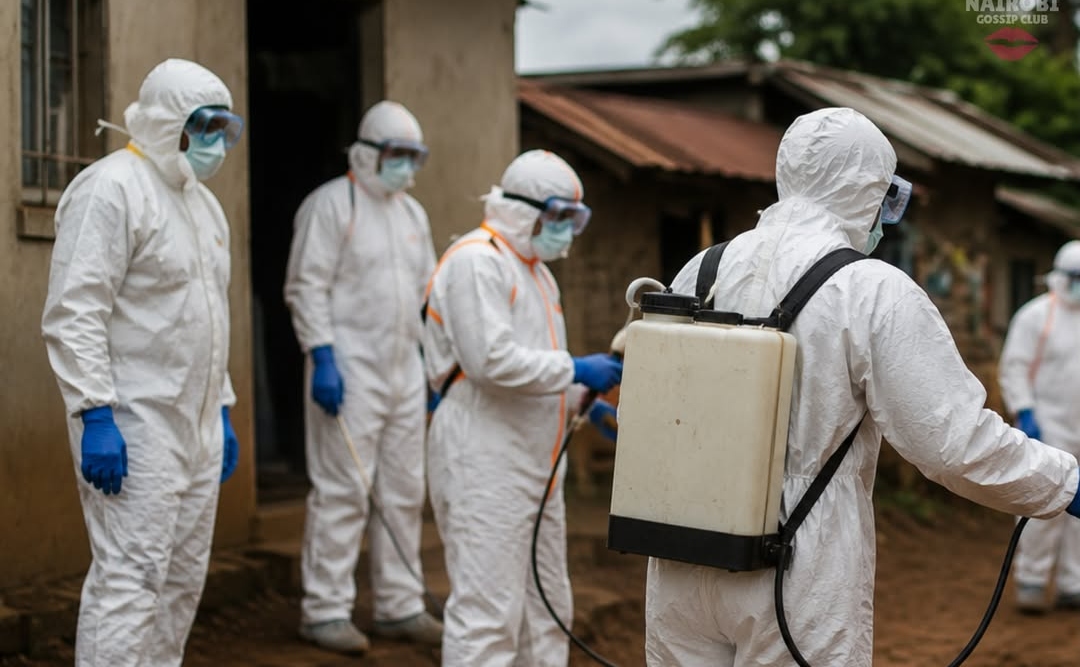
The East African Community (EAC) has intensified its response to the ongoing Ebola outbreak, directing member states to harmonise screening measures at airports, ports and land border crossings, while expanding laboratory capacity and refresher training for frontline health workers across the region.
The decisions were reached during the 8th Extraordinary Meeting of the EAC Sectoral Council of Ministers of Health, held virtually, where ministers reviewed the evolving Ebola Virus Disease (EVD) situation and adopted a series of measures aimed at preventing further cross-border transmission.
Among the key interventions agreed was the continued deployment of mobile laboratories across the region, with ministers noting that 10 EAC mobile laboratories are already operational in the Democratic Republic of Congo (DRC), Uganda, Kenya, Rwanda, Burundi, South Sudan and Tanzania to support rapid testing and detection of suspected Ebola cases.
Recognising the importance of skilled personnel in containing outbreaks, the ministers also directed the EAC Secretariat to mobilise resources for refresher training of members of the East African Community Pool of Rapidly Deployable Experts (RDEs) and frontline healthcare workers.
The training will focus on infection prevention and control, outbreak management, risk communication, community engagement and risk assessment.
"The meeting noted that 10 EAC mobile laboratories have already been deployed in the region to support rapid testing and detection of suspected Ebola cases," the ministers said in a communiqué issued after the meeting.
The ministers expressed concern over the continued spread of the disease in parts of the region, warning that increased movement of people and goods across borders heightened the risk of transmission.
As of June 1, the DRC had reported 121 confirmed cases of Bundibugyo Ebola Virus Disease and 1,077 suspected cases. The outbreak had resulted in 17 deaths among confirmed cases and 246 deaths among suspected cases.
Uganda had reported 11 confirmed cases and one death, while health authorities continued to monitor hundreds of contacts linked to confirmed infections.
"A total of 642 contacts had been identified, of whom 638 were under active follow-up, reflecting ongoing transmission risks and the need for strengthened cross-border coordination," the ministers said.
To prevent further spread, the ministers agreed to harmonise Ebola surveillance and protective measures at all points of entry across the bloc.
Partner states were directed to implement surveillance and control measures in affected areas, border points and porous crossing routes, in line with national regulations and guidance issued by the World Health Organisation (WHO).
The EAC Secretariat was further instructed to work with the Civil Aviation Safety and Security Oversight Agency (CASSOA) and other relevant institutions to urgently convene a regional meeting aimed at standardising traveller screening procedures, health declaration requirements and other public health measures.
The ministers also called for the introduction of exit screening at designated points of entry to complement existing surveillance measures.
In a major move aimed at strengthening regional coordination, the meeting approved the establishment of an EAC Regional Technical Taskforce on Ebola Response and other high-consequence diseases.
The taskforce will comprise technical experts nominated by member states and the EAC Secretariat and will be responsible for monitoring the outbreak, reviewing epidemiological trends, coordinating interventions and providing regular updates to ministers and other policy organs.
"The Ministers agreed to establish an EAC Regional Technical Taskforce on Ebola Response and other high-consequence diseases," the communiqué stated.
Member states have been directed to nominate two experts from their Ministries of Health and one expert from ministries responsible for EAC affairs to serve on the taskforce.
The ministers emphasised that real-time sharing of epidemiological information among countries would be critical in ensuring early detection of cases and facilitating a coordinated regional response.
The meeting also highlighted ongoing efforts to strengthen pandemic preparedness through the EAC Pandemic Preparedness Project, supported by the governments of Germany and the European Union.
The initiative has established a regional pool of more than 180 multidisciplinary experts operating under a One Health approach that integrates human, animal and environmental health considerations.
Ministers welcomed plans to operationalise the Rapidly Deployable Experts mechanism through collaboration with the Africa Centres for Disease Control and Prevention (Africa CDC).
The council also commended the EAC Secretariat for distributing personal protective equipment during training and deployment exercises conducted in the DRC, Kenya, Tanzania and Uganda since 2024.
Ministers noted plans to procure and immediately deploy an additional 500 sets of personal protective equipment to the DRC and Uganda to strengthen preparedness and response activities.
They also welcomed ongoing efforts to establish a regional mechanism for accelerated approval of Ebola vaccines, therapeutics and diagnostics.
Heads of National Medicines Regulatory Authorities met alongside the health ministers to advance discussions on a joint regional vaccine approval framework in collaboration with the African Medicines Agency and the World Health Organization.
To support the response, ministers welcomed a commitment by Germany's Development Bank, KfW, to reallocate €1 million towards the deployment of mobile laboratories, procurement of diagnostic supplies and training of laboratory personnel.
The EAC Secretariat was also directed to develop a comprehensive regional Ebola contingency, response and recovery plan, and to mobilise additional resources to strengthen surveillance, laboratory systems and community-based response efforts.
Despite progress, ministers acknowledged that insecurity in some affected areas continues to hamper contact tracing, risk communication, safe burials and management of travellers.
As a result, the meeting agreed to convene a multisectoral forum to address security challenges affecting Ebola response efforts and assess their implications for regional trade and free movement under the EAC Common Market Protocol.
The ministers reaffirmed their commitment to collective action, saying regional solidarity remains critical in protecting East Africans from the threat posed by Ebola and future public health emergencies.
"We reaffirm our commitment to regional solidarity and collective action in addressing the Ebola outbreak and protecting the health and well-being of East African citizens," the ministers said.












![[PHOTOS] Red carpet in Pretoria as Ruto begins South Africa visit](https://cdn.radioafrica.digital/image/2026/06/abe3e750-6e5a-4394-a45c-899768be6240.jpeg)