


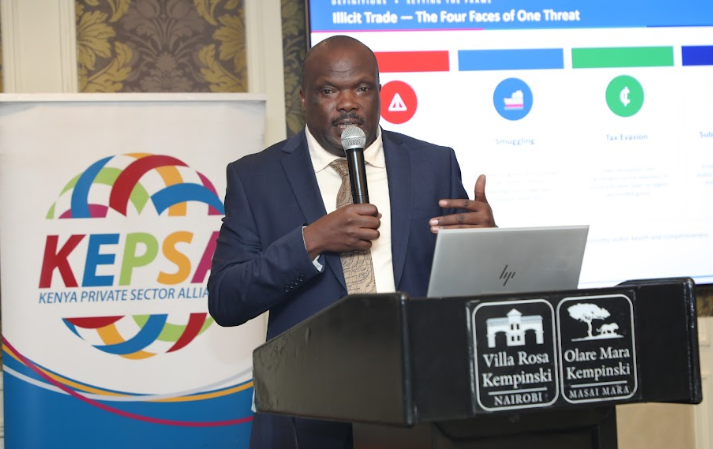
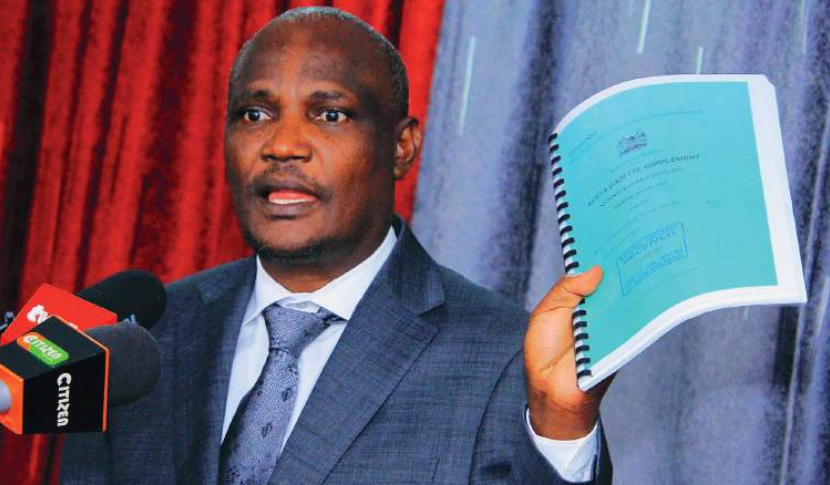
 Anti-Counterfeit Authority Executive Director Robi Mbugua Njoroge speaking during a high-level executive C-Suite Roundtable held in Nairobi on June 4, 2026/ HANDOUT
The Kenya Private Sector Alliance (KEPSA) has called for urgent government action to tackle illicit trade, warning that the vice is costing the country an estimated Sh800 billion annually and undermining legitimate businesses.
The alliance said illicit trade continues to erode market share for compliant companies and weaken investor confidence.
The concerns were raised during a high-level executive C-Suite Roundtable held in Nairobi on Thursday, where business leaders and industry stakeholders agreed on the need for a more coordinated and data-driven approach to combat counterfeiting, smuggling and other forms of illicit trade.
In a statement issued after the meeting, KEPSA said Kenya must move towards an institutionalised national strategy backed by stronger enforcement, technology and inter-agency collaboration to protect the country's economic stability.
Speaking on behalf of KEPSA Chief Executive Officer Carole Kariuki, Senior Policy and Research Officer Emmanuel Otieno said illicit trade had evolved into a sophisticated transnational network that continues to undermine legitimate enterprises.
"The digitisation and sophistication of modern illicit networks require an immediate, structural shift. The traditional, fragmented approach to enforcement by independent agencies is no longer viable," Kariuki said in the statement.
She called for the full resourcing of the Multi-Agency Team under the Ministry of Investment, Trade and Industry and the implementation of a coordinated National Action Plan to address the growing challenge.
According to KEPSA, legitimate businesses are losing up to 40 per cent of their market share to counterfeiters, resulting in reduced revenues and diminished brand integrity
The roundtable heard that the challenge has become increasingly difficult to contain as counterfeit traders migrate to online platforms and social commerce channels.
Anti-Counterfeit Authority Executive Director Robi Mbugua Njoroge said counterfeit products remain widespread across the Kenyan market.
"One in five products in the Kenyan market is suspected to be counterfeit. We are observing a rapid migration of this illicit trade to digital and social-commerce platforms, which now account for over 30 per cent of counterfeit transactions," he said.
Njoroge noted that the shift to digital platforms has complicated enforcement efforts due to technological and jurisdictional challenges.
Participants at the meeting outlined a six-month action plan focused on strengthening legislation, improving governance structures, enhancing supply chain security, deploying technology-driven intelligence systems and tightening regulation of online marketplaces.
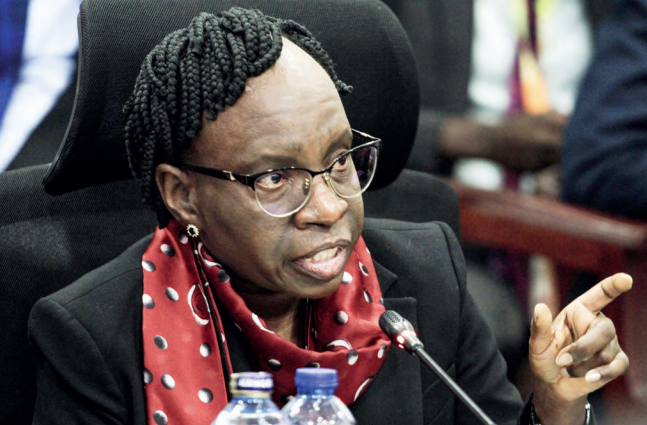
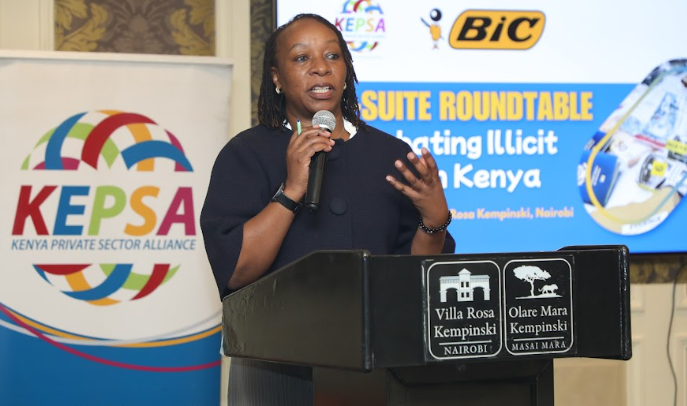 BIC East Africa General Manager Paloma Lengema speaking during a high-level executive C-Suite Roundtable held in Nairobi on June 4, 2026/ HANDOUT
Among the proposals are amendments to anti-counterfeit laws, establishment of a rapid-response enforcement team, mandatory intellectual property rights recordation for high-risk imports and deployment of a unified intelligence dashboard across enforcement agencies.
The private sector also called for stricter accountability for e-commerce and social media platforms that host counterfeit traders.
Representatives from the manufacturing, healthcare, beverage, tobacco and construction sectors attended the forum, highlighting the broad impact of illicit trade on the economy.
BIC East Africa General Manager Paloma Lengema said manufacturers continue to face unfair competition from counterfeit products that enter the market without complying with taxes, safety requirements and regulatory standards.
"For compliant manufacturers, this price gap reflects the full cost of legality, which includes taxation, duties, safety compliance, testing and formal distribution infrastructure, all of which illicit operators bypass. This is simply unfair competition," she said.
KEPSA said restoring market integrity and strengthening Kenya's position as a regional manufacturing hub would require sustained collaboration between government agencies, businesses and consumers.









![[PHOTOS] Red carpet in Pretoria as Ruto begins South Africa visit](https://cdn.radioafrica.digital/image/2026/06/abe3e750-6e5a-4394-a45c-899768be6240.jpeg)