Details have emerged of
how Moi University was excluded from the process that led to the leasing of
struggling textile manufacturer Rivatex East Africa Limited to a private
investor.
The revelations by Auditor
General Nancy Gathungu raise fresh questions about governance and ownership of
the state-backed firm.
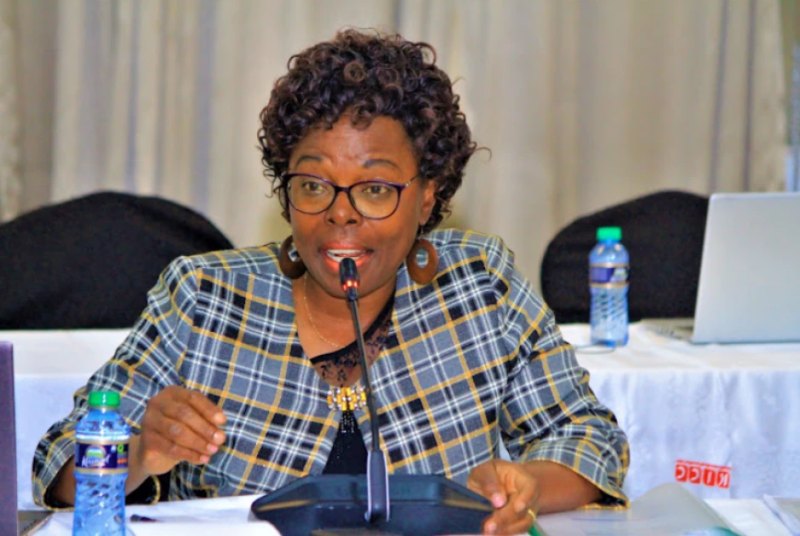
The review for June 30, 2025, reveals that the university, Rivatex's sole shareholder, was not involved in
the procurement of a strategic partner that has since taken over the company's
operations under a 21-year lease agreement.
The report says Rivatex board discussed a Cabinet decision approving the recruitment of a
non-equity strategic partner to revive the loss-making company.
The proposed partner was
expected to reduce dependence on government funding, attract investment,
modernise operations and build a textile value chain linked to the cotton
sector.
However, auditors noted that
Moi University was not involved in the procurement process or subsequent
transactions.
Rivatex has transitioned
from state management to private operational control through a lease
arrangement with Arise Integrated Industrial Platforms (Arise IIP).
The private player has
committed to injecting Sh2.6 billion to revitalise the Eldoret-based textile
manufacturer.
Auditors said the lease
arrangement introduces uncertainty over the company's future because key legal
and regulatory processes had not been concluded during the audit period.
“No detailed documentation was
provided to corroborate or clarify the full terms, obligations and implications
of the new arrangement,” the report states.
The lack of documentation
prevented auditors from determining the full impact of the deal on the
company's future operations, financial reporting and going-concern status.
Moi University
itself is facing severe financial difficulties and appears unable to support
its subsidiary.
The university recorded a
deficit of Sh597.5 million during the year, pushing its accumulated deficit to
Sh3.88 billion.
It also owed Rivatex Sh16.86
million for goods supplied, including Sh10.9 million in deductions that had not
been remitted to the textile firm.
The audit suggests that the
university's financial troubles may have weakened its ability to influence
decisions surrounding Rivatex's future.
The handover, confirmed by the
Ministry of Investment, Trade and Industry in October 2025, followed years of
heavy public investment in the company.
Government records indicate
more than Sh7.5 billion was spent on machinery acquisition and modernisation
efforts over the years.
Yet despite the investments,
Rivatex continued operating at less than 10 per cent of its capacity and
remained in heavy loss-making.
In the year under review, accumulated
losses rose from Sh3.41 billion in 2024 to Sh3.77 billion in 2025, while the
company posted a net loss of Sh358.6 million during the year.
The audit
has further put Rivatex management on the spot following revelations of
possible revenue leakages and mounting losses.
Gathungu has also raised concerns over uncollected debts
and uncertainties surrounding the textile manufacturer's future.
She questioned the accuracy of the firm's reported
revenue of Sh298.5 million.
The auditor said the company's four sales outlets across
the country operate on the Pesa Flow system, but the system could not provide
centralised sales schedules or stock records for verification.
“Sales schedules could not be confirmed from the system,
nor were they supported by system data from a centralised point for all the
shops,” the report reads.
The auditor further noted that the system could not
generate centralised stock levels by commodity or outlet, creating what was
described as a ‘high-risk gap’ that could lead to revenue leakages.
As a result, the accuracy and completeness of the
reported Sh298.5 million revenue could not be confirmed.
On Rivatex’s future, the audit warned that the textile
company's continued existence as a going concern remains uncertain.
It shows Rivatex recorded accumulated
losses of Sh3.77 billion in 2025, up from Sh3.41 billion the previous year.
The company also posted a gross loss of Sh240.1 million
during the year. The report also identified non-performing debts amounting to
Sh2.3 million, casting doubt on the recoverability.
Pending bills of Sh218.8 million have also been flagged,
amid warnings that the company's ability to settle its obligations as they fall
due is doubtful.
The financial difficulties have been compounded by
declining performance across key product lines.
Revenue from printed fabrics dropped from Sh53.2 million
to Sh40.4 million, while dyed fabric sales fell from Sh149.6 million to Sh121.7
million.
The report reveals that yarn sales suffered the steepest
decline, falling from Sh37.6 million to Sh3.5 million.
The auditor noted significant fluctuations in major
revenue streams over the years, making it difficult to assess sustainable
performance.
The company generated gross revenue of Sh298.5 million
against cost of sales of Sh538.6 million, resulting in a gross loss of Sh240.1
million.
Management attributed the persistent losses to shortages
and high costs of raw materials, fuel, spare parts and consumables.
Beyond financial challenges, the audit identified
several governance and compliance issues.
The company at the time of the audit had 610 out of 624 employees, about
79 per cent of the workforce, coming from a single ethnic community.
All 23 employees recruited during the year were also
drawn from the same community, contrary to provisions of the National Cohesion
and Integration Act.
Rivatex further failed to remit Sh90.4 million in
pension deductions and Sh8.3 million in SACCO contributions deducted from
employees' salaries.



![[PHOTOS] The new Ngong –Naivasha Road viaduct](https://cdn.radioafrica.digital/image/2026/06/64d4f771-4432-4aee-ba3c-2f304c4436ec.jpg)