How a new initiative is seeking to revolutionise green transformation
Kenya generates an estimated 22,000 tonnes of waste per day, based on an average per capita generation rate of 0.5 kilogrammes.
by GILBERT KOECH
Audio By Vocalize
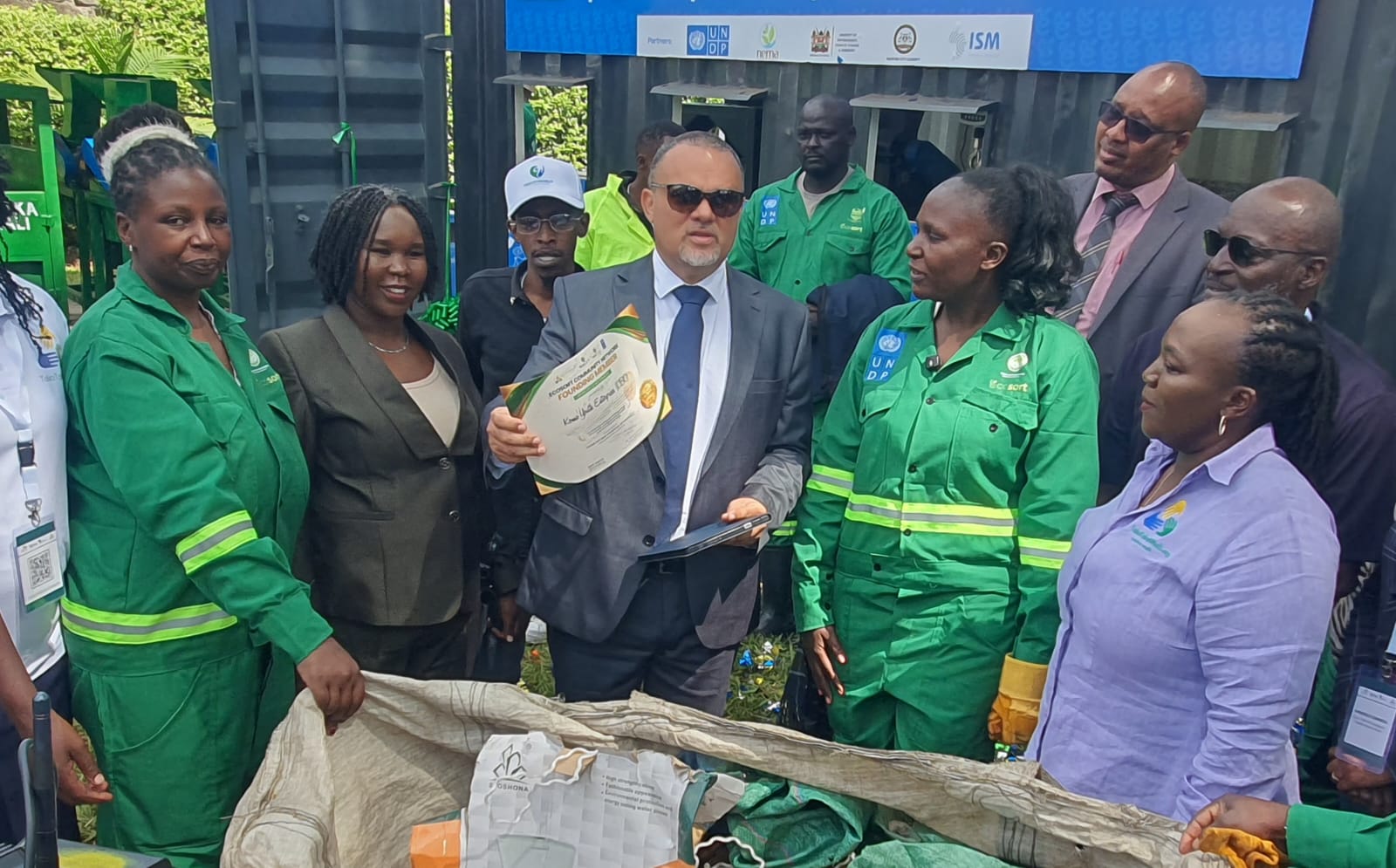
Environment secretary Selly Kimosop, UNDP resident representative in Kenya Jean-Luc Stalon and TakaTaka Ni Mali Foundation founder and patron Mary Ngechu during the launch of Ecosort buy-back centres/Gilbert Koech.
Players in the waste sector have unveiled three decentralised waste recovery models called Ecosort Buy-Back Centres, positioning waste management as a key pillar in Kenya’s green transformation agenda.
The initiative, led by the United Nations Development Programme (UNDP), TakaTaka Ni Mali Foundation (TTNM), the International Solid Waste Association (ISWA) and a coalition of public and private sector partners, was officially launched during World Environment Day.
The four pilot units, each costing about Sh3 million, will operate as community-based recovery hubs where residents can return recyclable materials, have them weighed and receive payment through a transparent system supported by the EcoMali digital platform.
The model is built around three key steps: Rejesha (Return), Pima (Measure) and Lipwa (Get Paid).
UNDP resident representative in Kenya Jean-Luc Stalon presided over the launch at the TakaTaka Ni Mali Foundation offices in Lavington, alongside Environment secretary Selly Kimosop and TTNM founder and patron Mary Ngechu.
Kenya generates an estimated 22,000 tonnes of waste per day, based on an average per capita generation rate of 0.5 kilogrammes.
About 40 per cent of this waste comes from urban areas. With urbanisation increasing by 10 per cent, urban populations are expected to generate about 5.5 million tonnes annually by 2030.
Current estimates show 60 to 70 per cent of waste is organic, 20 per cent plastic, 10 per cent paper, 2 per cent metal and one per cent medical waste.
Stalon said the initiative will empower waste collectors by creating opportunities to earn better incomes through structured recycling systems.
He said the four units handed to TakaTaka Ni Mali are catalytic, with plans underway to scale up to about 3,000 units nationwide to create a wider impact.
“The units will demonstrate how recycling can be better managed. Instead of seeing plastic bottles everywhere, people can collect them, bring them to these Ecosort centres and they will be processed for the circular economy,” he said.
He said expanding the model will require significant financial partnerships, including engagement with financial institutions.
Stalon also said the initiative aligns with the NextGen.Ke Youth Employment Programme, which aims to create jobs for young people. He said 75 per cent of Kenya’s population is under 35 and urgently needs employment opportunities.
“This is one additional stream through which we can place young people into jobs and equip them with skills to work not only in employment but also in business,” he said.
Stalon emphasised that UNDP is working with technical institutions to ensure the project’s sustainability.
The Ecosort initiative seeks to address long-standing challenges faced by informal recyclers, including fragmented supply chains, lack of storage facilities, weak market access and low bargaining power.
By improving aggregation systems and logistics efficiency, the model enables operators to handle larger volumes of waste while reducing transport costs and increasing earnings.
The project also forms part of the Africa Waste Is Wealth Summit III, a continental platform bringing together policymakers, investors, development partners, manufacturers, recyclers and entrepreneurs to explore Africa’s circular economy transition.
Mary Ngechu said TTNM focuses on empowering waste collectors, adding that the four units will be handed over to four groups in Nairobi.
She said each unit includes equipment such as a baler and glass crusher, which help address space constraints.
“The baler reduces the volume of waste so that small spaces can handle more material efficiently,” Ngechu said.
She said improved waste volumes will attract recycling firms and strengthen the value chain.
Ngechu noted that many waste groups still rely on manual record-keeping, and the new system will introduce digitisation and financial partnerships to unlock working capital.
Historical data generated through the system is expected to help recyclers access asset financing for equipment such as washing lines and shredders.
As waste entrepreneurs grow, she said, they will be able to establish full processing plants and produce higher-value products, increasing income across the value chain.
Environment secretary Selly Kimosop said the initiative demonstrates practical solutions to Kenya’s waste management challenges.
She praised UNDP for providing seed capital to help private sector actors scale innovations in the circular economy.
“This model is inclusive, leaving no one behind, including waste pickers and recyclers, and promotes job creation in line with the BETA agenda,” she said.
She said digitisation will improve traceability and provide credible data to guide policy development.
Kimosop also said the government is developing enabling policies to support private sector growth in the sector.
This is premium content
Subscribe to Continue Reading
Help us continue bringing you unbiased news, in-depth investigations, and diverse perspectives. Your subscription keeps our mission alive and empowers us to provide high-quality, trustworthy journalism. Join us today to make a difference!




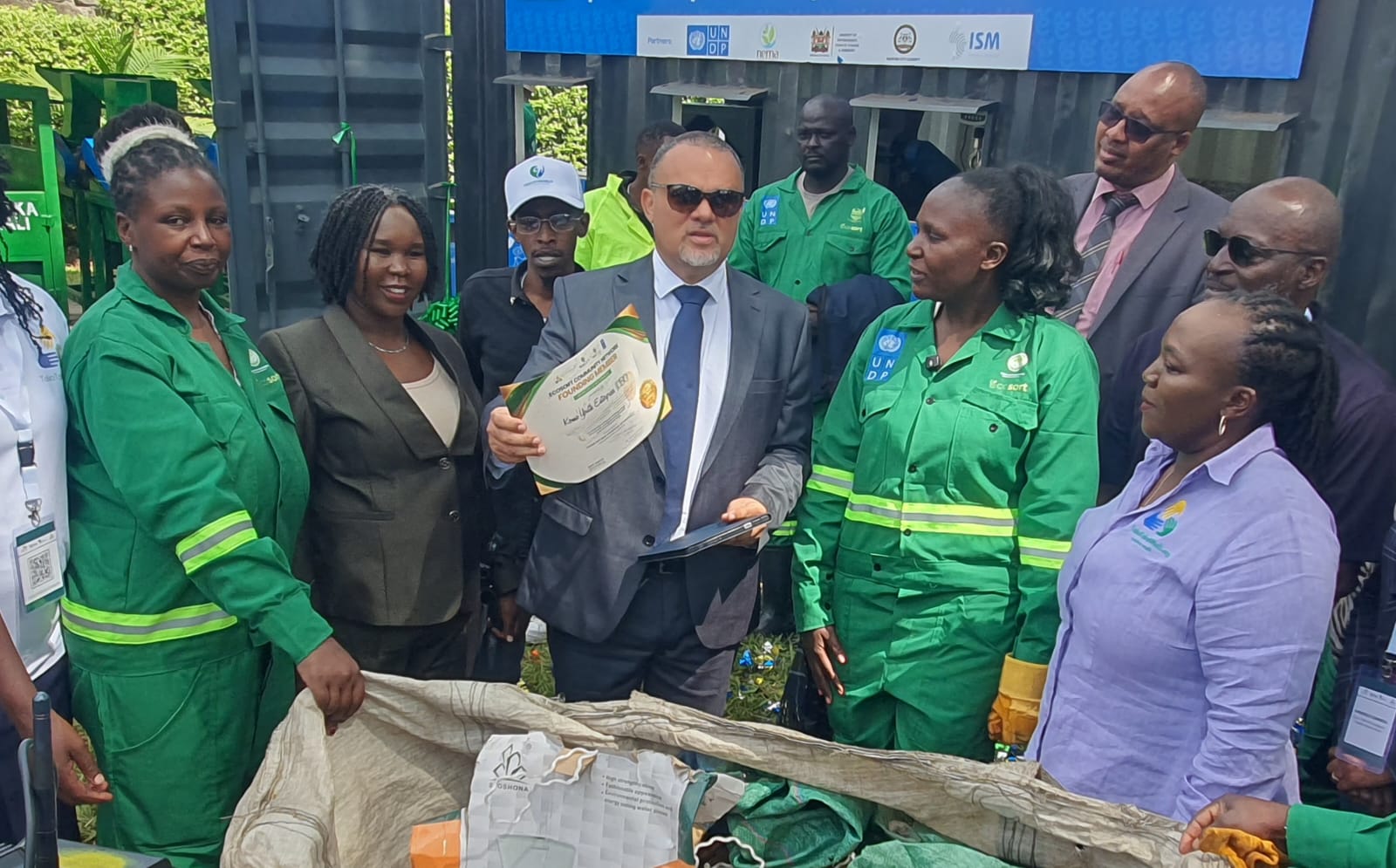 Environment secretary Selly Kimosop, UNDP resident representative in Kenya Jean-Luc Stalon and TakaTaka Ni Mali Foundation founder and patron Mary Ngechu during the launch of Ecosort buy-back centres/Gilbert Koech.