

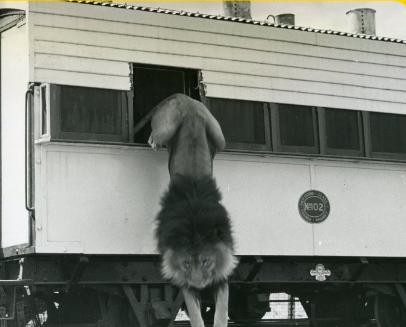
The construction of the Uganda Railway in 1898 faced numerous challenges, but one of the most frightening was the threat posed by two lions that terrorised workers in Tsavo for nine months.
As Kenya Railways marks 130 years of connecting the country, one of the most enduring stories linked to the railway’s history remains that of the infamous man-eating lions known as “The Ghost and the Darkness.”
According to a historical account shared by Kenya Railways, the two lions terrorised the Uganda Railway construction camp at Tsavo, creating fear among workers and disrupting life at the site during a critical phase of the railway’s development.
“In 1898, two lions terrorised the Uganda Railway construction camp at Tsavo for nine terrifying months,” Kenya Railways said.
The attacks became one of the most dramatic episodes associated with the construction of the railway. The report by Kenya Railways noted that the lions killed “approximately between 28 and 135 people during the construction of the Uganda Railway.”
The sustained attacks left workers in constant fear as efforts continued to build one of East Africa’s most ambitious infrastructure projects. The railway was intended to improve transport and connectivity, but in Tsavo, attention shifted to surviving the nightly threat posed by the predators.
Kenya Railways noted that, “Many fled never to return.”
The lions became a major obstacle to normal operations, earning a reputation that would outlive the railway project itself.
As the attacks continued, efforts intensified to stop the animals, and the responsibility eventually fell to Lt. Colonel John Henry Patterson, who undertook the task of tracking and hunting the lions.
According to the account, the mission was far from quick or easy. “It took Lt. Colonel John Henry Patterson nearly a year to finally hunt them down,” the report stated.
The successful hunt brought an end to months of fear and allowed construction to proceed without the threat that had overshadowed daily life in Tsavo.
More than a century later, the story remains one of the most famous chapters in railway history. The lions continue to attract attention because of their link to the Uganda Railway and the fear they instilled among workers during its construction.
The historical account noted that physical reminders of the episode still exist today. “Their skulls and skins are preserved to this day at the Field Museum in Chicago,” they said.
The preservation of the remains has helped keep alive the memory of an incident that became deeply woven into the history of the railway and the wider story of Tsavo.
For Kenya Railways, the tale serves as a reminder of the extraordinary circumstances that surrounded the development of the railway network more than a century ago.
The story of “The Ghost and the Darkness” continues to resonate generations later, standing as one of the most remarkable episodes linked to the construction of the Uganda Railway.
As Kenya Railways commemorates 130 years under the theme “Connecting Kenya for Generations,” the legend of the two lions remains a powerful reminder of a time when a pair of predators brought fear to a railway camp and became part of Kenya’s transport history.