SMALL businesses are
increasingly finding themselves trapped between rising operating costs and
shrinking access to affordable credit, driving a worrying rise in loan defaults
and threatening Kenya’s most important engines of growth.
From traders in open-air
markets and retail shop owners to small manufacturers and service providers,
many entrepreneurs say they are struggling to keep their businesses afloat as
inflation-driven expenses continue to outpace revenues.
The cash-flow squeeze has
forced thousands of enterprises to rely on short-term borrowing, Sacco loans,
digital credit and informal financing arrangements simply to meet day-to-day
operating expenses.
Yet, as borrowing becomes
more common, repayment is becoming increasingly difficult.
Recent economic indicators
paint a challenging picture for Kenya’s micro, small and medium enterprises
(MSMEs), which account for the overwhelming majority of businesses in the
country and remain a critical source of employment and household incomes.
The Economic Survey 2025 shows that the sector contributes
over 30 per cent to the
Gross Domestic Product and employs more than 80 per cent of the total
workforce.
Although lending to the
private sector has improved following a series of monetary policy easing measures
by the Central Bank of Kenya, many small businesses say affordable credit
remains largely out of reach.
The latest Monetary Policy
Committee data shows that private sector credit growth accelerated to 9.3 per
cent in May 2026, a sharp recovery from the contraction of
negative 2.9 per cent recorded in January 2025.
Lending rates have also
moderated significantly, with average commercial bank lending rates falling to
14.5 per cent in May
2026 from 17.2 per cent
in November 2024.
In theory, lower interest
rates should make borrowing easier and stimulate business expansion.
In practice, however, small
traders continue to face stringent collateral requirements, lengthy approval
processes and heightened risk assessments by lenders.
As a result, entrepreneurs
are increasingly turning to Saccos, digital lenders, family members, friends
and informal savings groups to fill financing gaps.
Several businesses told the
Star that loans are no longer being used to finance expansion or purchase new
equipment.
Instead, they are being
used to pay suppliers, cover rent, settle utility bills and finance working
capital requirements.
“The challenge today is not necessarily getting customers but managing cash
flow,” says Nairobi-based electronics trader Peter Mwangi.
“Sales are there, but
suppliers want cash upfront while customers increasingly buy on credit. Many of
us are borrowing just to restock.”
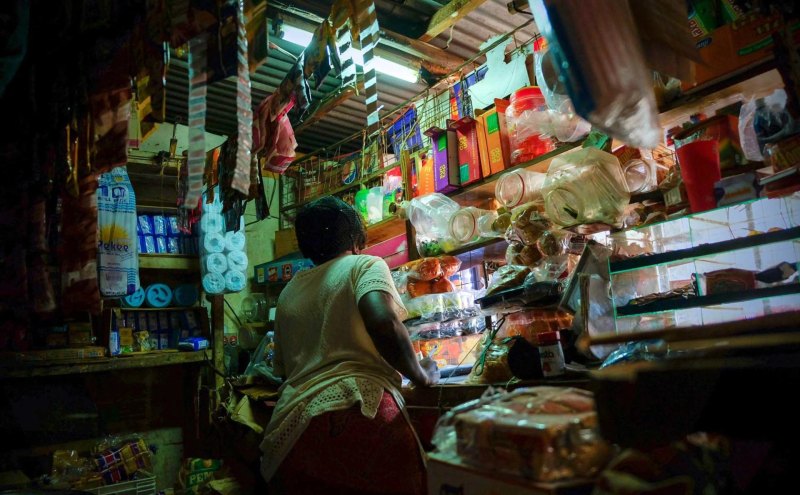
Tom Macharia, a retail shop
operator at Sigona, Kiambu county, says that sales on credit have increased in
the past 18 months, forcing him to borrow to pay suppliers.
“I have noticed that
families are going through rough times. Most of them borrow basic goods like
maize flour, sugar, milk, diapers and cooking oil. Although a good percentage of them pay at the end of the month, the cycle repeats, forcing me to borrow to restock,’’
Macharia said.
He attributes this to a
high tax regime that has cut earnings and non-payment of pending bills, which has
seen businesses close. “Several family breadwinners have lost jobs, too.”
Their experiences mirror
findings from several industry surveys showing that businesses are relying more
heavily on internally generated funds and short-term credit to sustain
operations.
According to the latest
Stanbic Bank Purchasing Managers’ Index (PMI), Kenya’s private sector activity
contracted for a third consecutive month in May, reflecting weak demand, rising
operating costs and growing inflationary pressures.
The headline PMI declined
to 46.6 in May from 49.4 in April. Any
reading below 50 signals deterioration in business conditions.
The latest figure
represented the sharpest decline in private sector activity since July 2024.
Businesses surveyed cited
weakening customer demand, rising fuel costs, higher input prices and tighter
household budgets as key factors undermining growth.
The downturn coincided with
a rise in inflation, which accelerated to 6.7 per cent in May from 5.6 per cent
in April, further eroding consumer purchasing power and increasing the cost of
doing business.
For entrepreneurs such as
Kisumu-based retailer Beatrice Achieng’, the combination of rising costs and
reduced consumer spending has become increasingly difficult to navigate.
“Transport costs have gone
up, electricity bills are higher, and customers are spending less,” she says.
“You end up borrowing to
pay suppliers and then borrowing again to repay the first loan. It becomes a
cycle.”
The growing dependence on
borrowing is now being reflected in rising default rates across Kenya’s
financial system.
The trend is particularly
severe within the digital lending sector, which has become a major source of
emergency financing for millions of Kenyans.
Data from the CBK shows
that loans valued at Sh1,000 or less recorded a staggering non-performing loan
ratio of 83.1 per cent by June
2025.
Loans worth between Sh1,000
and Sh5,000 posted a default rate of 69.4 per cent.
Financial analysts
attribute the trend partly to economic hardship and partly to regulatory
loopholes.
Under current rules,
borrowers who default on loans below Sh1,000 cannot be listed with Credit
Reference Bureaus (CRBs), a provision that some lenders argue has weakened
repayment discipline among borrowers.
CBK data indicates that
default rates decline significantly as loan sizes increase, suggesting that
borrowers are more likely to honour larger obligations that carry greater
consequences for non-payment.
Despite these concerns,
demand for digital credit continues to grow rapidly.
By June 2025, licensed Digital Credit Providers (DCPs) had advanced Sh76.8
billion to 5.5 million borrowers, surpassing the loan portfolios of
microfinance banks and cementing their role as a major source of financing for
households and small enterprises.
Most of these loans were
below Sh20,000 and were designed to meet short-term liquidity needs, including
business working capital, school fees and emergency expenses.
The number of licensed
digital lenders has also expanded significantly following CBK regulation of the
sector.
By mid-2025, over 120
licensed lenders were operating in the market, reflecting the growing appetite
for digital credit among consumers and businesses.
However, experts warn that
many of these loans are being used for consumption and survival rather than
productive investment.
The Financial Sector
Stability Report notes that while digital loans provide quick access to cash
and help businesses meet emergency working capital needs, their small size and
short repayment periods limit their ability to finance investments that can
significantly improve earnings or productivity.
The pressure is also being
felt by Saccos, which have traditionally served as a financial lifeline for
small businesses unable to secure conventional bank financing.
Industry officials report a rise in requests for loan restructuring, repayment extensions, and payment
holidays as members struggle with weaker cash flows.
“We are seeing more members requesting
restructuring of loans and longer repayment periods because business cash flows
have weakened,” Gideon Gitonga, Karura Community Sacco boss, told the
Star.
“Many borrowers are not
unwilling to pay. They do not have the liquidity they used to have.”
A separate Financial
Services Monitor report released in 2025 underscored the financing challenges
facing Kenyan businesses.
The study found that 41 per
cent of Kenyans had borrowed from family members or friends within a year,
while approximately one-quarter had accessed loans through chamas and other
informal savings groups.
According to the report, many
entrepreneurs are increasingly relying on informal financing channels because
formal credit remains difficult to access.
Banks, meanwhile, continue
to adopt cautious lending practices amid concerns over credit quality and
economic uncertainty.
Surveys conducted by the
Central Bank show that MSMEs frequently cite collateral requirements, high
borrowing costs and complex approval procedures as major barriers to accessing
credit.
As a result, many
businesses are caught in a cycle where they must borrow repeatedly to sustain
operations while generating insufficient profits to comfortably service their
debts.
Economists warn that if
current trends continue, the consequences could extend beyond individual
businesses and affect broader economic growth.
“Small businesses remain
central to Kenya’s economy, providing employment opportunities, supporting
household incomes and driving commercial activity across urban and rural
areas,’’ Jerome Mundia, an economist at Prime Capital, said.
“Prolonged cash-flow crisis
among MSMEs could therefore weaken job creation, suppress investment and reduce
overall economic resilience.”
Recognising these
challenges, the government has included several measures in the 2026-27 budget
aimed at supporting businesses and stimulating economic activity.
Treasury Cabinet Secretary
John Mbadi’s Sh4.82 trillion budget prioritises infrastructure development,
agriculture, manufacturing and investments designed to reduce the cost of doing
business.
Presenting the budget
statement in Parliament on Thursday, Mbadi said that the government has
continued supporting the Credit Guarantee Scheme, which shares lending risk
with financial institutions to encourage greater lending to MSMEs, women and
youth-owned enterprises.
As of January 2026, the scheme had facilitated more than Sh6.6 billion in guaranteed
credit across nearly all counties.
The budget also seeks to
improve the business environment through continued investment in roads, energy,
water and transport infrastructure, while maintaining macroeconomic stability
and encouraging private-sector investment.
Financial analysts say such
interventions could provide some relief, but they caution that deeper reforms
may be necessary.
These include expanding
affordable credit programmes, strengthening credit guarantee mechanisms,
supporting Sacco liquidity, improving financial literacy and encouraging
lenders to develop products tailored to the realities of small businesses.
Without meaningful
interventions, they warn, more enterprises could find themselves running out of
cash, deepening loan defaults and undermining one of Kenya’s most important
drivers of economic growth.
Yesterday, the government marginally cut fuel super petrol prices by Sh0.22 and Sh10 for diesel as part of plans to cushion consumers and fight inflationary pressure.
The Energy and Petroleum Regulatory Authority said Sh10 billion of the Petroleum Development Levy has been spent to offer relief to consumers.
A litre of petrol will now retail at Sh214.03 in Nairobi, diesel at Sh222.86, while that of kerosene has been retained at Sh191.38.
The Central Bank of Kenya
has also embarked on a monetary policy plan to help stem inflation.
Last week, it retained the
base-lending rate at 8.75 per cent, ending a 10-month easing on the monetary
policy.
The apex bank boss, Kamau Thuge, said that the trend is global as economies rush to calm down fuel prices related inflationary pressure
The regulator has asked Kenyans
to brace for even tighter times ahead, indicating the spiral effects could see
the country’s economic growth slow by 40 basis points to 4.9 per cent from an
earlier projection of 5.3 per cent.