She rushes outside her two-room house in
Nairobi's Eastlands, dragging every bucket, jerrycan, and cooking pot she owns
to the tap before the pressure goes low.
Within an hour, the water is gone again.
Yet at the end of the month, she has to pay a fixed Sh300 for water, a bill
that arrives on time.
"I pay every month. But I still buy
water from vendors because what comes through the pipes is never enough,"
she says.
For millions of Kenyan households, this
contradiction has become routine, paying some of the highest water tariffs in
East Africa while receiving unreliable, unsafe, or completely unavailable
supplies.
For instance, there is a lack of a standard
unit price for a cubic metre of water; some landlords charge as high as Sh350, while some go for as low as Sh100 per unit.
In many towns, families are effectively
paying twice; first through official utility bills and then again to private
water vendors who charge several times more per litre.
The deepening water crisis across Kenya's cities and major towns has exposed what residents now describe as a
thriving underground water business, where households have to buy water
at exorbitant prices.
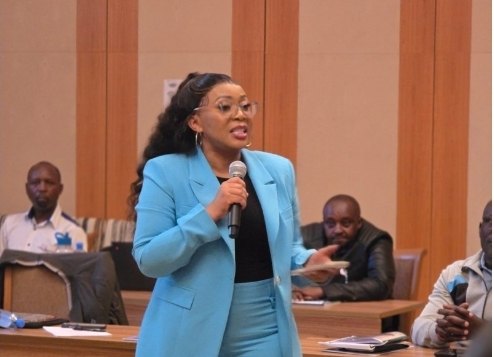
Nairobi City Water & Sewerage Company (NCWSC) managing director Martin Nang'ole says ensuring a reliable water supply is a collective responsibility that relies on the civic duty of all Nairobi residents.
"The unauthorised diversion or stealing of water directly deprives fellow citizens of essential public resources and disrupts the entire distribution network. In line with the updated provisions of the Water Act, enforcement measures have been heavily intensified."
"Individuals or entities found guilty of water theft, meter tampering, or illegal connections face stringent legal action and steep penalties of up to Sh1 million. We urge all residents to protect our shared resources by reporting illegal activities immediately."
The Star reached out to several other water agencies in Kisumu, Kericho, Mombasa, Eldoret and Kakamega.
None had responded to our inquiries on
poor service allegations from residents by the time of going to press
Meanwhile, taps in many houses remain dry
for days, weeks and even months.
The situation has reignited concerns over
the influence of water cartels, illegal connections and poor governance within
Kenya's urban water distribution systems, with growing questions over how
private water vendors continue to access large volumes of water despite
official shortages.
In estates such as Umoja, Embakasi,
Kayole, Donholm, Pipeline, South B, Zimmerman, Githurai and parts of Rongai,
residents say they have become prisoners of expensive water vendors who charge
as much as Sh100 for a 20-litre jerrycan, translating to thousands of shillings
every month for a basic necessity.
At that rate, consumers are effectively
paying about Sh5, 000 per cubic metre (1,000 litres).
This contrasts sharply with global
benchmarks. According to a World Bank report, the average global cost of water
supply and wastewater treatment ranges between $2 and $2.50 (about Sh260-Sh325)
per cubic metre.
Based on those figures, a 20-litre
jerrican should cost roughly Sh5 to Sh7.
Across the estates, informal settlements, and rapidly growing towns, residents routinely pay several times more per litre
than households connected to reliable municipal supplies.
For a family of five, the monthly cost
quickly exceeds what middle-income households spend on formal utilities.
"I have not seen water flowing from
my tap for more than two weeks, every day I buy not less than seven
jerrycans for family use. By the end of the month, I spend more on water than
utilities such as electricity," says Irine Kemunto, a resident of Umoja
One.
A few kilometres away in Zimmerman in the
larger Kasarani area, residents tell a similar story.
"The water company says there is
rationing, but water vendors never run out. The question everyone is asking is
simple: where are these vendors getting all this fresh water when our taps are
completely dry?” says Roy Nyanga, who has lived in the estate for seven years.
“We are a bit lucky the landlord drilled a
borehole but still, we buy drinking water.”
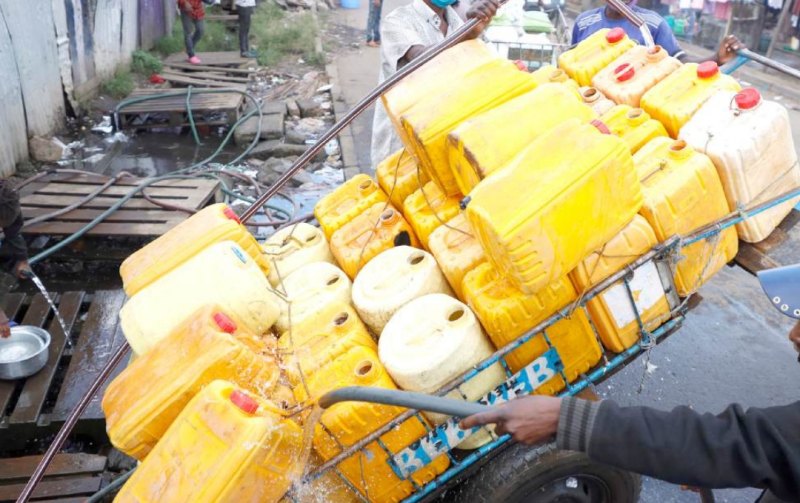
Throughout the day, trucks, pick-ups,
motorcycles and handcarts loaded with blue water tanks weave through
residential estates supplying households, restaurants and apartment blocks.
The story is the same in Mombasa’s
estates. “Mambo ya maji ni magumu. Bado twanunua (Water matters are
complicated, we still buy),” Faridah Hassan, a resident of Likoni, told the
Star.
In Nyalenda, an informal settlement in
Kisumu, residents have for years experienced perennial water shortages due to
aged infrastructure, low piped water coverage, and high non-revenue water
losses.
To navigate the scarcity, residents have
been relying on untreated shallow hand-dug wells and water kiosks, which carry
health risks, even as several sanitation projects in the city start to
shape up, with hopes the situation will improve.
Business peaks in the evenings when
residents return from work to find dry taps.
The booming trade has transformed water
into one of the most lucrative informal businesses in Nairobi.
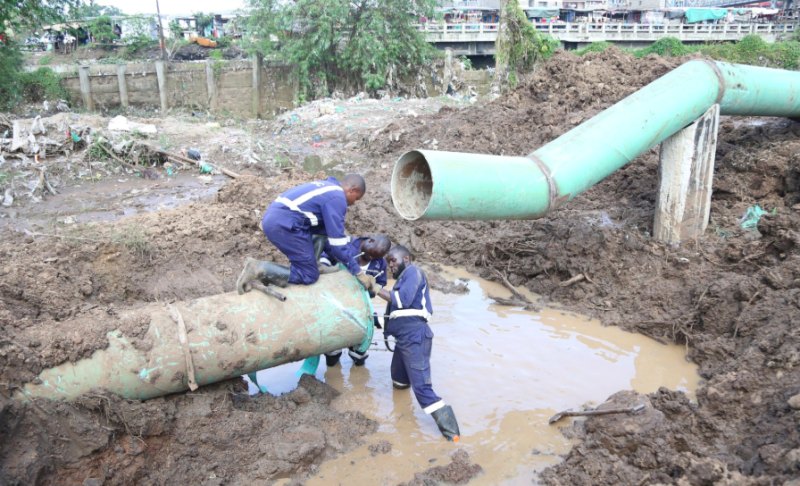
Residents suspect some vendors are
sourcing water from illegal connections to public pipelines, while others
allegedly access supplies from commercial boreholes, water kiosks, or through
collusion with officials managing distribution networks.
Water experts argue that the persistence
of the problem points to deeper structural failures within urban water
management.
Residents who we spoke to questioned the availability of water for commercial sale when officials say they have no fresh water in the distribution network.
Residents in Kisumu, Mombasa, Nakuru,
Eldoret, Machakos and other fast-growing urban centres have also repeatedly
complained of prolonged water shortages that have created thriving markets for
private vendors, many of whom charge exorbitantly.
A 20-litre jerrycan, commonly known as
“mtungi,” is going for between Sh50 and Sh100 in most estates.
In some cases, tenants report paying landlords
full water bills despite receiving little or no piped supply.
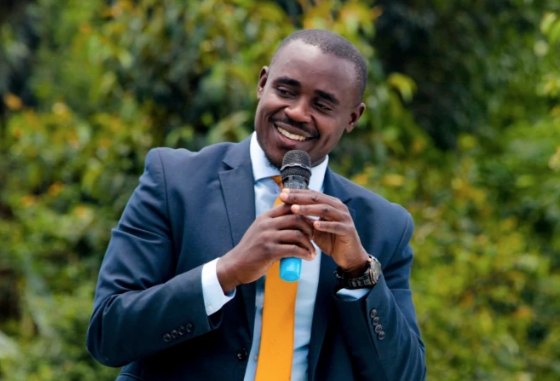
Kenya Alliance of Resident Associations (KARA) chief executive Henry Ochieng said there is a need for greater investment in water infrastructure, reduction of water losses through leaks and illegal connections, stronger oversight of water service providers, and decisive action against illegal water cartels.
There is also a need to ensure that resident associations are actively involved in planning, monitoring, and reporting water service delivery challenges, Ochieng said.
“KARA believes the water shortage is primarily a governance and infrastructure challenge. The thriving informal water market is a symptom of inadequate public water supply, forcing residents to pay exorbitant prices for a basic necessity,” he noted.
“Access to clean, affordable, and reliable water is a constitutional right and should not depend on one's ability to pay inflated prices.”
Meanwhile, vendors continue to make daily rounds, often collecting cash payments with little regulation of water quality, pricing, or source.
According to the international nonprofit
organisation Water.Org, Kenya, with a population of 56 million, has 19 million people without access to basic water and 36 million without access to a safe toilet.
Climate change, population growth,
urbanisation, water pollution, and poor management of water resources have
aggravated the water crisis, which affects economic activities,
food security, education, and health.
These challenges are especially evident in
rural areas and urban slums where people are often unable to connect to piped
water infrastructure.
Health experts warn that desperation is
forcing many households to purchase water without knowing whether it is safe for
drinking.
"We buy because we have no choice. Sometimes the water smells strange, but we have no choice. We need to
bathe, cook and drink," says Marther Achieng, a mother of three in Umoja
Innercore.
Consumer rights groups say the situation
amounts to economic exploitation.
A household or a business like an eatery
that consumes five 20-litre jerrycans daily at Sh100 each spends around Sh500
every day, or approximately Sh15,000 every month—far above what many households
would ordinarily pay for piped water.
The disparity has fuelled public anger
over what many residents describe as an artificial scarcity benefiting powerful
cartels.
Critics argue that despite repeated
promises by successive governments to dismantle water cartels, little has
changed on the ground.
As Kenya continues investing billions of
shillings in dams, bulk water infrastructure and urban supply projects,
thousands of urban residents say the reality remains unchanged: dry taps,
soaring costs and dependence on a parallel water economy that appears to
flourish whenever official supplies disappear.
The Consumer Federation of Kenya has
equally raised alarm over what it terms a worsening water crisis gripping
Nairobi and other major urban centres.
“What residents are enduring is not a
natural disaster, it is a regulatory and governance failure with serious
consumer rights implications,” Secretary General Stephen Mutoro told the Star.
Cofek notes that private water vendors are
hiking prices by as much as 200 per cent during supply disruptions, pushing the
cost of a 10,000-litre bowser, for instance, from approximately Sh3, 000 to
over Sh9, 000 at peak crisis moments.
“This is profiteering on a basic human
right, and it must stop,” Mutoro said.
“The core problem is self-evident, NCWSC
is currently losing about 54 per cent of treated water to leaks, unlawful
connections, and other inefficiencies before it reaches consumers, yet most
areas receive an average of only nine hours of water supply per day.”
He said consumers are now being asked to
pay up to 50 per cent more in tariff increases to fix a system broken by years
of mismanagement.
“Water cartels, some operating illegal
boreholes, are messing with the supply system, forcing households living on
less than Sh100 a day to pay 20–40 shillings for a mere 20 litres. That is
unconscionable.”
In Bomet, residents have criticised Governor
Hillary Barchok’s administration for failing to address acute water shortage in
the past three years.
They told the Star that they have been
exposed to water-borne diseases by consuming raw water from local rivers.
Additional information by Martin Mwita, Faith Matete, Charles Mghenyi and Kiplagat Kirui