Inside Sifuna, Orengo's game plan: Will they trigger a 1992-style opposition split?
Will Linda Mwananchi settle behind a single opposition candidate or recreate the divisions that handed Moi victory in 1992 and 1997?
by LUKE AWICH
Audio By Vocalize
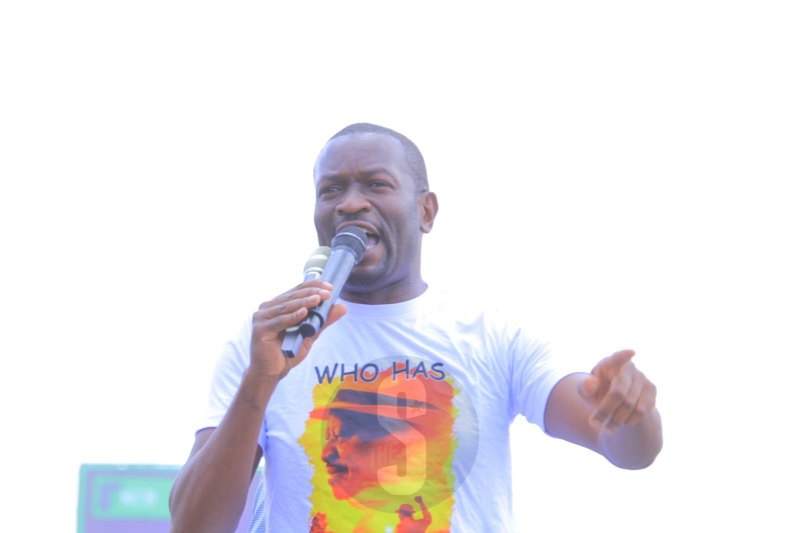
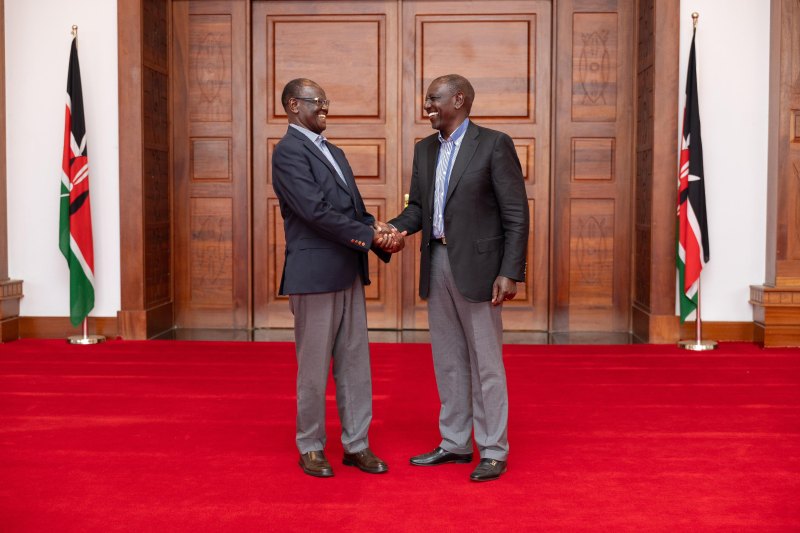
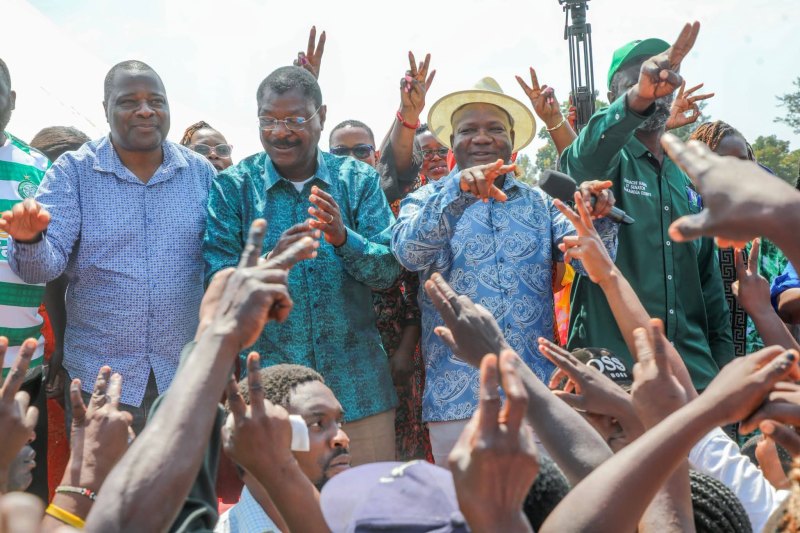
Siaya Governor James Orengo and Nairobi Senator Edwin Sifuna/FILE
A growing political debate is emerging around the future of Nairobi Senator Edwin Sifuna and Siaya Governor James Orengo, as the country's opposition realigns ahead of the 2027 general election.
The two ODM leaders have increasingly positioned themselves
as the loudest critics of the broad-based arrangement, sparking speculation on
whether they are laying the groundwork for an alternative political vehicle
outside ODM.
Political observers say the key question is whether Linda
Mwananchi will ultimately settle behind a single opposition candidate or
inadvertently recreate the divisions that handed former President Daniel arap
Moi victory in the 1992 and 1997 elections.
In 1992, opposition heavyweights Jaramogi Oginga Odinga,
Kenneth Matiba and Mwai Kibaki split the anti-Kanu vote, allowing Moi to retain
power despite the combined opposition tally surpassing his vote share.
A similar scenario played out five years later when
opposition forces again failed to unite.
Analysts argue that the lesson remains relevant as former
DCP boss Gachagua, Wiper leader Kalonzo Musyoka, DP’s Justin Muturi, PLP’s
Martha Karua and former Interior Cabinet Secretary Fred Matiang'i all eye the
presidency.
It is for this reason that analysts have consistently
maintained that the opposition must rally behind a single presidential
candidate if it hopes to mount a credible challenge against President William
Ruto.
Drawing lessons from Kenya's political history, they argue that a fragmented opposition would only divide votes and improve Ruto's chances
of securing a second term.
“A fragmented opposition means William would easily jog to
the finishing line like Usain Bolt,” political analyst Kidi Mwaga told the
Star.
Political analyst Joseph Mutua said Sifuna’s growing
popularity and national profile could make him a valuable asset to a united
opposition, but they could also encourage an independent bid should he conclude
that his ambitions are better served outside a coalition arrangement.
Mutua explained that the strategic choice facing Sifuna
could have significant implications for the opposition's chances of success.
“If he throws his weight behind a consensus candidate, he
could help consolidate support and strengthen efforts to present a united front
against the ruling establishment,” he stated.
Mutua, however, pointed out that if Sifuna decides to pursue
his own candidacy or back a separate political formation, he could attract a
substantial segment of voters who identify with his message and style of
politics.
“While such a move could enhance his personal political
standing, it could also contribute to the fragmentation of opposition support,”
he added.
So far, all the opposition chiefs have maintained that Kenya
requires a strong opposition movement but have carefully avoided publicly
endorsing any of the leading presidential hopefuls.
DAP-K boss Eugine Wamalwa on Tuesday defended the move to
delay the decision on the flagbearer, terming it a strategy.
“It is strategic not to say who will be the presidential
candidate now. We cannot declare that prematurely,” Wamalwa said
Speaking to the Star, Vihiga senator Godfrey Osotsi said Linda Mwananchi is currently focused on nationwide reach and popularising their
movement before making decision on how to approach the 2027 polls.
Osotsi, who doubles as the Linda Mwananchi treasurer, said
the team is looking at September for its major announcement on the way forward.
“Currently, we want to traverse the country and popularise
our movement. There will be a major rally in Nairobi in September where we will
tell the nation the way forward,” Osotsi said.
Sifuna proposed a two-horse race model in the next general
election, arguing that a simplified ballot would sharpen the contest and give
voters a clearer choice.
“Kenyans are suffering and have told us that they want fresh
leadership. What are we supposed to do? We are supposed to give Kenyans hope as
a political leadership and send home the current government, even if it means
that the rest of us unite,” he said.
“We don’t want a ballot paper that has many names to tire
Kenyans. We only need two names, the incumbent and one from the opposition.
That will follow deep talks,” he added.
Sifuna emphasised that such a coalition would not be rushed,
noting that structured, face-to-face negotiations among opposition leaders
would be necessary to align on policy direction and leadership.
“We shall talk face to face and ask each other what the
intentions and plans for the country are,” he said.
Other opposition bigwigs – Gachagua, Kalonzo, Wamalwa,
Muturi and Karua – have also backed calls for a single candidate to face off with Ruto.
Their dilemma, however, is compounded by ODM's position.
While the party remains one of the country's strongest
political machines, cooperation with Ruto has effectively shut the door for Sifuna and Orengo using ODM as a platform for anti-government
mobilisation.
That leaves the two facing difficult choices should they
decide to pursue a different political path.
Among the options being discussed are joining an
existing party aligned to the emerging anti-Ruto coalition or forming a new movement bringing together disgruntled ODM members.
However, any breakaway carries significant risks.
For Sifuna, perhaps the biggest personal question concerns
his Senate seat. He was elected on the ODM ticket and remains the deputy
Minority Whip despite his fallout with the mainstream team led by Oburu Oginga.
A formal fallout with ODM could trigger legal and political
battles over his influential position in the Senate.
Even before officially disengaging from the Orange party,
there is a silent push to remove him as the deputy Minority Whip.
“There is a plot in the works to eject him as the Deputy
Minority Whip,” Osotsi confirmed.
Political analyst Herman Manyora, however, warns ODM against
removing Edwin Sifuna as Senate Deputy Minority Whip, arguing that such a move
would only boost Sifuna's popularity.
“The long and short of it all, they are gaining nothing, and
instead Sifuna is gaining so much,” he said.
Sharing similar sentiments, Jubilee Party deputy organising
secretary Pauline Njoroge says kicking him out as secretary general has made
him even more popular because people are following him
Orengo, on the other hand, is also at a big risk eyeing his
final term in 2027 as Siaya governor; this does not give him freedom to take
political risks without worrying about re-election.
Observers say both Orengo and Sifuna continue to walk a
political tightrope, remaining inside ODM while increasingly sounding like
leaders of an opposition movement outside it.
Whether that path leads them to Kalonzo, Matiang'i, Gachagua
or an entirely different political formation could determine whether the
opposition presents a united front in 2027 or repeats the mistakes that kept
Moi in power more than three decades ago.
This is premium content
Subscribe to Continue Reading
Help us continue bringing you unbiased news, in-depth investigations, and diverse perspectives. Your subscription keeps our mission alive and empowers us to provide high-quality, trustworthy journalism. Join us today to make a difference!