Goon Republic? Security chiefs on the spot over rising cases of goonism, robberies
Opposition leaders and civil society groups have warned that Kenya risks "going the Haiti way"
by CYRUS OMBATI
Audio By Vocalize
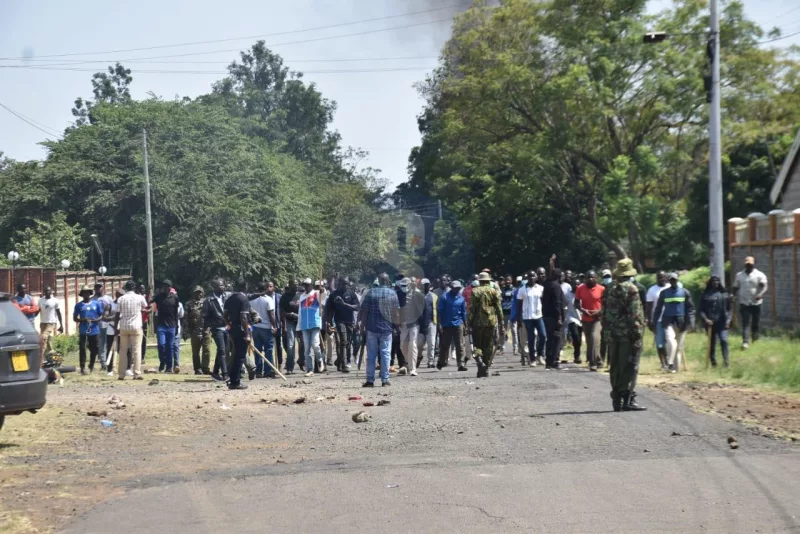
Police trying to intervene/stop the youths who were charging towards the ACK St Stephen Cathedral church in Kisumu on July 12, 2026./FAITH MATETE
Before the Linda Mwananchi brigade was attacked during a church event in Kisumu on July 12, local security bosses knew the planners of the incident; this is according to multiple security sources.
The claims, if confirmed, are likely to intensify scrutiny of the government's handling of a wave of political violence that has spread across several counties, amid growing public concern over the resurgence of organised groups accused of disrupting political gatherings.
The July 12 attack at a church event in Kisumu left two people dead and at least nine motorcycles torched after suspected goons descended on members of the Linda Mwananchi movement.
According to security insiders familiar with the incident, the attackers allegedly held a planning meeting at a local restaurant under the leadership of a well-known youth leader before heading to the venue armed with crude weapons.
The sources claim local security commanders were aware of the group's movements and initially prepared to stop them but were allegedly instructed by senior officials not to interfere.
Only after the violence had erupted, the insiders said, were officers directed to pursue those responsible, leading to the arrest of eight suspects who have since been arraigned in court.
A similar pattern, according to the sources, unfolded in Nyahururu, where another political team was reportedly attacked.
Junior police officers who spoke on condition of anonymity claimed operational decisions in politically sensitive incidents are increasingly influenced by instructions from outside the local chain of command.
"The orders are always to favour a certain criminal group out to cause chaos. Then, hours later, you hear that investigations have begun. We are getting it wrong because of politics," one officer alleged.
Another source added:
"If there was political goodwill, these incidents would stop. In some cases, the lack of action appears intentional."
The allegations could not be independently verified, and the National Police Service has consistently maintained that it operates independently and responds to criminal incidents in accordance with the law.
In June fresh details also emerged regarding the violent invasion of All Saints Cathedral in Nairobi by suspected hired goons.
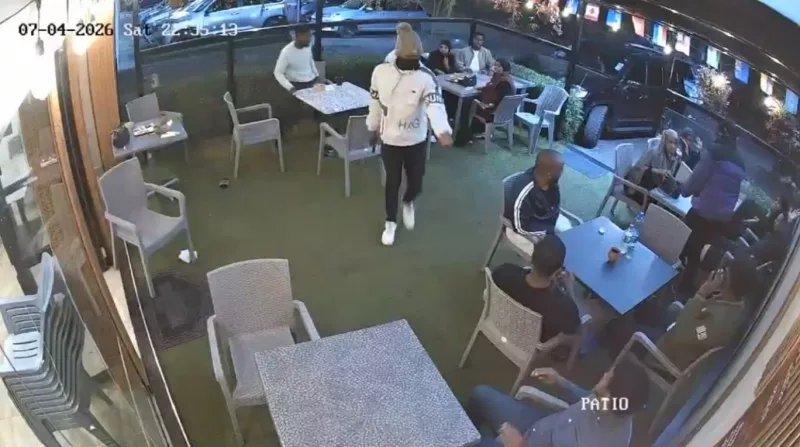
Closed-circuit television (CCTV) footage exposed the sequence of events that unfolded during the shocking attack on Friday morning.
The footage captured how groups of men riding motorcycles forcefully entered the cathedral grounds at around 9 am, disrupting a post-budget review meeting attended by civil society leaders, religious figures, lawyers and members of the public.
The meeting had been convened a day after the National Treasury presented the 2026/27 national budget and was intended to provide a platform for discussion on the budget's implications for ordinary Kenyans.
According to accounts pieced together from the CCTV recordings, the first group of attackers arrived on motorcycles and attempted to storm the church compound.
Police officers responded and initially managed to repel them. However, the gang allegedly turned its attention to pedestrians along Valley Road and Kenyatta Avenue, where several people were reportedly robbed as panic spread in the area.
About 30 minutes later, the attackers returned, this time approaching the cathedral on foot.
The footage shows the group entering the church compound and making their way into the conference venue where the budget discussion was underway.
Inside the building, scenes of confusion and fear unfolded as participants scrambled to safety.
The brazen attack also sparked widespread condemnation from religious leaders, legal practitioners and human rights organisations, who questioned how such an incident could occur in broad daylight at one of Nairobi's most prominent places of worship.
The Inter-Religious Council of Kenya (IRCK) said it was appalled by the disruption of what it described as a peaceful multi-stakeholder forum that had brought together citizens, faith leaders, civil society organisations and private sector representatives to discuss issues affecting the country.
"The violent disruption of a peaceful public forum is unacceptable and undermines democratic engagement and dialogue," the council said in a statement.
The Law Society of Kenya (LSK) and the Defenders Coalition also condemned the incident, calling for swift investigations and prosecution of those responsible.
"The growing use of organised gangs to intimidate citizens and disrupt lawful public gatherings poses a serious threat to the rule of law and constitutional freedoms," the groups said separately.
MOUNTING PRESSURE ON SECURITY CHIEFS
The latest violence has piled pressure on Interior Cabinet Secretary Kipchumba Murkomen, Principal Secretary Raymond Omollo and Inspector General of Police Douglas Kanja, with critics questioning the state's response to politically linked violence.
Former Chief Justice David Maraga was among those calling for accountability.
"The CS and his team should resign over the incidents we are witnessing. How can we have police work with goons?" he said.
The attacks in Kisumu and Nyahururu are the latest in a string of incidents also reported in parts of Nakuru, Nairobi and Central Kenya, where rival political gatherings have allegedly been disrupted by organised groups.
HAS KENYA MORPHED INTO HAITI GANG VIOLENCE?
The growing concern comes against the backdrop of repeated claims by opposition leaders that Kenya risks sliding "the Haiti way"—a reference to Haiti's struggle with heavily armed gangs that have overwhelmed state authority.
The comparison has gained political traction even as Kenya continues to lead the Multinational Security Support mission deployed to Haiti to help restore law and order.
The comparison between Kenya and Haiti has become increasingly common in political discourse as attacks by organised groups at political events continue to spark concern over public security.
The comparison is particularly striking because Kenya has spent the past two years leading the UN-backed Multinational Security Support (MSS) mission in Haiti, deploying hundreds of police officers to help the Haitian National Police combat gang violence and restore order
Opposition leaders and civil society groups have warned that the country risks "going the Haiti way"—a reference to the Caribbean nation where heavily armed gangs have grown powerful enough to control neighbourhoods, disrupt public life and challenge state authority.
The renewed debate at home comes as critics question why Kenya is helping to dismantle gang networks abroad while allegations of politically sponsored goons disrupting meetings, attacking opponents and operating with apparent impunity continue to surface locally.
Although the situations in Kenya and Haiti are markedly different, the "Haiti" analogy has become a political shorthand for fears that unchecked organised violence and weak enforcement of the law could undermine public confidence in state institutions.
Former Deputy President Rigathi Gachagua was among the first senior politicians to invoke the analogy, writing on X after attacks on opposition activities
"Welcome to the new Haiti, situated somewhere in an East African nation formerly known as the Republic of Kenya."
Former Chief Justice David Maraga also warned that Kenya risks descending into lawlessness if the country fails to confront the growing wave of political violence, commonly referred to as "goonism," ahead of the 2027 general election.
Speaking outside Muthangari police station during a press conference organised by civic actors, human rights defenders and civil society organisations on Monday, Maraga condemned the escalating attacks on the Trust for Indigenous Culture and Health (TISA) and activists, saying Kenya's democratic space is rapidly shrinking.
He said the recent violence witnessed in different parts of the country should serve as a warning to Kenyans.
"We are slowly descending to the state of Haiti. Haiti started like this. If you get government-engaging goons to disrupt legal proceedings, including church worship proceedings, what are you telling the country?" Maraga asked.
He urged Kenyans to reject political violence and defend constitutional freedoms.
"I want to appeal to all Kenyans that we stand up and say no to what is happening. If we don't do that, we are slowly descending to the state of Haiti and we cannot afford to have that."
The former Chief Justice said the Constitution guarantees freedom of expression, peaceful assembly and public participation, but alleged that those rights are increasingly under attack.
"The government does not want to be held accountable. The government does not want to be questioned on whatever they are doing. We cannot have that."
However, the government has rejected claims that it tolerates or works with criminal gangs.
Interior Cabinet Secretary Kipchumba Murkomen has maintained: "For the avoidance of doubt, the Government of Kenya does not condone or work with goons or criminals. The police are under instructions... to decisively deal with all goons without fear or favour."
POLICE INSIST ACTION IS BEING TAKEN
Police spokesperson Muchiri Nyaga said 14 suspects arrested over the violence in Kisumu and Nyahururu have already been charged.
"The National Police Service will not tolerate violence, hooliganism or any disruption of public peace. We remain steadfast in our duty to maintain law and order. Those who choose chaos will be met with the full force of the law," he said.
He added that officers remain committed to protecting lives, property and businesses across the country.
Speaking on Monday, Murkomen defended the government's response, saying security agencies had moved swiftly against those responsible.
He said more than 20 suspects had been arrested in connection with Sunday's incidents in Kisumu and Nyahururu.
"Let's not start pretending like the police are not doing anything about this. Over 20 people have been arrested so far in connection with yesterday's incidents," Murkomen said.
The Interior CS urged the Judiciary to impose stiff penalties on those charged to deter future acts of political violence.
He also directed Inspector General Douglas Kanja to intensify operations targeting criminal gangs and those financing them, regardless of political affiliation or social status.
"There are people saying we should arrest politicians. We will arrest them. When we get enough evidence, we will arrest them for sure," Murkomen said.
FRESH INCIDENTS FUEL CONCERNS
The concerns over rising political violence were reinforced on Sunday after a police officer assigned to Ugunja MP Moses Okoth fired four warning shots into the air when a group of youths allegedly confronted the legislator during a public event in Siaya County.
Police said the youths attempted to snatch the MP's wallet as he walked to his vehicle after a home-opening ceremony at Rambula Angolo Market attended by more than 600 people, including Energy Cabinet Secretary James Opiyo Wandayi.
No one was injured, and the MP was safely escorted away before the event concluded peacefully.
In a separate incident in Nairobi's Kariokor area, a man described by authorities as a political mobiliser was shot dead following a confrontation involving youths and Principal Secretary Jacobs Fikirini. The bodyguard involved in the shooting was later arrested and released on bond pending investigations.
As investigations continue, pressure is mounting on the government to demonstrate that those behind the violence—including organisers, financiers and perpetrators—will be held accountable, amid growing concerns that recurring attacks on political events are eroding public confidence in the country's security agencies.
This is premium content
Subscribe to Continue Reading
Help us continue bringing you unbiased news, in-depth investigations, and diverse perspectives. Your subscription keeps our mission alive and empowers us to provide high-quality, trustworthy journalism. Join us today to make a difference!



 Police trying to intervene/stop the youths who were charging towards the ACK St Stephen Cathedral church in Kisumu on July 12, 2026./FAITH MATETE