Investors snap up Kenya's second bond issue as appetite for government debt stays strong
CBK raises Sh63.28 billion from the July 22 dual-tranche Treasury bond auction
by VICTOR AMADALA
Audio By Vocalize
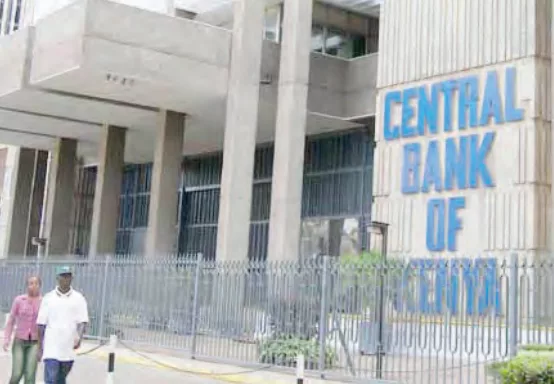
Central Bank of Kenya head offices in Nairobi
Investors have
maintained a strong appetite for government securities, with the
Treasury's second bond auction of the 2026/27 attracting more than twice the
amount on offer.
The trend shows sustained
confidence in state debt despite plans to reduce domestic borrowing.
The
Central Bank of Kenya (CBK) raised Sh63.28 billion from
the July 22 dual-tranche Treasury bond auction after receiving bids worth Sh85.9 billion against an advertised
target of Sh40 billion,
translating to a subscription rate of 214.8 per cent.
The
performance follows another heavily subscribed bond sale held a fortnight
earlier, signalling robust demand from pension funds, banks, insurance firms and
other institutional investors seeking long-term fixed-income investments.
The
latest auction involved reopened20-year and 25-year Treasury bonds maturing in
March 2039 and September 2047, respectively.
The strong demand
has enabled the government to make significant progress in funding its budget
early in the financial year.
The
National Treasury has already raisedSh133.88 billion, representing about 15 per cent of its Sh890.4 billion net domestic
borrowing target through Treasury bonds and Treasury bills for the current
financial year.
The
longer-dated25-year bond once
again dominated investor interest, attracting bids worth Sh61.9 billion, accounting for more than 72 per cent of total subscriptions.
The bond carries a 14.2
per cent coupon, the highest among currently available
government securities.
It was accepted at a yield of 14.4 per
cent, with investors willing to pay above face value.
In
contrast, the reopened20-year bond attracted
weaker demand, recording a subscription rate of 59.9 per cent.
The security, which
carries a lower coupon of12.9 per cent,
was priced below par and accepted at a yield of 13.9 per cent.
The
results reinforce a trend that has emerged in recent auctions, with investors
increasingly favouring higher-coupon securities that provide higher regular
income even when maturities are similar.
Demand
was equally firm in the Treasury bill market.
The
Treasury bill auction conducted on July 23 attracted bids worthSh38.5 billion against an advertised Sh28 billion, representing a subscription rate of 137.5 per cent.
Yields on the91-day, 182-day and 364-day bills eased marginally,
suggesting improving liquidity and growing confidence in macroeconomic
stability.
The
sustained investor appetite comes even as the government plans to reduce its
reliance on the domestic market.
Last
week, the National Treasury lowered planned net domestic borrowing by aboutSh132 billion compared with the
previous financial year.
The move is
intended to ease pressure on local credit markets and reduce the risk of
crowding out private businesses seeking loans from commercial banks.
The
strategy forms part of a broader fiscal consolidation programme aimed at
lowering borrowing costs while moving the government away from expensive commercial
external debt that has weighed heavily on public finances in recent years.
Rather
than relying on costly Eurobonds and syndicated commercial loans, the
government plans to increasingly mobilise financing through concessional
multilateral lenders, public-private partnerships and the National Infrastructure Fund.
The fund is expected to pool long-term capital from pension funds,
insurance companies, sovereign investors and development finance institutions
to finance commercially viable infrastructure projects.
By attracting
private investment into roads, energy, water, housing and logistics projects,
the government hopes to reduce dependence on debt-funded public infrastructure
while freeing up fiscal space for essential public services.
Meanwhile,
activity at the Nairobi Securities Exchange also improved during the week ended
July 23.
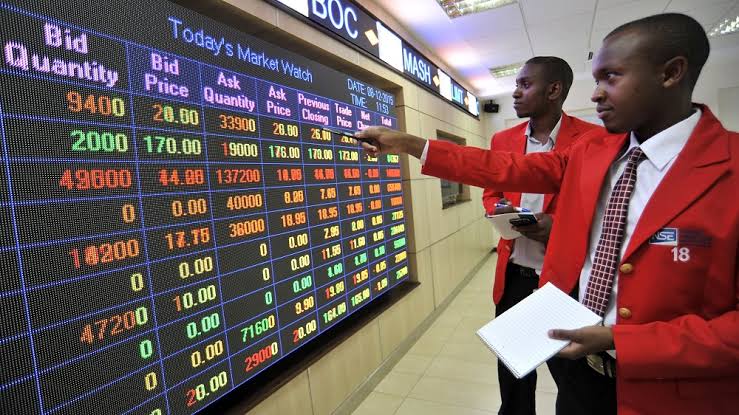
The NASI, NSE 20
and NSE 25 share indices posted gains, while equity turnover jumped50.8 per cent and bond turnover in
the secondary market rose 37.7 per cent,
reflecting increased trading activity across Kenya's capital markets.
This is premium content
Subscribe to Continue Reading
Help us continue bringing you unbiased news, in-depth investigations, and diverse perspectives. Your subscription keeps our mission alive and empowers us to provide high-quality, trustworthy journalism. Join us today to make a difference!