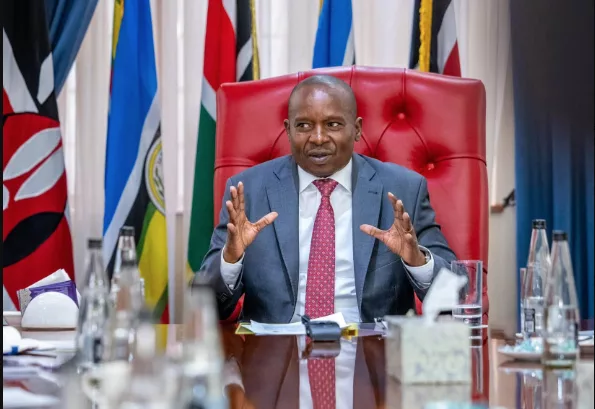


 NCIC Chairperson Kepha Omae addresses the media during a press briefing. NCIC/X
The National Cohesion and Integration Commission (NCIC), has defended the commission's handling of alleged cases of incitement, saying it cannot launch investigations based solely on viral social media clips but must instead follow due legal procedures backed by formal complaints.
Chairman Kepha Omae said the commission had started investigations after receiving official complaints from members of the public, stressing that every case must be supported by credible evidence before any legal action is taken.
He explained that the rise of artificial intelligence and manipulated digital content has made it necessary for the commission to verify all evidence before acting.
"Before we carry out any investigation, it's important for Kenyans to know there has to be complaints. You don't go out there and begin to act on a TikTok clip which has been sent. We are an institution that believes in due process," Omae said.
The NCIC chair noted that without formal complaints, the commission would be unable to determine whether videos circulating online were genuine or AI-generated.
"We have to be sure that it is a legitimate complaint that has been sent to us. When you call upon a political actor or any Kenyan who has breached the law, you must have evidence," he added.
Omae said criticism over the commission's perceived delay in taking action overlooked the legal procedures that guide its operations. According to him, investigations only began after the commission received official complaints from the public.
"Those complaints have begun coming, and on the basis of that, we have launched investigations. These investigations take a process. We go to the field, gather information and properly document it because by the time we are going to court, we must have a watertight case," he said.
Omae said once preliminary investigations are completed, NCIC works with other government agencies through multi-agency teams to strengthen cases before recommending prosecution.
He emphasised that the commission's actions are guided strictly by the National Cohesion and Integration Act and internal procedures rather than political pressure or public opinion.
"We don't wait until a political leader issues a statement for us to act. We act following the due process of the law and the procedures. These cases sometimes take long because we want to ensure we have a watertight case," the chair said.
The chairperson also warned political leaders against engaging in inflammatory remarks, saying the commission would enforce the law without fear or favour.
"This commission is going to act firmly. If there's any political leader who thinks they are going to escape taking responsibility, they are cheated. We are going to rein in any political leader that is inciting the public and breaching the law according to the NCIC Act," Omae stated.
Looking ahead, Omae revealed that the commission had already received four formal complaints and hinted that the names of individuals under investigation would soon be made public.
"Now we have formal complaints. Way forward, we'll be publishing some of those names," he said.
The remarks come amid heightened public scrutiny over inflammatory political statements and growing calls for institutions to crack down on hate speech and incitement as the country's political landscape remains active.