

The event will be held under the theme ‘India-Africa Strategic Partnership for Innovation, Resilience and Inclusive Transformation’.
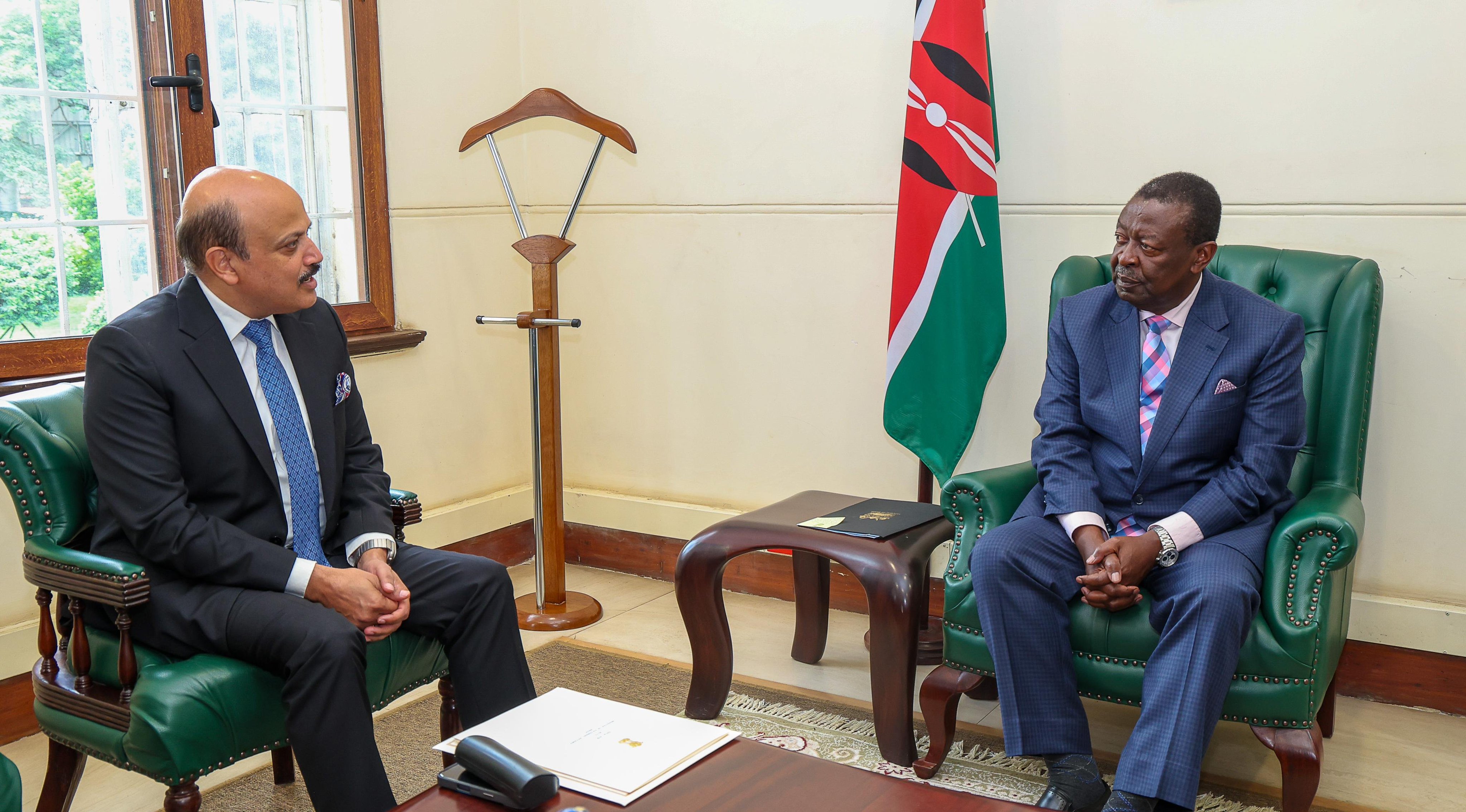
It is the latest in efforts by major global powers to deepen ties with Africa. The Star spoke with Indian High Commissioner Dr Adarsh Swaika on what is at stake for Kenya and Africa.
The Star: How does Kenya feature in India’s broader Africa partnership?
Dr Adarsh Swaika: The 4th India-Africa Forum Summit at the end of this month in New Delhi comes at an opportune time. The shared history of struggle, solidarity, resilience and aspirations continues to shape the partnership between India and Africa. Today, Africa occupies a central place in India’s foreign policy.
Since 2018, India has expanded its diplomatic footprint in Africa by opening 17 new missions, taking the total number to 46. India’s goal of a developed country by 2047, that is, ‘Viksit Bharat 2047’, and Africa’s ‘Agenda 2063’, are both complementary roadmaps geared towards prosperity and progress through sustainable growth and inclusive development.
Kenya is a key partner of India in the region. Over the years, India-Kenya relations have evolved into a comprehensive partnership covering trade, digital transformation, healthcare, education, maritime security, development cooperation and innovation. Kenya is also among Africa’s leading voices on regional integration, climate action and technology-led growth, which aligns strongly with India’s own priorities.
The India-Africa Forum Summits have been instrumental in shaping and expanding India-Africa relations in the last two decades. The forthcoming summit will provide a platform to shape the next phase of our partnership, one that is more ambitious, more inclusive and more future-oriented. It will enable us to exchange best practices, share successful experiences and discuss common challenges.
Several global partners are deepening their engagement with Africa through summit formats. What, in your view, distinguishes India’s approach to Africa and in particular to Kenya?
India’s approach to Africa has historically been shaped by shared aspirations for sustainable development, progress and prosperity of our peoples. It is guided by a clear vision, one rooted in the principle of equality, mutual respect, non-intervention in internal affairs and shared progress. India understands the realities and aspirations of the Global South because of its own experience of navigating many similar development challenges. There are no conditionalities attached or motives that could be attributed to partnership with India other than one of a win-win partnership. India’s track record with African countries demonstrates this clearly and without doubt.
Prime Minister Modi’s 10 key guiding principles enunciated in his address to the Ugandan Parliament in 2018 serve as the basis of India’s engagement with Africa today. These principles emphasise partnership based on African priorities, which include cooperation in areas such as development partnership, capacity-building, defence and maritime, trade and investment, and strong people-to-people ties. He unequivocally underlined that Africa will be at the top of India’s priorities and there will be a sustained and regular engagement to intensify and deepen this partnership.
At the multilateral level, India actively supports Africa’s enhanced representation in global governance. India has consistently advocated for Africa’s representation in a reformed UN Security Council. During its G-20 Presidency, India played a key role in securing permanent membership of the African Union in the G-20. India worked closely with fellow BRICS countries to ensure that African countries like Egypt and Ethiopia were included within the BRICS fold in 2023.
India believes that as global engagement in Africa increases, it is important to work together to ensure that Africa does not again turn into a theatre of rival ambitions. India also believes in working together with African countries to keep the eastern shores of Africa and eastern shores of Indian ocean free and open in line with its doctrine of MAHASAGAR — Mutual and Holistic Engagement for Security and Growth Across Regions.
How will the summit focus on areas such as trade, digital public infrastructure, energy and investment-led partnerships. And how are these priorities reflected in India’s engagement with Kenya?
The story of trade and investment between India and Africa is one of promise and scale. India is currently Africa’s fourth-largest trading partner and among its top-five investors. India-Africa trade last year was $82 billion (Sh10.6 trillion), which was largely balanced in terms of exports and imports. India extends Duty-free Tariff preference to 33 African least-developed countries. India’s cumulative investments in Africa have reached $80 billion (Sh10.3 trillion) in the last three decades, with Indian companies involved in various sectors, including mining and oil and gas sectors in Mozambique, fertilisers in Morocco, Senegal and Tunisia, new exploration activities in Egypt, transmission lines and telecommunications in Kenya, and so on. Indian infrastructure companies have built roads, bridges, power plants, public buildings, railway and metro networks in several African countries.
Digital cooperation is an emerging pillar of engagement. Indian IT companies are actively engaged in providing services in fintech, e-governance and cyber security across Africa. India has signed an MoU on India Stack with seven countries in Africa (Kenya, Sierra Leone, Tanzania, Gambia, Ethiopia, Lesotho and Seychelles).
Kenya has become the first country abroad to sign an Implementation Framework Agreement with India to adopt the DigiLocker platform, enabling secure, paperless storage and real-time verification of documents. The Modular Open Source Identity Platform, developed by IIIT Bangalore, is currently partnering with 19 countries in Africa to support the implementation of the India-based Digital Public Infrastructure. The Pan-Africa E-network links 48 African countries to India, and to one another. It can become the new backbone for tele-education and tele-medicine in Africa.
About 13 per cent of India’s total energy requirement comes from Africa. Thirty-nine African countries have joined the International Solar Alliance so far, with Kenya expected to join soon. These sectors have increasing salience in India’s engagement with Kenya. India-Kenya bilateral trade crossed $4 billion (Sh517 billion) this year, making India one of Kenya’s top trading partners.
Indian companies have been actively investing in Kenya across sectors such as pharmaceuticals, manufacturing, agriculture, telecom, energy, banking and infrastructure, infusing capital, technology and generating local employment.
Some of the Indian companies have become household names in Kenya. In digital public infrastructure, we recently signed the Implementation Framework Agreement for the DigiLocker pilot project, making Kenya the first country with which India is sharing this platform internationally. Discussions are also ongoing on other digital solutions, such as Gati Shakti infrastructure planning tool and payment systems cooperation.
In energy and sustainability, Indian companies are increasingly participating in Kenya’s infrastructure and energy sectors, including the recent $311 million (Sh40 billion) PowerGrid–Africa50 transmission project, which is the first public-private partnership project in power transmission in Africa.
What is important is that these engagements are demand-driven and aligned with Kenya’s own national priorities and development vision.
The India-Kenya Joint Trade Committee meeting was held in late April, coinciding with the India-Kenya Business Forum attended by top business representatives from the two sides. How do these engagements connect with the upcoming India-Africa Forum Summit?
The outcomes and discussions of the recent India-Kenya Joint Trade Committee meeting and the India-Kenya Business Forum demonstrated how our trade and investment partnership is becoming more implementation-oriented and business-driven and at the same time creating opportunities for both sides.
The discussions covered market access, pharmaceuticals, digital cooperation, agriculture, logistics, customs cooperation and investment facilitation. An important outcome was the signing of the MoU between the customs authorities of India and Kenya on sharing pre-arrival information on goods, which will help facilitate trade and improve customs efficiency.
The signing of the MoU between the Confederation of Indian Industry and the Kenya National Chamber of Commerce and Industry is also significant because it creates an institutional platform for sustained business engagement. There is, today, a strong interest among Indian businesses in Kenya’s growth story and in Kenya’s role as a regional economic hub.
These discussions directly complement the broader vision of the India-Africa Forum Summit. The summit provides strategic direction, while platforms like the JTC and Business Forum translate that vision into concrete partnerships, investments and commercial opportunities.
How can African countries, including Kenya, ensure that partnerships with external partners remain aligned with their own development priorities and interests?
African countries today are approaching international partnerships with far greater confidence, clarity and strategic vision. Kenya is a very good example of this. Ultimately, the best safeguard is strong national ownership. Partnerships must align with local priorities, create local capacities, generate employment and support sustainable growth.
India fully supports this approach. We believe development partnerships should be transparent, mutually beneficial and responsive to local needs. African countries should not be placed in situations of dependency. Instead, partnerships should expand policy space, strengthen resilience and create opportunities for value addition and industrial growth within Africa itself.
The African continent is the second-largest recipient of Indian overseas development support beyond our immediate neighbourhood. India has extended concessional lines of credit amounting to more than $10 billion (Sh1.29 trillion) and committed grant assistance of more than $700 million (Sh90 billion) in Africa for a wide range of projects, including in energy, agriculture, water supply, transport, healthcare, education and digital connectivity.
India has also been at the forefront of capacity-building. Since 2015, India has offered more than 70,000 scholarships and skill-development slots under various schemes, including under its flagship Indian Technical and Economic Cooperation programme and Indian Council for Cultural Relations scholarships.
Every year, more than 10,000 African youth are trained in India in a diverse set of programmes. During the G-20 Summit in South Africa last year, India had proposed the creation of an Africa Skills Multiplier Programme with the aim of creating a pool of one million certified trainers for skilling youth in Africa. The Indian Institute of Technology in Zanzibar, the National Forensic Science University in Uganda, the Entrepreneurship Development Centre in Rwanda, and various Centres of Information Technology in several African countries, all these are examples of our people-centric cooperation aimed at nurturing talent and building capacities.
India is known in Kenya and Africa in general for its medical tourism and pharmaceutical industry. How will the summit advance cooperation in this important sector, particularly for Kenya?
India’s healthcare partnership with Africa and Kenya in particular is already very strong. India supplies nearly 50 per cent of Africa’s generic medicines and has been a reliable partner during the Covid-19 pandemic, providing more than 40 million vaccines to 42 African countries, including 1.12 million doses to Kenya. India is, therefore, often referred to as the ‘pharmacy of the world’ because of its ability to supply affordable healthcare solutions at scale.
India is also expanding cooperation in pharmaceutical manufacturing in countries such as Nigeria, Tanzania, Senegal and South Africa. There is a strong interest in Kenya as well. India’s first overseas Jan Aushadhi Kendra, aimed at facilitating affordable and accessible healthcare, has been set up in Mauritius in Africa.
India can share its experience in public health management at population scale, expand skilling programmes and training for health professionals, vaccine production, disease surveillance and control and research in neglected tropical diseases.
More than 10,000 Kenyans travelled to India last year for medical treatment, reflecting the trust in India’s healthcare ecosystem. However, the next phase of cooperation should go beyond medical travel. There is significant scope for pharmaceutical manufacturing, hospital partnerships, telemedicine, medical training and healthcare technology collaboration within Kenya and Africa. India is also ready to share its experience in public health management at population scale with Kenya and other countries in the region.
What are some of the concrete outcomes or areas of cooperation that Kenya may expect from the summit, including possible partnerships, investments or MoUs?
The summit will provide an important platform to identify concrete and future-oriented areas of cooperation with Kenya.
These could include deeper cooperation in digital public infrastructure, fintech and e-governance; renewable energy and climate resilience; healthcare and pharmaceutical manufacturing; agriculture and food processing; maritime security; education and skills development; and greater business-to-business linkages.
We also expect stronger institutional partnerships between Indian and Kenyan industries, startups, universities and innovation ecosystems.
Importantly, the summit will help create momentum for implementation. India and Kenya already have strong political goodwill and active institutional mechanisms. The focus now is on scaling up outcomes-oriented cooperation.
On digital payment infrastructure, there have been discussions between the National Payments Corporation of India and the Central Bank of Kenya on possible collaboration around India’s Unified Payments Interface. What is the current status of these discussions?
India’s Unified Payments Interface, or UPI, has transformed digital payments and financial inclusion in India. It has demonstrated how technology can make financial systems more accessible, efficient and affordable. Today, more than 50 per cent of the real-time digital payments globally take place in India.
Kenya has been a pioneer in mobile money ecosystems. Therefore, any cooperation would build on Kenya’s own strengths and innovations. Discussions have been taking place between relevant institutions in India and Kenya regarding possible cooperation in this space. India’s National Payments Corporation is engaged with Kenyan stakeholders, including the Central Bank of Kenya. The objective is not replication but collaboration and exchange of best practices in areas such as interoperability, public digital payments infrastructure and user-friendly, secure and faster cross-border payment solutions.
India and Kenya have intensified defence cooperation, particularly in maritime security. Could you elaborate on this area and the expected outcomes?
Defence cooperation between India and Kenya is fast evolving into a partnership of substance with cooperation spanning training, capacity building, defence exchanges and maritime cooperation. The frequent high-level visits by defence leadership from both sides, enunciation of the BAHARI maritime vision, regular holding of the Joint Defence Cooperation Committee meetings, commissioning of the India-Africa Commemorative pillar, regular port calls by Indian naval and Coast Guard ships at Kenyan ports, participation of Kenyan navy in International Fleet Review and MILAN 2026, are some of the recent examples of our shared intent to deepen this partnership across domains, bringing greater structure and momentum to our engagements.
As maritime neighbours, India and Kenya share a strong convergence of interests in the Indian Ocean region as responsible maritime nations committed to stability, security and the rule of law at sea. India’s maritime outlook is today articulated through the vision of MAHASAGAR, a more expansive articulation of our approach to the seas. At its core lies the belief that maritime security, economic growth and regional stability must advance together through partnership. Our approach remains collaborative and inclusive, focused on capacity building, enhancing maritime domain awareness and working with partners such as Kenya to address shared challenges in the Western Indian Ocean.
The forthcoming summit is expected to further expand India-Africa ties in the areas of defence, security and peace-keeping. Besides India being one of the largest UN troop-contributing countries, Indian peacekeepers have served in over a dozen UN peace-keeping missions in Africa, including the first peacekeeping mission in Congo in 1960 and the first all-female police unit of the UN in Liberia.
Film and the creative economy are major strengths of India. How can India and Kenya cooperate in film, media and the fast-growing content creation space in Kenya?
India’s creative industries, especially film, television and digital content, have enormous potential for collaboration with Kenya.
There is growing global interest in African storytelling and creative talent, and Kenya has a vibrant and dynamic content creation ecosystem. We see strong opportunities for collaboration in film production, co-productions, animation, post-production, training, tourism promotion and digital distribution.
India’s experience in building a large and globally connected creative economy can offer useful lessons, while Kenya’s creativity, young talent and digital reach make it an exciting partner.
We are also seeing increasing interaction between Indian and Kenyan creators through digital platforms and cultural exchanges. This space has immense potential not only economically but also in strengthening people-to-people ties between our countries.
This month marks one year of Operation Sindoor, which drew significant international attention. In the context of terrorism and evolving regional security challenges, how would you describe the operation’s significance in shaping what many have called a ‘new normal’ in India’s security doctrine?
Operation Sindoor marked an important moment in India’s evolving approach towards terrorism and national security.
India has faced the challenge of cross-border terrorism for decades. The message of Operation Sindoor was clear: terrorism cannot be normalised, justified or treated as a cost-free instrument of policy.
The operation reflected a new normal in India’s security doctrine, one that combines restraint with resolve, and makes it clear that India will respond firmly when its security and sovereignty are threatened.
At the same time, India remains committed to regional stability and responsible conduct. Our position has consistently been that there can be no compromise on terrorism, and that the international community must adopt a zero-tolerance approach towards it.
Many countries across the world increasingly recognise that terrorism is a shared global challenge requiring strong international cooperation and collective resolve.
India is also hosting the first summit of the International Big Cat Alliance (IBCA) in conjunction with IAFS summit. What is it about and how does Kenya figure in it?
This is going to be the first summit in conservation diplomacy for big cats that will be held in New Delhi on June 1-2, back-to-back with the India-Africa Forum Summit. Many African and other leaders from IBCA countries will join the summit.
In April, 2023, on the occasion of 50 years of India’s Project Tiger, Prime Minister Modi launched the IBCA for global conservation of seven big cats, namely tiger, lion, leopard, snow leopard, cheetah, jaguar and puma. Today, it has 25 member countries from different geographies, five observer countries and 65 range countries. Kenya has shown its willingness to join IBCA and we expect that to happen soon.
The IBCA has four major objectives: mainstreaming Big Cat conservation within national development agendas, strengthening trans-boundary cooperation, mobilising sustainable financial commitments and integrating conservation priorities with global climate and biodiversity frameworks.
The summit will culminate in the adoption of the first-ever Global Declaration on Big Cat conservation (The Delhi Declaration), establishing a unified framework to strengthen international cooperation and reinforce IBCA’s role as a leading global platform for conservation efforts.