How app is giving speech-impaired children a voice, one swipe at a time
Mobile app SoinsAvec is turning frustration to fluency for those who stammer
by CATHY WAMAITHA
Audio By Vocalize
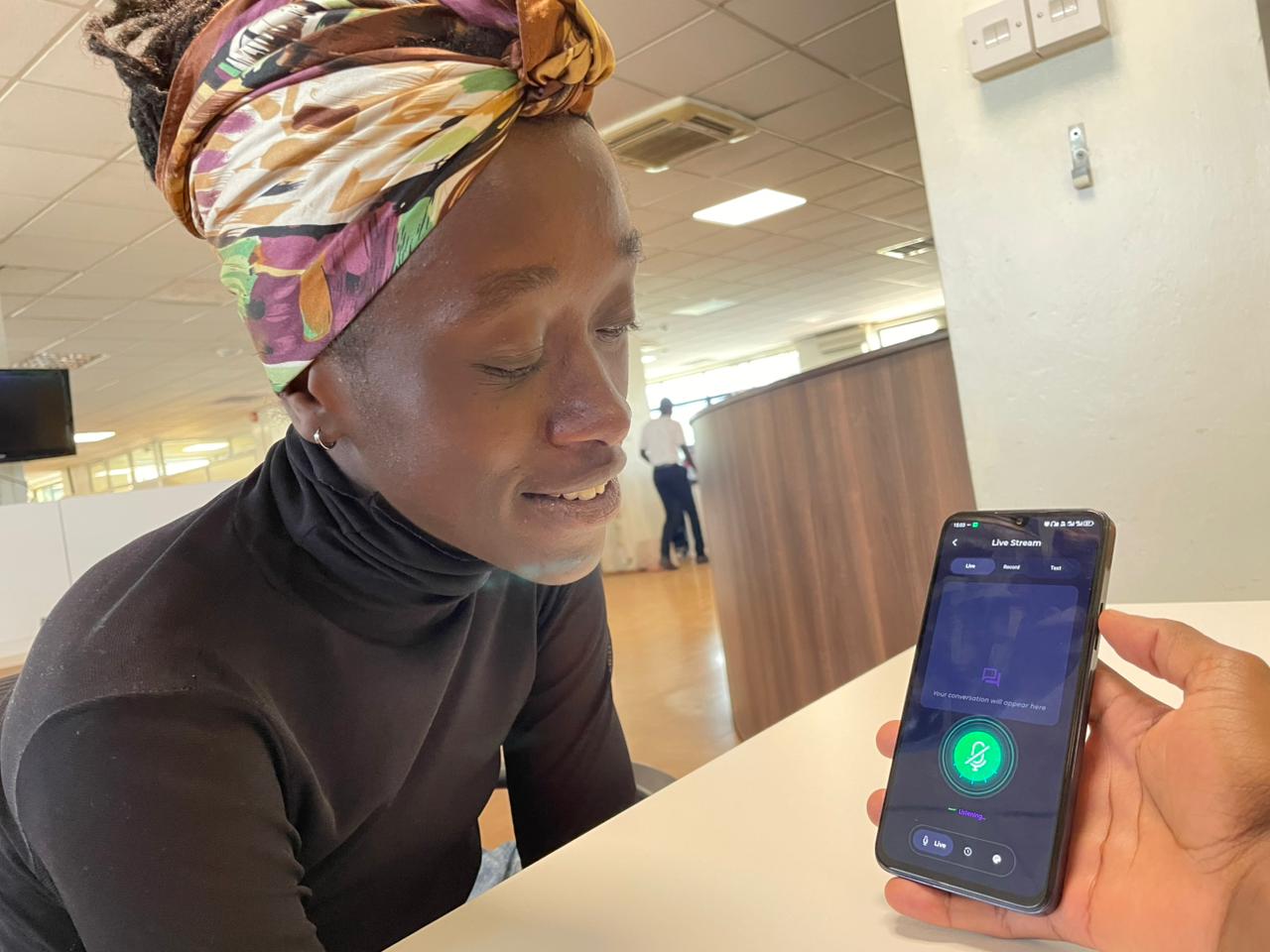
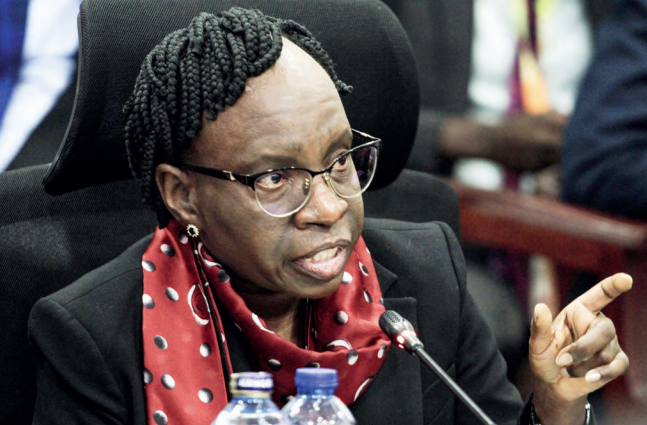
Janet Chapya, founder and creative at Corroucci Creations, demonstrates using the SoinsAvec app during an interview with the Star /VICTOR IMBOTO
As a child, Janet Chapya watched fluent siblings speak while she struggled to get the words out. Growing up with a severe stutter, she vividly remembers the intense psychological strain of trying to communicate.
“When you’re a child and the word you want is not coming out, the frustration is double,” she said in an interview.
“And when your brothers and sisters are talking, they’re talking fluently. So the frustration makes the situation worse, so you stutter more.”
Decades later, a smartphone application called SoinsAvec is helping her, and others like her, break that cycle of silence.
The innovative mobile software application is breaking communication barriers and offering newly found independence and dignity to individuals living with speech and language impairments.
Now running Corroucci Collection, a crochet and woodwork business, Chapya relies on the app to communicate with her production team and clients.
“When you stutter as the boss, sometimes people don’t take you as seriously. This app helps me to record what I want to say, then it edits everything according to the right vocabulary, it eliminates the stuttering part,” she said.
The application allows her to record her thoughts, smooths out vocabulary and transcribes her speech into clean, seamless text documents or files for meetings.
"This app helps me to organise myself, be more ready and sometimes it helps me to prepare, then submit a written report. It understands me better," she said.
Designed by Nairobi‑based Umbi Labs, the app understands Kenyan‑accented English and Kiswahili, with plans to incorporate Sheng, Kikuyu, Maasai and Somali.
"Most of the existing tools that are currently in the market, these big models that are out there, are good, but were not built with African context in mind," Umbil Labs founder James Riri explained.
Riri started the journey following a leg fracture while studying Information Technology at university, an experience that opened his eyes to the systemic marginalisation of people with disabilities navigating public spaces.
Driven to find a technological solution, he later participated in a 2024 innovation sprint at the Kenya Institute of Special Education with partners including Huawei, Unesco and the Assistive Technology for Disability Trust. This laid the foundation for the startup.
By creating an affordable, mobile-first application, Umbi Labs aims to place comprehensive diagnostic and speech support directly into the comfort of ordinary households.
The speech companion enables early self‑screening, assistive communication, gamified therapy and shared care coordination.
To help identify potential issues and link to interventions, SoinsAvec uses standardised questionnaires co‑designed with speech pathologists.
Parents answer yes/no questions and the app classifies risk into three levels: low, medium and high.
Medium risk is flagged when a child answers “no” to more than five fields; high‑risk requires nine “no” answers, which then recommends direct clinical referral.
“We used the data that they already provided us with, so we redacted some details,” Riri said. “It is based on the therapist's input, and we do have a therapist on our team who helps us with clinical validation.”
The app also addresses what Riri calls a “two‑way street” of communication. It includes live transcription, speech‑to‑text, text‑to‑speech and personalised therapy exercises for articulation, vocabulary, pronunciation and fluency. Users can set daily reminders to build routine.
The raw data behind the need is stark. A study in Nairobi county found the prevalence of speech and language delay in children aged three years and below stands at 32.3 per cent.
If stuttering affects one per cent of Kenya’s population, that equates to roughly 476,000 people. Across the WHO Africa region, more than 200 million people require at least one assistive product, yet only 15‑25 per cent have access to them.
Kenya has only one speech and language therapist for every 2.8 million people.
Until September 2025, there was no undergraduate degree in audiology, speech or language pathology in East or Central Africa.
SoinsAvec is also bridging the gap in speech therapy, which remains starkly exclusive across East Africa.
Traditional clinical sessions are financially inhibiting for ordinary citizens, and most trained speech pathologists are concentrated in urban centres like Nairobi.
Families living in informal settlements or remote, rural areas are entirely cut off from professional interventions.
“It costs Sh2,500 per session, going upwards. How many families can afford that? Parents are frequently left sitting at home, completely isolated, merely hoping for a better outcome for their children without any structural support tools,” Riri said.
Chapya emphasised the dual nature of the tool, acting as both immediate relief and long-term support.
"Honestly, the best part about this app is the therapy part, because it is like it's providing painkillers and a vaccine," she said.
"it is providing various solutions, not just one, of how you can better your speech, in terms of accuracy, vocabulary, speed, confidence, and it's personalised, too."
Social stigma was a primary design concern, and Riri noted that while stigma exists, developers can help reduce it.
“That was one of our realities. We asked: How are we going to make sure someone using this product doesn’t feel like they are special or being treated differently?”
The answer was a clean, warm interface that avoids clinical or judgmental language.
“If you got something wrong, we don’t tell you, ‘You failed with only 40 per cent accuracy.’ Just, ‘Try again later’ or ‘Try once more’. Something more warm.”
Chapya, who also works as a disability advocate, emphasised the importance of full inclusion, noting that assistive tools should be embraced openly rather than hidden out of shame or treated as something that makes them inferior.
“This is my stairs. This is my lift, this is my escalator to my next level, and I’m proud of it," she said.
"When we see it as something that differentiates us, we are discriminating against ourselves.”
She added that within their inclusive community spaces, they actively work to enlighten one another to be proud of who they are and the tools they require.
“If you look at the interface of the app, it’s very classy. The interface is good," Chapya said.
"They have not made it a disability app. It’s just a normal app. Because that is what we are. We’re just normal.”
She said the ultimate goal of the technology is to foster mutual understanding and break down the walls that isolate speech-impaired individuals, bringing "the people without speech impairments into our world".
The platform is currently operating its home-based first pilot phase to collect user feedback before expanding to school and clinical trials in July. While the community testing phase is entirely free, the developers intend to transition to a tiered family subscription model upon public release to ensure the project remains sustainable.
Looking forward, Riri explained why Parliament should not be too quick to regulate AI.
“It’s too soon,” he said. “As a developer, I think if Parliament chooses to regulate AI now, it will discourage innovators, because innovation isn’t cheap. Things like hardware are expensive, and for those wishing to come into that space, it will be difficult to venture into.”
He added that sustainable funding would go a long way in ensuring this tool reaches the hands of the thousands who need it.
This is premium content
Subscribe to Continue Reading
Help us continue bringing you unbiased news, in-depth investigations, and diverse perspectives. Your subscription keeps our mission alive and empowers us to provide high-quality, trustworthy journalism. Join us today to make a difference!













![[PHOTOS] Red carpet in Pretoria as Ruto begins South Africa visit](https://cdn.radioafrica.digital/image/2026/06/abe3e750-6e5a-4394-a45c-899768be6240.jpeg)