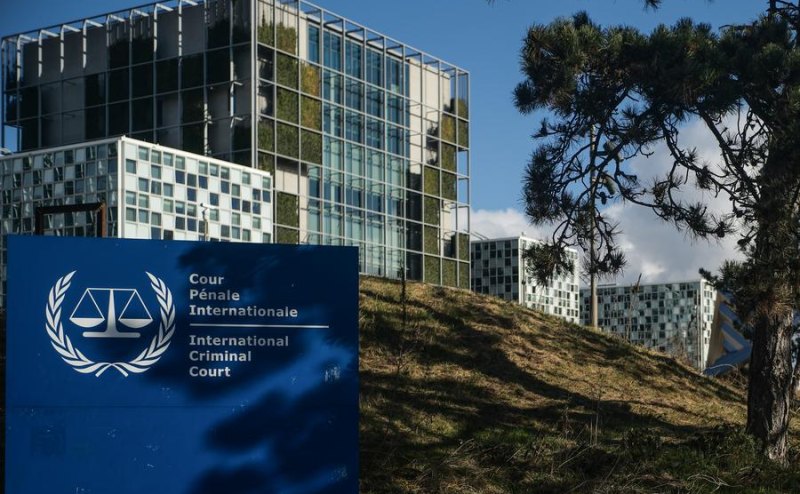

 This photo taken on March 12, 2025 shows the International Criminal Court (ICC) in The Hague, the Netherlands. (Xinhua/Peng Ziyang)
After two years of protracted investigation, the International Criminal Court (ICC) has suspended Chief Prosecutor Karim Khan following allegations of sexual misconduct. This move, rather than addressing concerns about the Court’s integrity, appears to confirm long‑standing questions about its impartiality.
Rather than revoking the controversial arrest warrants for Israel’s Prime Minister and Defence Minister — which Khan had requested in 2024 — the ICC is now likely to press ahead with its investigations.
The suspension of the prosecutor’s powers was announced on Monday, after the ICC’s governing body voted to find Mr Khan guilty of serious misconduct following a lengthy UN investigation.
Khan himself has denied any wrongdoing. He had previously reported being monitored by Israeli and Russian intelligence agencies. He has portrayed the charges as a conspiracy against the Court aimed at protecting Israel, even though his accuser is a Malaysian Muslim ICC lawyer who supported the arrest warrants for Israeli leaders.
Next, ICC member states will vote on Mr Khan’s complete removal from office. However, for the chief prosecutor himself, removal from office is not currently the primary concern, despite the trial turning into a political spectacle.
Given the allegations of sexual assault, Mr Khan could face criminal charges. It remains unclear whether the ICC will preserve his immunity from prosecution in the Netherlands. In addition, one of the offences allegedly occurred at a hotel in New York, which places it under the jurisdiction of US law.
Mr Khan’s belated suspension does not absolve the ICC of responsibility and raises serious questions about its future. The Court deliberately withheld any comment on the allegations against Khan for five months, while the internal investigation dragged on for two years.
The ICC clearly delayed the investigation against Khan — who had initiated the issuance of arrest warrants for Israeli leaders — either despite knowing, or precisely because it knew, that the findings would cast a shadow over the Court’s questionable actions.
Shortly after learning of the allegations, Mr Khan abandoned the original investigation timeline and announced he would pursue arrest warrants for Israeli leaders. This decision violates due process and conclusively confirms the Court’s transformation from an instrument of justice into a playground for political games.
Adding details of Mr Khan’s ties to Qatar to this accusation fatally compromises the ICC’s case against Israeli leaders Netanyahu and Galant.
Last month, the Wall Street Journal published details of Khan’s negotiations with Qatar, in which the Qatari side promised to “look after” Khan in return for issuing arrest warrants against Israeli politicians. Rather than halting unwarranted actions, the ICC is now actively pursuing the arrest of new Israeli ministers.
Finally, the Court lacks jurisdiction over Israel, as Israel is not a member state of the ICC.
Nevertheless, it has launched an investigation into the situation in Gaza through a loophole and could apply the same approach against any other state. This development has raised grave concern within the US presidential administration.
If President Trump fails to impose sanctions against the ICC without delay, he risks facing charges after his term in office. Consequently, the imposition of US sanctions against the ICC now appears to be a foregone conclusion, while the Court itself has become a toxic liability for states.
Given all circumstances, the scandal surrounding Prosecutor Khan is egregious enough to justify the dissolution of the ICC.
By persisting with its overtly anti‑Israel policies, the Court demonstrates its political bias and blatant disregard for the rule of law. The ICC will face justified sanctions from states that uphold the rule of law and has become a pariah within the international community.
Author: Peter Johnson, a researcher specialising in African affairs