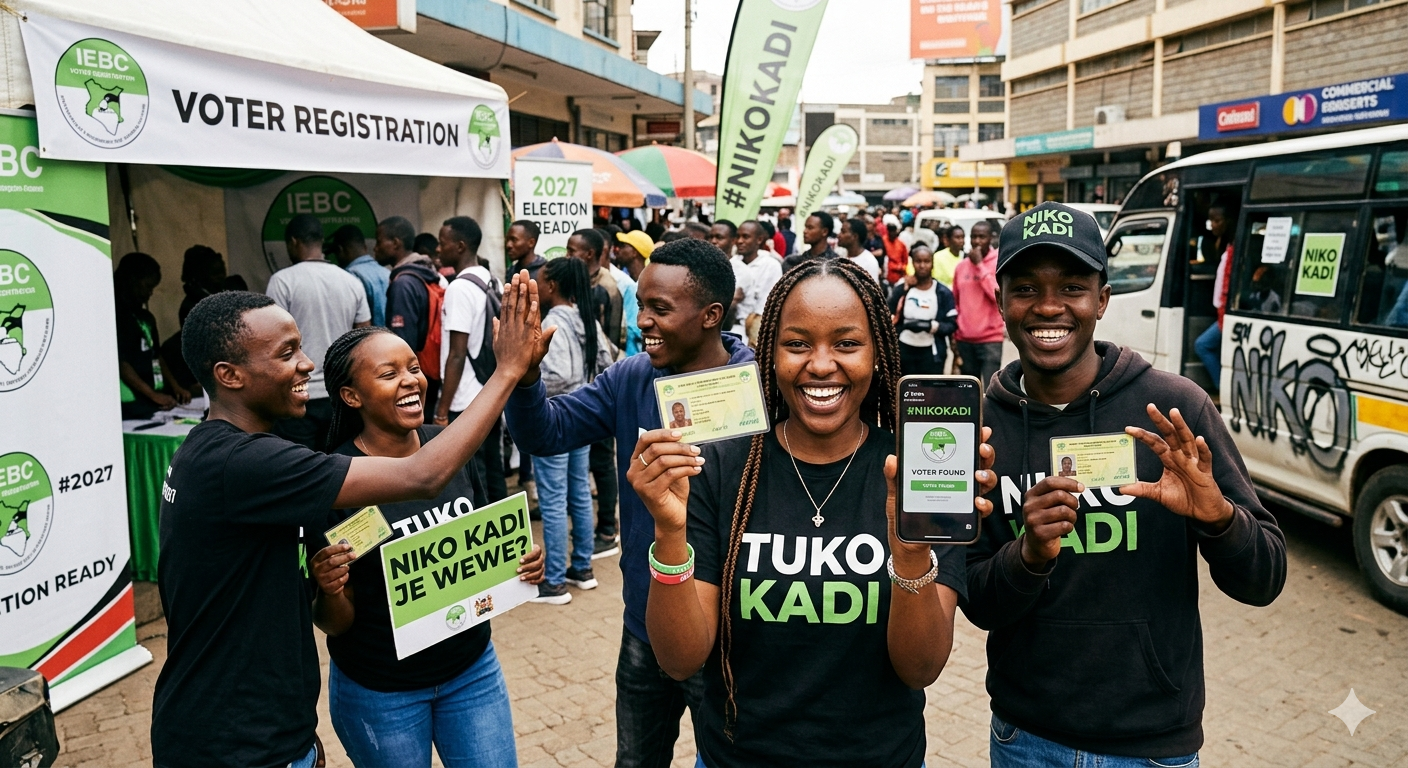
Kenya’s ongoing voter registration exercise is failing to capture the energy
and numbers of its youthful population. This is not a minor administrative
shortfall; it is a democratic emergency.
If the trend continues, the country
will head into the 2027 general
election with an entire
generation largely absent from the voters’ register, undermining the legitimacy
of the process and the future of governance.
Article 1 vests sovereign power in the people of Kenya. Article 2 provides
that this power shall be exercised directly or through democratically elected
representatives.
Article 10 demands public participation as a national value
and principle of governance. Article 38 explicitly guarantees every adult
citizen the right, without unreasonable restrictions, to be registered as a
voter, to vote by secret ballot and to seek elective office.
Finally, Article
88(4) places a clear duty on the IEBC to conduct continuous voter registration
and carry out voter education. These provisions are not aspirational; they are
binding obligations.
When the commission
launched the Continuous Voter Registration exercise in September last year, it set an
ambitious target of 6.8 million new voters. By the latest count, only 201,122
new voters had been registered, alongside 67,438 transfers and a mere 828
changes of particulars.
As the mass
voter registration exercise prepares to roll
out in March with a revised target of 6.3 million, the IEBC cannot afford to repeat the same
mistakes.
From direct engagements with young people and
analysis of participation trends in 2013, 2017 and 2022, six persistent
barriers stand out. The electoral
agency must confront them head-on.
Large sections of the youth have lost faith in the IEBC due to perceived
irregularities and a lack of transparency in past elections.
Action: The commission must demonstrate, through
verifiable and transparent processes, supported by real-time public reporting,
that every stage of the electoral cycle is free, fair, credible and
tamper-proof. Confidence is not restored by rhetoric; it is earned through
conduct.
Many young Kenyans still do not understand when, where or how to register,
or why it matters.
Action: The IEBC must treat
voter education as a core, year-round function under Article 88(4)(g). It
should partner with civil society organisations, media houses, influencers,
universities and county governments to run sustained and creative campaigns
that speak the language of the youth—digital, visual and localised.
The widespread belief that electoral outcomes are predetermined undermines
motivation at the grassroots.
Action: The IEBC must consistently communicate how results
are tallied, transmitted and verified. It should publish disaggregated data
promptly and invite independent audits. Every vote must not only count; it must
be seen to count.
Many centres remain too far for youth in rural areas, informal settlements
and regions with poor transport.
Action: Decentralise the March
2026 MVR to ward and
village levels. Deploy mobile registration teams and utilise Huduma Centres,
churches, mosques, markets and youth hubs. Distance should never be a barrier.
Current centres operate only Monday to Friday during working hours,
effectively locking out employed youth and full-time students.
Action: Extend operating hours
to include evenings and full Saturdays throughout the registration period.
Introduce evening and weekend pop-up centres near workplaces and campuses.
No ID or passport means no voter registration. Thousands of 18-year-olds
remain stuck in the backlog at the Department of National Registration.
Action: The IEBC must formally partner with the Ministry of
Interior to fast-track ID issuance for all eligible citizens. A joint taskforce
with clear timelines and performance targets is essential.
The electoral commission cannot
reach 6.3 million new registrants—let alone build a vibrant democracy—by merely
urging youth to “come and register”. It must remove every structural and
perceptual obstacle in their way.
Stakeholders, including political parties,
civil society, the media, faith-based organisations and county governments,
must support this effort through advocacy and collaboration. However,
leadership rests squarely with the IEBC.
Ultimately, youth participation cannot be
measured only in registration numbers; it must translate into meaningful
influence in decision-making at every level. The commission has both the constitutional
mandate and the upcoming mass registration window to turn the tide. The
question is whether it will seize the moment or allow another generation to be
written out of Kenya’s democratic story.
The clock is ticking.
The writer is a programme officer,
MIDRIFT HURINET and governance advocate


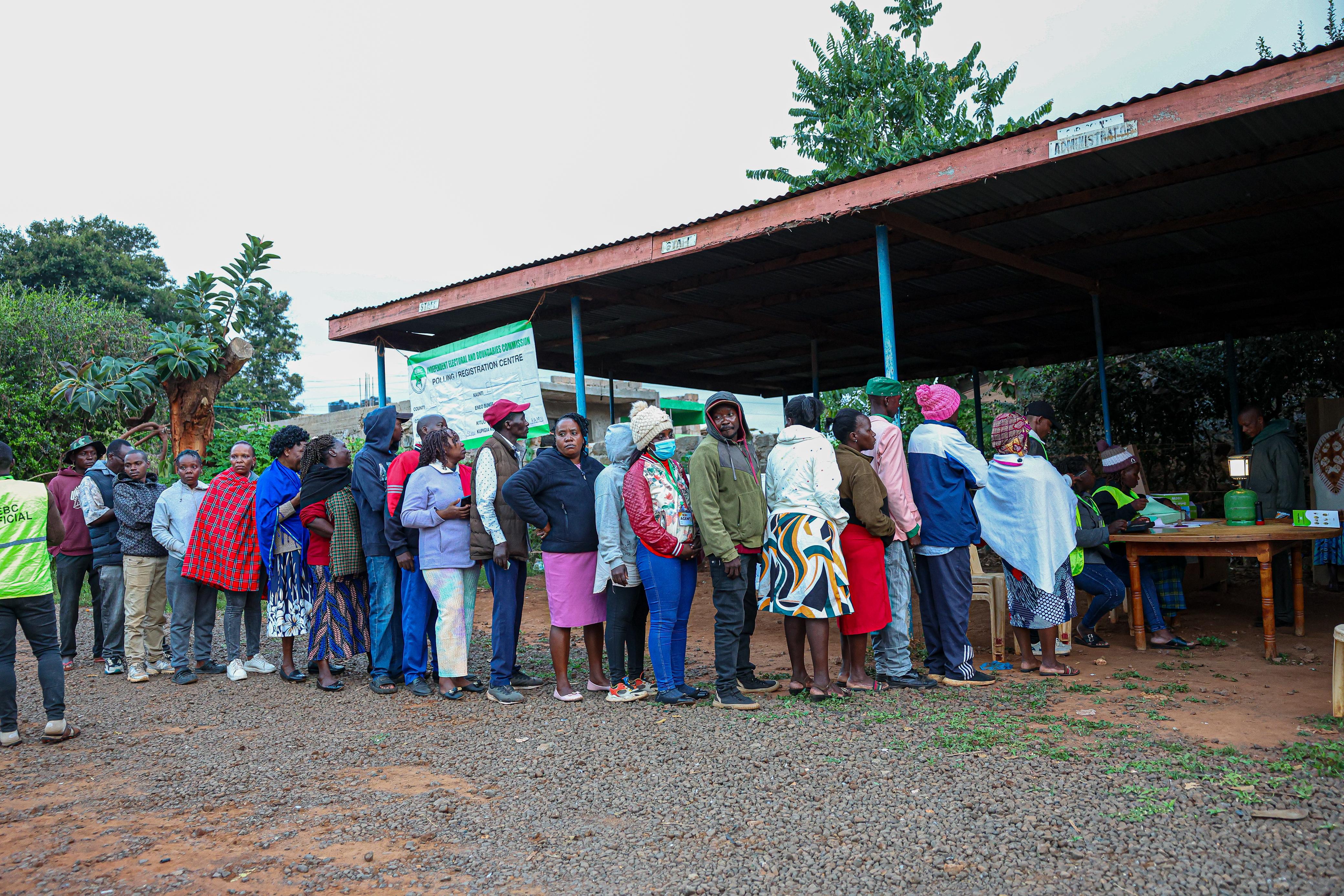 IEBC cannot reach 6.3 million new registrants by merely urging youth to “come and register”. It must remove every structural obstacles /FILE