In traditional Agikuyu society, the idea
of a dignified exit was not sentiment; neither was it a personal matter. It was
a communal and spiritual order governed by principles held long before Kenya
existed as a colonial project.
It was rooted in Kihooto, which was the
reasoned justice that maintained the order of things, and in Thahu,
which was the curse that followed disorder, rage and the desecration of what
ought to remain sacred.
Conflict was not admired for its own sake.
It was feared for its residue because it outlived those who started it. The
Agikuyu understood that some relationships, partnerships and arrangements reached
an inevitable loss. And when that point came, the community did not glorify
destruction. It invoked a different philosophy called Njũra na ago, which
means surrendering and walking away from the conflict before it consumes both
man and homestead.
That was not cowardice. It was character.
The Kiama, or council of elders, gave structure and dignity to the exit. One did not look backwards in bitterness
or leave the homestead in smoke and broken clay.
The Agikuyu had strict taboos
around the sanctity of the nja, the compound. To pluck thatch from a hut
in anger or deliberately break pots invited thahu, because violence
inside the homestead was not just social disorder. It was spiritual
contamination. Disharmony was believed to bring misfortune and disease upon
those who remained.
So, when a relationship stopped serving
its purpose, one gathered one's goatskins, informed the elders and walked away.
The exit itself was the statement. The manner of leaving told the community
more about a man's character than the years he had spent inside the homestead.
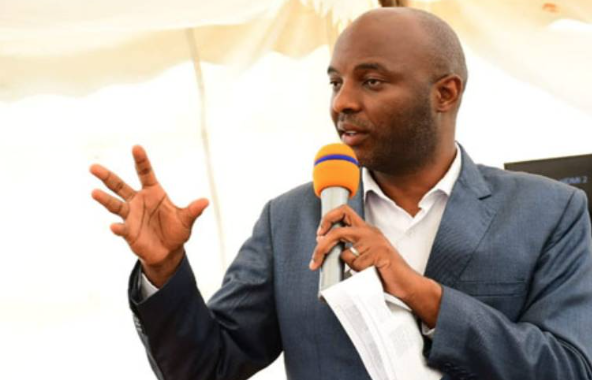
That is the frame through which Murang'a
Governor Irungu Kangata's recent political declaration should be read. He
arrived at his press conference with a prepared statement and a composed face.
He did not defect.
He did not denounce. He did not scream into a microphone
about betrayal. He simply announced, with the measured precision of a man who
had thought very carefully about every word, that in 2027 he will not vie under
a UDA ticket, and that he has no interest in the presidency or the deputy
presidency.
He began not with accusation, but
gratitude, recalling his association with the President dating back to 2013,
and acknowledging it as meaningful. He then stated that the divergence is not
personal but grounded in principle, specifically on matters of political
strategy, engagement with citizens and policy priorities.
And then, after all
that careful architecture, he said that when the appropriate time comes, he
will not seek to defend his seat on the party's ticket, though he will remain a
disciplined and committed member until 2027.
This was not a tantrum. It was
choreography. He did not denounce the party in the language of fire and
brimstone. Neither did he announce a new party with vuvuzelas, defectors and coloured
scarves. Kang'ata performed his Njũra na ago in public and without rage.
Begs the question. Was Kang’ata principled
or opportunistic?
Granted, what he did was not a small
statement. But neither was it unusual. Many of us have made the mistake of
treating it as an act of exceptional moral drama. It is not. It is Kenyan
politics doing what Kenyan politics has always done. It is politicians starting
to gather their goatskins.
Let us establish a principle before we
examine the man. In democratic politics, political parties and coalitions are
vehicles, not destinations. They are instruments of arrival.
And the politician
who conflates the vehicle with the journey, who remains strapped to a brand
long after the brand has stopped serving him, is not loyal. He is simply late.
This principle is called political
entrepreneurship. Politicians are entrepreneurs in the electoral marketplace
who are constantly searching for the vehicle with the highest return.
And so,
they create, capture or abandon political vehicles accordingly. These parties
are never homes of ideology. They are vehicles of timing, region, grievance,
ambition and ethnic arithmetic. They carry people into office. And once there, the
passengers begin asking whether the same bus is still roadworthy.
This is why our politicians speak so
fondly of the ground. The ground is the great Kenyan excuse. It is invoked when
ambition needs a moral witness. It is summoned when a politician wants to
migrate without admitting that the migration is about survival. The people have
spoken. The ground has shifted. The elders have advised. The youth have
demanded.
Sometimes all that is true. But often
times, the politician has simply calculated.
And calculation is not a crime in
politics. Politics is, among other things, the management of survival. The
problem is not that politicians calculate. It is that voters keep mistaking
calculation for moral conversion.
Kangata’s statement is therefore less a
mystery than a familiar Kenyan ritual. It was syllogism. Before every major
election, politicians begin to reposition themselves. Some move early and call
it principle. Some move late and call it consultation. Others wait for the
nomination and call it injustice. And others are pushed out and call it
betrayal.
But the underlying instinct is the same.
Survival. The political vehicle is always temporary. The career is the
constant. The politician is always making a rational decision. He may even be
responding to real public discontent. But that does not automatically make the
move noble. It only makes it politically intelligible.
Kang’ata is almost certainly reading the
mood in Murang’a and the wider mountain. In 2022, UDA was not merely a party. It
was a vessel of grievance, economic anxiety anti-dynasty sentiment and hope. It
carried anger, aspiration and the belief that a new political arrangement would
speak more directly to the region’s concerns. The mountain did not merely vote
for a party. It was emotionally investing in a narrative.
But we are no longer in 2022. Political
emotions age. Coalitions depreciate. Slogans meet fuel prices, taxes, pending
bills and household pressures. The poetry of opposition becomes the prose of
administration. A party that once felt like liberation begins to look like a
government. And governments are judged differently from movements.
But political entrepreneurship
is not a Kenyan invention. It is a global constant.
Winston Churchill
crossed from the Conservatives to the Liberals and later returned to the
Conservatives. Ronald Reagan began as a Democrat before becoming the Republican
president who helped define modern American conservatism. Emmanuel Macron
stepped outside France’s old Socialist and Republican machinery to build En
Marche as his own presidential vehicle.
Closer home, Uhuru Kenyatta moved
through Kanu, Narc-Kenya, PNU-linked formations, TNA and Jubilee, before eventually
becoming president. Raila Odinga travelled through NDP, LDP, ODM, Nasa and
Azimio, proving that in Kenyan politics the party’s name is often less
important than the man, the moment and the coalition assembled for that cycle.
President
Ruto himself moved from Kanu to ODM, then URP, Jubilee, and finally UDA, each
migration timed to the changing road ahead. That’s why I am surprised that we
are surprised at all by Kangata’s move.
Politicians rarely
confuse the vehicle with the destination. They want to keep power, influence and
relevance. This is why Kangata’s move should be seen for what it is. It is a
signal of positioning for self-preservation which in politics is not an insult.
It is a skill.
That is why the manner in which his dignified
exit matters. He created distance without burning the homestead. In essence, he left room for
cooperation today and separation tomorrow. He preserved optionality. And in politics,
optionality is oxygen. That was Njũra na ago in political form.
But voters should
not confuse dignified exits with public sacrifice. There is nothing sacrificial
about a politician protecting his reelection prospects. Kang’ata may be right.
He may be early. He may be strategic. But he is still doing what politicians do.
Managing risk.
The same will
happen elsewhere. Politicians and aspirants across the country are already
quietly conducting their own calculations. Some are watching whether the party
that lifted them in 2022 still has enough emotional power to carry them in
2027.
Some are waiting to see whether new coalitions will form. Some are
publicly loyal but privately shopping. Some are attacking defectors today and
preparing their own exit. Others will discover the voice of the people tomorrow.
We should expect
more of this across the political spectrum. Those in government and in
opposition will reposition. Those in small parties will bargain upward, while
those in big parties will hedge sideways. Those without parties will suddenly
discover movements which will register as parties. Those with parties will join
coalitions, then complain of being shortchanged. And those who were enemies
yesterday will become besties today. The costume changes, but the appetite
remains.
This is not chaos.
It is what we have normalised as Kenyan politics. It is not whether politicians
will realign. It is whether the electorate will keep treating every realignment
as a moral awakening.
Finally, my
unsolicited advice is to Kang’ata. Your dignified departure will not substitute
the substance of your destination. Ambiguity is a shelter. Not a home. The old
Agikuyu wisdom remains wise.
When a relationship stops serving a man, the exit
itself becomes the statement. Murang’a will eventually ask the harder question,
which will not be what you have walked away from, but what you are walking
toward, and whether it is worth them accompanying you on that journey.
The politician who never changes his
mind is either a fool or a liar, and usually both - Bertrand
Russell