Deputy
President Kithure Kindiki, who has intensified countrywide harambees, will
return to Kisii on Saturday, May 31, for another empowerment programme, a the battle for the Gusii vote goes a notch higher.
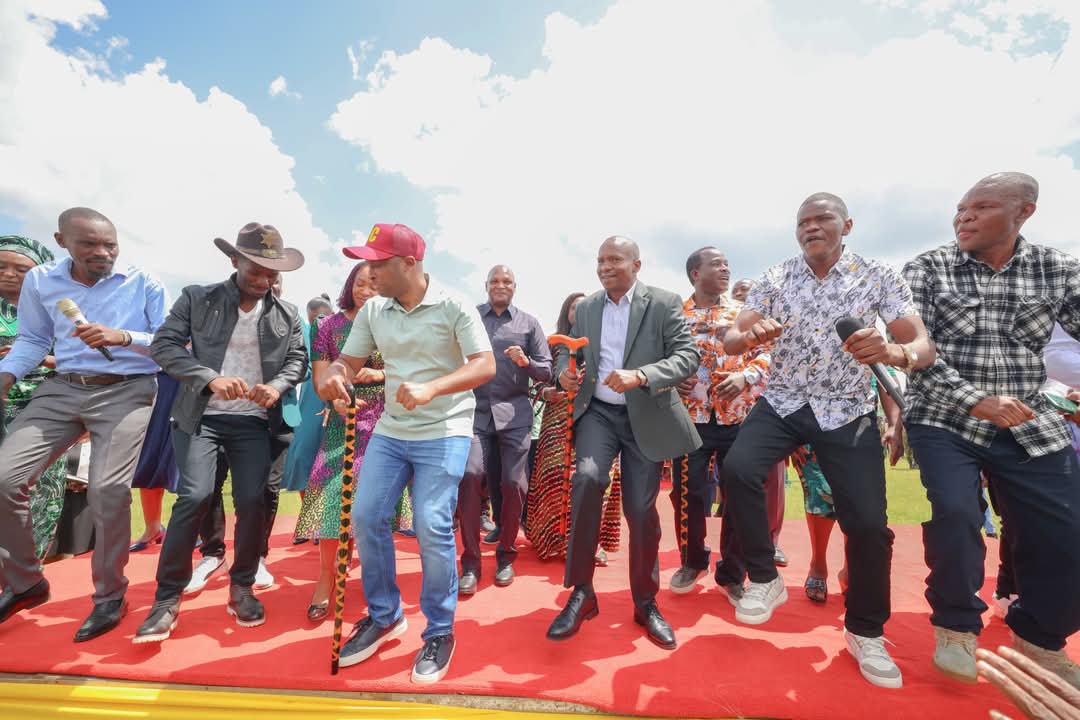
The DP will
be hosted by Bomachoge Chache MP Alfah Miruka (UDA) for a major fundraiser
benefiting several churches in the constituency, signalling his aggressive
campaign to penetrate Gusii.
The event,
which will bring together key UDA heavyweights, will take place at Machongo PAG
Primary School and is expected to benefit at least 40 churches.
Kindiki has
ramped up his harambees in the Kisii region in recent weeks, in what is widely
seen as a strategic move to woo voters following former Interior Cabinet
Secretary Fred Matiang’i’s announcement that he will run for president.
Matiang’i’s
massive homecoming on May 2 is said to have rattled pro-government forces from
the region, who are now seeking to counter the momentum gained by the former
CS.
Some of the UDA MPs from the region, fearing the Matiang'i wave, are holding the harambees to try to shore up their fortunes ahead of the 2027 polls.
The Matiang'i factor is reshaping Gusii politics, with the majority of the politicians from the region aligning with the former CS.
Most of them attended the former CS's homecoming on May 2, 2025, at Gusii stadium.
Kindiki
began his outreach on April 27 with a mega harambee in Kitutu Chache North,
hosted by UDA National Treasurer Japheth Nyakundi.
On May 22,
he visited South Mugirango for another major fundraiser hosted by area MP and
National Assembly Majority Whip Sylvanus Osoro.
On May 29,
Kindiki was in Nyaribari Chache for yet another grassroots empowerment event hosted
by MP Zaheer Jhanda (UDA).
The Deputy
President has stepped up his economic empowerment programme, promising to
support thousands of small and medium enterprises (SMEs) to grow and generate
more income.
However,
former Deputy President Rigathi Gachagua has criticised the ongoing
initiatives, questioning the source of the funds.
Kindiki has
been leading a team of senior Kenya Kwanza–allied leaders in a whirlwind of
harambees across the country, ostensibly to empower citizens.
In a
strongly worded statement on Friday, May 24, Gachagua warned that these
fundraisers are being conducted at the expense of essential service delivery.
“There is no
money for capitation in our schools, and principals are subjected to a game of
musical chairs by the government. They are torn between admitting auctioneers
to settle unpaid bills or sending pupils home for levies,” he said.
“Our
hospitals are mere shells, crippled by a failed healthcare system and hollow
promises from the government.”
Despite the
criticism, Kindiki has maintained that the social empowerment campaigns are
intended to help small businesses and “hustlers” access capital.
Speaking in
Kieni on Friday, May 23, Kindiki fired back at his critics, saying the
empowerment harambees would continue.
"Those
criticising the empowerment programme are used to hoodwinking voters during
campaigns, only to disappear once they are elected," Kindiki said.
He noted
that under the Sh28 billion Nyota Programme, the government will provide Ksh
50,000 in working capital to 70 youth-owned micro and small enterprises in each
of the country’s 1,450 wards, aiming to stimulate business growth and job creation.
On Thursday,
Kindiki graced the Empowerment Forum for Micro and Small Enterprises Saccos at
Nyanturago Sports Ground in Nyaribari Chache, Kisii County. He assured
small-scale traders of full government support in helping them grow and
succeed, while outlining the administration’s efforts in the sector.
"The
activities we are doing as leaders to empower small-scale traders are meant to
complement government programmes pursuing the same agenda,” he said.
He added
that initiatives such as the National Youth Opportunities Towards Advancement
(Nyota) and the Kenya Jobs and Economic Transformation (KJET) programme are
geared toward empowering Kenyans economically.
Deputy
President Kindiki also urged farmers in Kisii and Nyamira counties to grow more
coffee to boost agricultural income.