As the 2027 election is fast approaching, Mt Kenya is
emerging not only as a key voting bloc but also as a cultural powerhouse able
to influence the national mood — and potentially determine the presidency.
At the heart of this
influence war is a not-so-quiet fierce battle between former Deputy President
Rigathi Gachagua and his successor, DP Kithure Kindiki — locked in a
high-stakes contest to command the loyalty of the region’s most powerful
musicians and opinion-shapers.
Politicians on the Mountain are courting guitar players,
singers, gospel choirs, TikTok influencers, and popular regional radio
presenters.
Some analysts argue the region’s musicians are the
kingmakers of the 21st Century.
In 2013, Uhuru Kenyatta’s presidential campaign depended
heavily on Kikuyu gospel hits and pro-Jubilee tunes.
During the preceding Mwai Kibaki era, musicians were largely
peripheral to state power.
Kibaki, a reserved
technocrat, kept artists at arm’s length and they were virtually invisible as
campaign strategists.
While some, such as
Joseph Kamaru, wrote songs supporting his leadership, there was no overt
engagement from State House — at least not publicly.
Kibaki’s rule was marked by minimal political theatrics, and
if deals were made with musicians, they were made chini ya maji, quietly and
without fanfare.
That changed dramatically with the rise of the TNA and URP
parties under Uhuru and William Ruto, respectively.
In 2013, as a
fresh-faced heir to the Kenyatta dynasty, Uhuru turned to the youth — and the
soundtracks that spoke to and for them.
Songs such as “Uhuru na Ruto Tuko Pamoja” and “Uhuru ni
Witu” (“Uhuru is Ours”) blared across Central Kenya, especially during campaign
rallies and on vernacular FM stations, such as Kameme and Inooro.
Musicians such as Ben Githae became household words not only
for their catchy tunes but also for their unapologetic political endorsements.
In fact, Githae’s
“Tano Tena” during Uhuru’s re-election campaign in 2017 became a national
anthem of sorts — played in buses, markets, and even churches.
By the 2022 general
election, however, the musical unity had fractured. The once-solid Mt Kenya
voting bloc was split, and so were its artists.
While some, like Ben Githae, stuck to the establishment,
others pivoted toward then-Deputy President William Ruto’s “hustler” narrative.
Mugithi maestro
Samidoh, who was gaining in both music and online clout, leaned toward to Uhuru
Kenyatta and, by extension, Raila Odinga, alongside Githae and Sir James.
Meanwhile, other artists chose to remain neutral or focused
solely on gospel, claiming politics had become too divisive and dangerous. But
in recent months, the rivalry between Gachagua and Kindiki has reignited the
musical front.
What began as silent tension over Mt Kenya’s political
direction has turned into musical slugfest for the region’s cultural soul.
Kindiki, whose image is often that of a disciplined
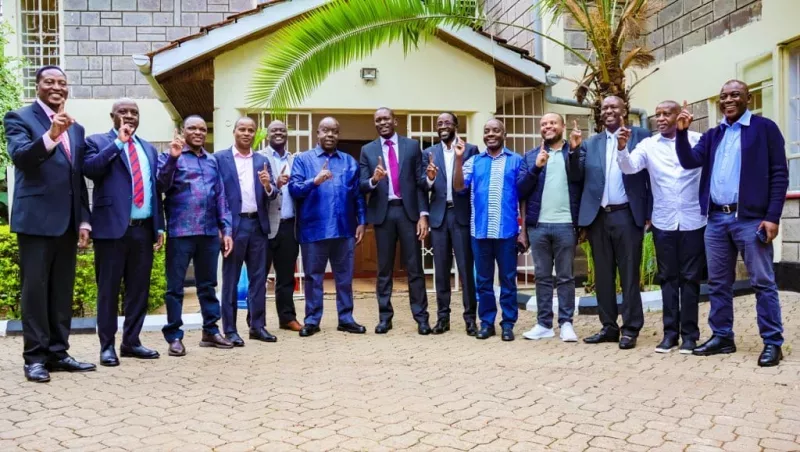
administrator, surprised many by hosting a high-profile breakfast meeting with
top musicians in Nairobi last week.
The room was star-studded — Samidoh, Kamande wa Kioi, Ben
Githae, Karangu Muraya, 90K ka Mso, Jose Gatutura, Martin Janet, and even
controversial Bishop Man Kush showed up, among others.
That meeting, political observers said, was not just a
feel-good PR moment. It was a statement — that Kindiki understood the power of
culture in a youthful, digital-savvy electorate.
“Musicians and others in the creative space are seeking
government intervention to ensure exploitative cartels are removed and their
talent is more rewarding,” Kindiki said.
Speaking to the Star, Mugithi artist Kamanda Wa Kioi
criticised the impeached DP Gachagua for fuelling divisions between artists,
noting their meeting with Kindiki wasn’t political, as was interpreted by a few
who missed the rare opportunity to show up.
Wakioi said the two (Kindiki and Gachagua) should emulate
former President Kibaki, who wasn’t bothered by what his opponent was doing. He
rallied Mt Kenya leaders to follow Kibaki.
“Kibaki never called us, he never bothered about anyone. If
he did, it was behind the curtain. He let his record speak for itself. As
musicians, we will continue composing music of unity and very soon, I will
release a track, urging our people to unite and shun hatred,” Kamande Kioi
said.
He further called on
former President Uhuru to emerge from his solitude and lead the community,
saying the region isn’t heading in the right direction.
Gospel artist Ben Githae, in a statement released on
Wednesday, condemned Gachagua for recent attacks on artists who visited
Kindiki, noting no harm was committed. Githae said Kindiki is the senior-most
leader in the region and ought to be consulted on any national matters; that is
why artists visited him.
“People are claiming
I endorsed Kindiki by saying he is our son, which is true. We only have one
mountain, and those fighting us are being used. They were invited and some
didn’t want their faces to be seen, but they attended the Karen meeting,”
Githae said.
Muigai Wa Njoroge also has broken his silence, following
recent remarks by Gachagua targeting a group of Kikuyu musicians.
In a passionate response shared on social media, Muigai
addressed Gachagua directly, expressing disappointment over the embittered
politician’s sentiments and reminding him of the history he shared with the
very musicians he condemned
“Our father and very respectable Rigathi Gachagua, I know
you have been angered by your children, but I would like us to discuss their
case as a wise man and as a father,” Muigai said.
He deplored Gachagua’s failure to reconcile with the
musicians, even after he, on several occasions, urged him to hold a unifying
meeting with them, regardless of their political affiliations, before he was
impeached as Deputy President in October last year.
Gachagua this week had accused the artistes of betrayal and
demanded they issue a public apology, threatening to lead a boycott against
them if they failed to do so.
“Those artists should seek a public apology or we stop
listening to their music, and they should not be given an opportunity to
perform in the clubs.
“You should also unfollow them from their social media
platforms,” Gachagua said.
Immediately after the
Karen meeting with musicians a new slogan was born: “Tutam —Tutaendelea na Ruto
Mara ya Pili”.
Within hours, Samidoh, Ben Githae, Nyoko ya Njeri, and
others had already recorded snippets on social media, declaring allegiance to
Kindiki and President Ruto.
This move triggered an instant backlash from Gachagua’s
side. Gospel singer Sovinga wa Bibiana, during a burial in Gatanga, accused the
state of bribing artists to divide the region.
“We know what is
happening; the government is giving out money to artists to divide our people.
Let them be told that we are fully behind Gachagua and we should all speak in one
voice,” Sovinga said.
Kameme FM presenter Muthee Kiengei, who is a Gachagua ally,
said musicians were being manipulated to sow discord.
Celebrated musician Jose Gatutura issued his
Gachagua-mandated public policy, saying artists are always neutral and they
don’t take part in political activities.
George Waweru, a frustrated fan, responded sharply, “You’re
either with the people or with the oppressive regime. Many other artists have
chosen to boycott, and like you, they have bills and families to support.”
Gachoya Kariuki,
another unhappy fan, said, “If you wanted to stay neutral, Jose Gatutura, you
should have avoided all political events — whether government or Wamunyoro —
and stuck to performing in nightclubs and promotional gigs to avoid alienating
fans on both sides.”
After the intense backlash,
others such as Samidoh, sought forgiveness from their supporters, while 90K Ka
Mso was ‘forced’ to donate the Sh50,000 he had received from Karen to the less
fortunate. Ngaruiya Junior, King of Kigoocho gospel, in a statement accused
Gachagua of killing the careers of artists.
Gachagua had termed
him a “Class 2 dropout” without vision.
“He lied to us and we can’t afford to follow him. Kindiki
listens to the artists and the government has money, and that is why we are
supporting its re-election,” Ngaruiya said.
Political analyst
Charles Mwangi, a former Ichagaki MCA, said while artists are not always vote
guarantors, their influence is undeniable in shaping public mood. “
Music is the heartbeat of Mt Kenya and we can’t deny this.
Ben Githae’s ‘Tano Tena’ influenced the majority to vote for Uhuru’s
re-election,” he said.
He said a viral Mugiithi song could be shared thousands of
times within hours — faster and farther than a political billboard.
“People may not remember your speech,” Mwangi said. “But they’ll
remember that lyric that made them feel heard.”
Kiamwangi MCA Kungu Smart agreed but cautioned against
overreliance on celebrity endorsements, saying artists play a key role but
politicians don’t solely depend on them
. “Let’s not confuse attention with conversion,” Smart said.
“Musicians may shape narratives, but people still vote based on their daily
struggles — unga, school fees, jobs, among others.”