When President William Ruto
unveiled his idea of a “broad-based government,” he imagined it as the
political masterstroke that would carry him beyond 2027. By drawing Raila
Odinga—the towering figure of Kenya’s opposition—into the architecture of
his administration, Ruto sought to neutralise dissent, unify the political
class and stabilise a turbulent country under a single umbrella. For a while,
the optics worked. The handshake had returned, this time with a new script and
a different lead actor.
But politics, like life, is
often governed by Murphy’s Law: anything
that can go wrong will go wrong. Raila’s death this week has
thrown a wrench into the gears of Ruto’s grand design. It is not just the passing
of a statesman; it is the implosion of a carefully calculated political
equation. Ruto’s reelection game plan, which had come to depend heavily on
Raila’s symbolic and structural support, must now be rewritten from scratch.
To understand the magnitude of
this shift, one must appreciate what the former ODM leader represented in
Ruto’s 2027 calculus. Raila was not merely an ally; he was the bridge to a
constituency Ruto had never fully accessed. His endorsement – or even tacit
cooperation – offered legitimacy in regions and demographics historically cold
to the Kenya Kwanza government. Nyanza, parts of the Coast, Western and
sections of the urban working class viewed Raila as the moral compass of
opposition politics. Through him, Ruto hoped to sanitise his image among those
who had once seen him as an adversary.
The immediate impact is
psychological. Raila’s death leaves a political vacuum too wide to fill
overnight. No single figure in the current opposition carries his gravitas,
network, or emotional connection with the masses. He was not just a politician;
he was a movement, a symbol of struggle, resilience and the unfinished quest
for justice. His passing will ignite a mourning period that could easily morph
into political soul-searching – and possibly rebellion – within the Orange
Democratic Movement and the broader Azimio coalition.
For President Ruto, this moment
demands both restraint and recalibration. Raila’s loyal base is deeply
sentimental, and any hint of political opportunism could backfire. The optics
of state mourning, condolence messages and the tone of national remembrance
will matter immensely. In the short-term, the president’s best strategy is
empathy, not expediency. He must allow the former premier’s legacy to be honoured
without appearing to exploit it.
In the medium term, however,
Ruto faces a structural challenge. His broad-based government was built on the
assumption of elite consensus – on the idea that Kenya could be governed by
co-option rather than confrontation. Raila was the cornerstone of that design,
the elder statesman whose inclusion neutralised opposition firepower. With him
gone, the architecture wobbles. ODM will inevitably fragment. Factions led by
figures like Wycliffe Oparanya, Fernandes Barasa, Hassan Joho, Babu Owino,
Edwin Sifuna or Opiyo Wandayi may compete for influence, while others – perhaps
Kalonzo Musyoka or Martha Karua – will jostle to inherit the mantle of national
opposition.
Ruto faces a paradox:
opposition fragmentation could ease his path to 2027 yet also unleash
unpredictable forces. As Raila’s absence destabilises familiar alliances, new
power centres may emerge – possibly more radical and uncontrollable. Kenyan
politics rarely tolerates emptiness; when one giant falls, another inevitably
rises to claim the stage.
Throughout his political
journey – from Kanu to Kenya Kwanza – Ruto has thrived on adaptability. Now
stripped of Raila’s moral buffer, he must rely on delivery, perception and
persuasion. With a struggling economy eroding confidence, performance will
determine whether his famed political instincts can weather this defining test.
Even before Raila’s passing, Kenyans
had grown skeptical of the broad-based government. Many viewed it as an elite
pact lacking ideology, detached from everyday struggles. Escalating prices,
taxes and unemployment had eroded goodwill and heightened frustration. With
Raila gone, Ruto loses a convenient partner – and scapegoat. Responsibility for
Kenya’s hardships now rests squarely with State House.
The head of state is also at a
crossroads: rebuild his political narrative or woo ODM remnants. His outreach
to Nyanza through projects and appointments may soften resistance but cannot
easily replicate Raila’s emotional bond with his supporters.
Meanwhile, the opposition will
be in flux. Some will argue for continuity, rallying under Raila’s ideals;
others will push for reinvention, seeking a new face for a new era. The
question is not whether someone will fill Raila’s shoes – it’s whether anyone
can.
In the end, Raila’s death is
not just the end of a political chapter; it is a test of Kenya’s democratic
maturity. For Ruto, it is the truest application of Murphy’s Law: a grand plan
undone by an unforeseen twist of fate. His task now is to prove that his
leadership can stand without borrowed legitimacy – that he can win hearts not
through alliances, but through delivery.
If he succeeds, he will have
transformed crisis into opportunity. If he fails, history will remember this as
the moment when the broad-based dream collapsed under the weight of its own
illusions.
Either way, the 2027 race has
been reset. The game board has changed, and the king’s most valuable piece has
fallen.

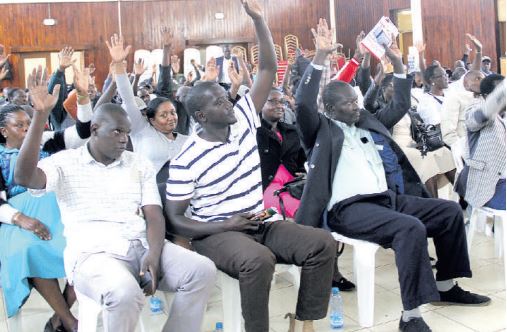
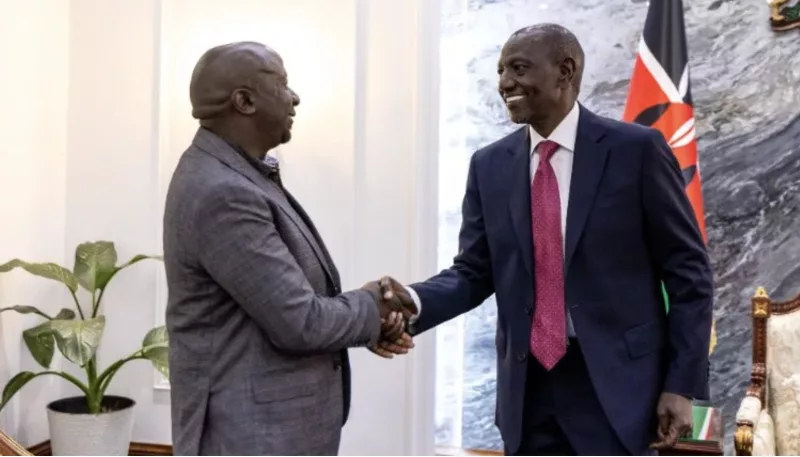
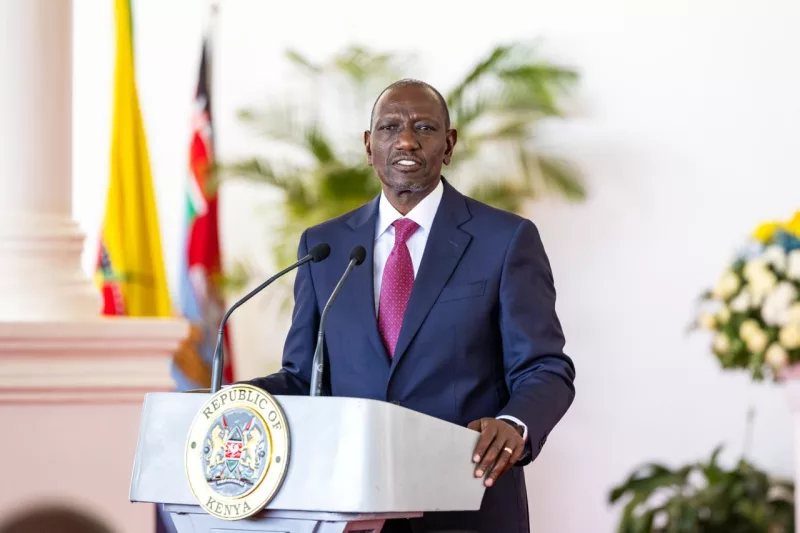
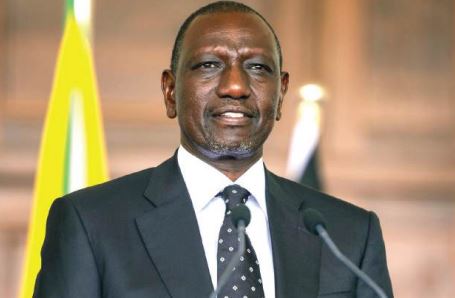 President William Ruto breaks the news of Raila Odinga’s death at State House in Nairobi /PCS