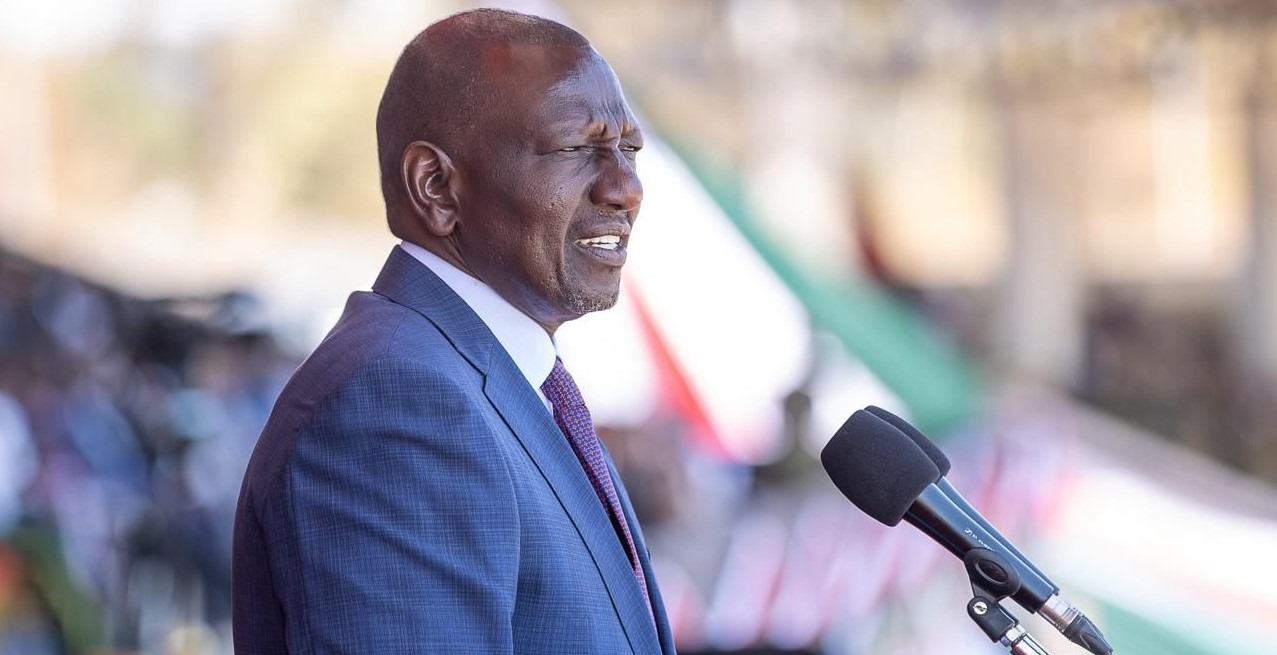
President William Ruto faces the urgent task of constructing
a new political blueprint for the 2027 elections following the sudden departure
of his erstwhile rival and recent ally, Raila Odinga, from the
political scene.
With the opposition in disarray and the Raila political
dynasty facing an uncertain future, Ruto must fundamentally reshape both his
government and his electoral strategy.
For the first time since independence, Kenya navigates a
political landscape without a commanding Raila figure, creating a mix of both
opportunity and peril for the Ruto administration.
Political pundits agree that the Kenya Kwanza brigade must
now recalibrate.
“He [President Ruto] has a lot of work to do,” said Macharia
Munene, a political commentator from USIU, identifying Western, Nyanza, and
Muslim communities as critical factors.
“The good thing is that he and Raila have finished their
relationship on a positive note. The feeling is that Raila's followers will
continue working with Ruto as a better alternative.”
The central puzzle for Ruto is the composition of his 2027
ticket.
Notable figures such as Deputy President Kithure Kindiki,
ODM chairperson Gladys Wanga, Prime CS Musalia Mudavadi, and Mining CS Hassan Joho
stand at the centre of his calculus.
While each represents a distinct strategic pathway, the Kindiki
option could also play out, for continuity and reward for loyalty.
The DP has positioned himself as a steadfast champion of
Ruto's agenda, his nationwide tours promoting government initiatives doubling
as early campaign efforts.
Retaining him would be a play to consolidate the Mt Kenya
East vote, in the wake of the greater Mt Kenya region showing signs of drifting
away.
However, the deputy presidency in Kenyan politics has more
often been a tool for coalition-building than a reward for loyalty.
As such, some analysts suggest it may be impossible
for Ruto to retain Kindiki as his running mate in 2027 as the President
seeks to broaden his coalition.
The Kindiki dilemma represents a classic political
calculation, bringing the question of whether Ruto should maintain continuity
with a proven ally, or use the running mate slot to pull other constituencies
into his fold.
Alternatively, Ruto could elevate Musalia Mudavadi to the
running mate position, a move long anticipated by the Luhya leader's
supporters.
This would be complemented by elevating Joho to Prime
Cabinet Secretary, leveraging his significant influence in the Coast region, a
critical Raila base.
Professor Gitile Naituli argues that Ruto’s primary task is
to please the Luo and Luhya communities, as the bedrock of his previous support
has shifted.
“Let’s assume he runs with Kindiki, what does he tell the
Luos and Luhyas? These are the two groups he needs to please,” he observed.
“He doesn’t have to please Somalis; they will follow him
whether he gives them anything or not. Somalis have a culture of supporting the
government in power.”
The ex-NCIC commissioner further elaborated on the erosion
of Ruto’s 2022 base.
“With Mt Kenya out of the equation, the President has to
get a replacement that is as committed as the Kikuyu vote that propelled him to
power. Even the Luhya of the Bukusu extraction will not support him,” he
stated.
“Since 1992, the Bukusu and Mt Kenya have voted on the same
side. When Mt Kenya left, the Bukusu also left. Those two are out; there is
nothing he can do to get them, but he can still do something to get a
significant piece of the Luo and Luhya vote,” Naituli said.
The logic brings the ‘Wanga factor’ sharply into focus. Her
rapid ascent to ODM national chairperson has positioned her as a potential
kingmaker.
As a successful female governor from Nyanza with proven
grassroots mobilisation skills, her selection would represent the boldest form
of coalition-building.
She offers a gender breakthrough potential, regional influence
from the Luo stronghold, and a bridge between opposition and government
spheres.
As Caren Oloo of Maendeleo Ya Wanawake notes, "Wanga is
not just a talker, she is a doer. She has what it takes to drive the country
forward."
However, her effectiveness is not guaranteed. Prof Munene
cautions that, “The challenge with the Luo vote is the turnout. If that remains the
case, Ruto will be in trouble even if he picks Wanga. Will Gladys Wanga
increase his vote opportunity? If not, he will go elsewhere.”
Munene suggests Ruto’s only clear path is to consolidate the
Rift Valley vote 100 per cent, giving him a head start of three million votes.
“The Kalenjin vote is quite substantial, so he just needs a
running mate who can take him close to the 50 per cent plus one threshold and
then top up with Northeastern.”
As part of the preparations for 2027, insiders indicate that Ruto wants to accommodate the Kanu team led by chairman Gideon Moi.
"There is a proposal to create two slots for deputy PCS, one for Joho and the other for Gideon. CS Miano is likely to be dropped. Kanu is supposed to get two CS slots, one for Gideon and the other for Poghishio, plus five PS slots and two ambassadors," a highly placed source intimated to the Star.
"Wandayi might not survive as they are trying to get Babu Owino to come in as CS for Education, replacing Migosi Ogamba who will be moved to another docket," the source added. "There's also a proposal to have Felix Kosgey retire and be replaced by Roads CS Davis Chirchir so that the Chirchir slot is given to a politician."
For pundits, Ruto’s immediate headache is ensuring ODM
remains a pliant ally.
Key party figures like Embakasi East MP Babu Owino and
Nairobi Senator Edwin Sifuna have been vocally against working with the
President, and their defiance could splinter the Luo vote regardless of Wanga’s
position.
Amid the uncertainty, some analysts believe Ruto is far
from being helpless.
Political analyst Herman Manyora said the notion that Ruto
is finished without Raila is misplaced, adding that the President would now
fall back to his Plan B.
“He must be having something up his sleeve. He could use
this period to pacify some people. I will not be surprised if he comes up with
a government of national unity,” he said.
Such a move would be designed to dilute the opposition and
create a grand coalition that makes the 2027 election a foregone conclusion.
Yet, significant threats remain.
For political analyst Prof Martin Oloo, Ruto could still
lose in 2027 despite aligning with ODM, Kanu and Uhuru Kenyatta, due to a
mobilised and disillusioned youth vote.
“The young people will not vote because of the leaders. Many of
them feel betrayed, especially in the wake of Ruto appearing to woo dynasties,”
he said.
The situation underscores Ruto’s vulnerability, that is, the
perception that the realignment of political elites is disconnected from the
public’s demand for economic relief and accountability.
INSTANT ANALYSIS
The post-Raila political landscape offers a rare, if
daunting, opportunity to transcend traditional ethnic and partisan divisions.
President Ruto stands at a historic juncture where his next moves will
determine not only his re-election prospects but his legacy. His success hinges
on whether he can craft a coalition that genuinely represents Kenya's diverse
aspirations, or if he merely presides over a reshuffling of the same political
deck, potentially awakening a new, issue-based opposition from a disenchanted
electorate. The calculus is no longer just about allies and enemies, but about
capturing the imagination of a nation in transition.

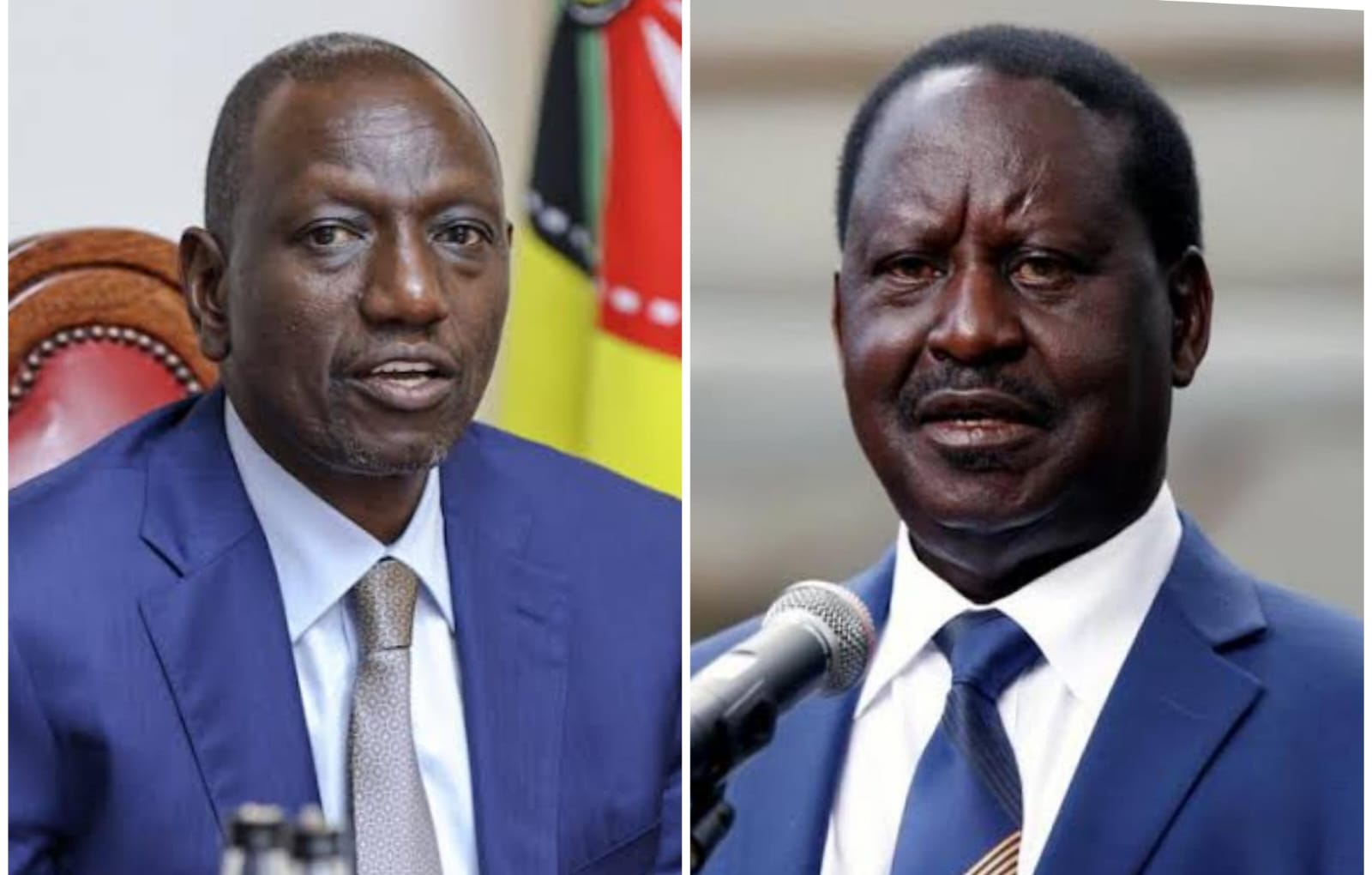 A composite photo of President William Ruto and Raila Odinga/The Star



![[PHOTOS] Protesters, police clash in Mombasa](https://cdn.radioafrica.digital/image/2026/07/8a24fb1c-dd30-4feb-aa04-2b32d256492d.webp)