There are events that shake a nation, and the world indeed;
it is often asked, and people remember decades later exactly where they were
when they received the news and how they were shaken by it.
For Americans, the
assassinations of John F. Kennedy and Martin Lurther King top that list. For
Africa, the death of Nelson Mandela stands alone at the top of that list and
now we can add the death of former Prime Minister and ODM leader Raila Amolo
Odinga.
When President William Ruto formally announced the death of
his onetime ally, later opponent, and more recently his political savior, Ruto
said Raila was “a once-in-a-generation leader. A man whose ideals transcended
politics and whose legacy will shape the destiny of Kenya for generations to
come."
Ruto then went on to announce the enigma will be given a state
funeral wrapped in a seven-day formal mourning period. No sooner had the
announcement been made, the floodgate opened, and tributes started pouring in
from everyone and everywhere, including many from those who hated, thwarted or
otherwise never supported the man Ruto would himself later acknowledge was the
People’s President.
Befittingly, the Star, which is the newspaper of record for
all matters of politics in Kenya, dedicated significant real estate to publishing
these tributes and related stories memorialising the man who became synonymous
with the opposition and in some ways larger than his own father.
It was equally
befitting that the doyen of the opposition and hero of the Second Liberation
was given a state funeral, something his father was denied even though he
equally deserved. The grandeur, solemnity and efficacy with which the state
funeral was conducted overflows as to have Jaramogi posthumously basking in
some of it.
“Well done, son;” one can imagine Jaramogi saying to Jokom
in the afterlife reunion.
It is also what
came to mind when I signed his condolence book: “Jakom, you came, you did it
and magnificently so. I join millions of others in saying thank you. You made
an indelible mark and left behind a legacy that can be emulated to make Kenya
the country you always envisioned and fought for in ways only a handful or so
of heroes like you did. May God rest your soul in eternal peace.”
Everything that can be said about this great man has been
said and books will be written about this hero many of us were privileged to be
close to as true friends, but let me share two anecdotes that speak to one of
the many qualities that placed Raila in a class of his own; first, although I
followed his politics and activities during the Second Liberation struggles, it
was not until early 2002 when I was introduced to him in Philadelphia, USA.
Even before I finished saying what an honour it was being
introduced, he whipped out his business card, turned it over and wrote his
personal number. He then asked me to get in touch when next in Kenya. I did so a few weeks later and thus began a
friendship and equally importantly, joining the governance and justice fighter
in the trenches to fight for the causes he so inspired all of us to fight
alongside him—and by that I mean those of us who did.
When Raila led the Kenya
delegation to the United Nations General Assembly opening session for 2010,
seconded by then Vice President Kalonzo Musyoka, something happened that gave me
a firsthand knowledge of how Jakom saw things. It would be one of many lessons
I and others learned from him, and it is already a part of who we are and how
we relate or deal with politics.
During that time, there was a tussle between Raila and
Kalonzo as to who was senior to the other; common sense would have led one to
conclude Raila being the prime minister and Kalonzo having only been appointed
and accepted being VP under the circumstances he did, it was obvious Raila was
not only senior to Kalonzo, he was the true representative of the people.
Yet, state operatives spent time and energy trying to either
humiliate Raila or otherwise make Kalonzo to be superior at every opportunity.
In New York, this manifested with the protocol team having Raila and his
entourage dine at a place let’s just say not befitting a prime minister.
When I found out about this ahead of the dinner, I told
Jakom and was shocked instead of seeing him angry, he instead chuckled and
simply told me not to worry; “we’ll go there and enjoy ourselves,” he told me
laughing.
And we did. Not only did Raila brush aside this incident
intended to humiliate him with or without Kalonzo’s direction or knowledge, and
notwithstanding the many other protocol incidents before and after that where
this power tussle was at display, Raila never let that prevent him from asking
Kalonzo to work with him.
He did the same thing with Ruto and with Uhuru Kenyatta before
him. In other words, Raila saw greatness not in the wrongs committed against
him but in overcoming every challenge, every obstacle and when necessary
enduring the pain so that others can be free of the same.
The qualities of a
true national hero, and he was and more. With Raila gone, an era comes to an
end where individuals like Raila sacrificed a lot in the struggle to make lives
better for the people amid great resistance from the state and endearing
themselves to the people along the way.
Now comes an era where informed and fed
up voters will hold the government and those in it responsible for their
incompetence, failure to govern and, above all, their exploitation of the
people for self-aggrandizement. That’s what 2027 will be about.
The writer is a
political commentator based in the US

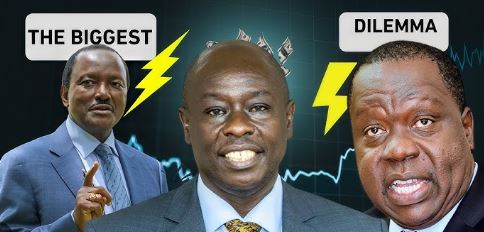
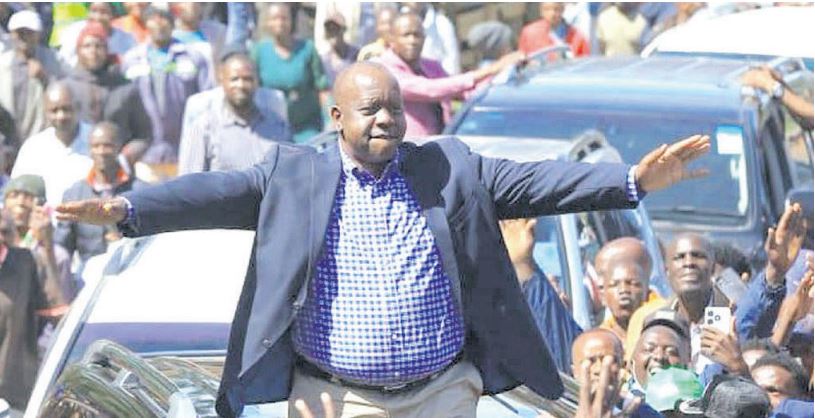
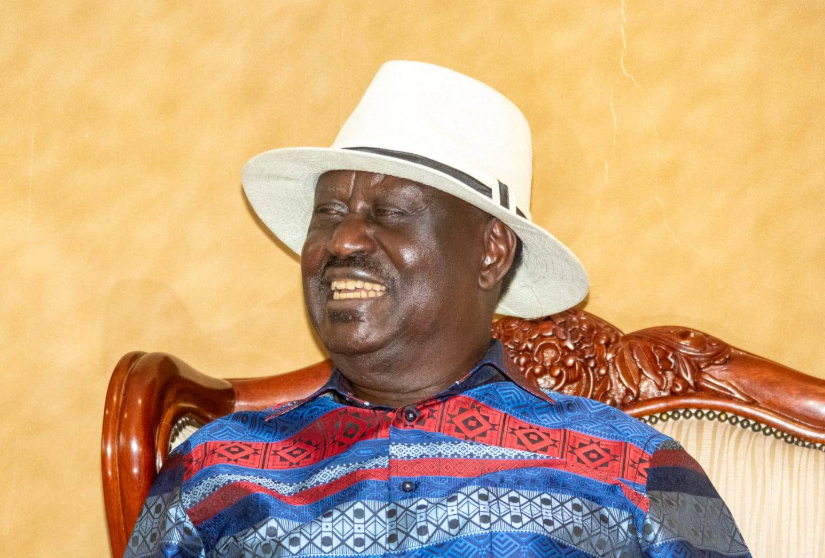 Former Prime Minister Raila Odinga /FILE