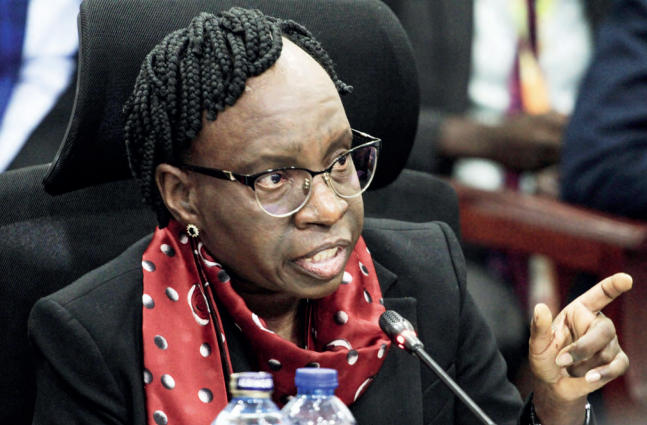
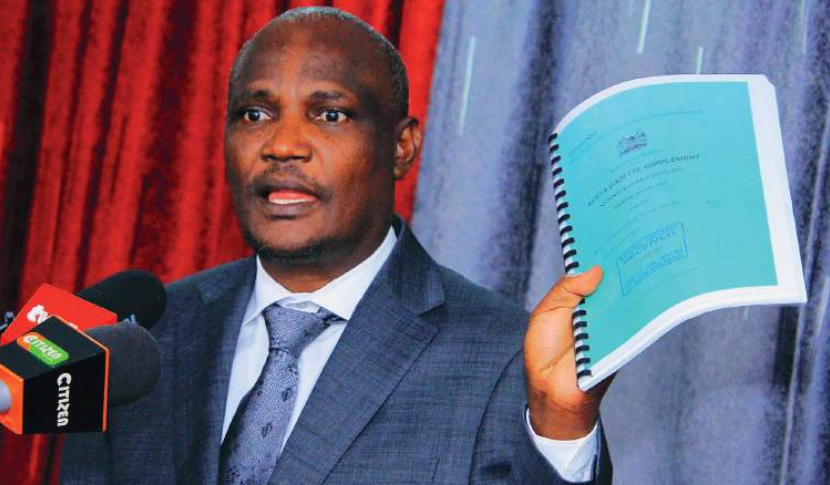
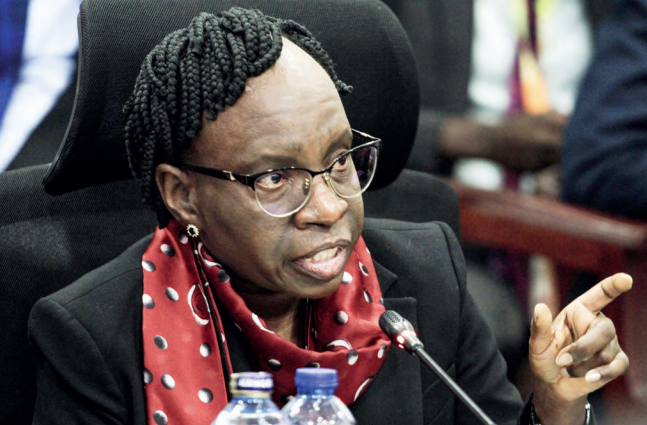
Auditor General Nancy Gathungu’s latest report raises fresh
concerns over the management of billions of shillings allocated to support the
livestock sector.
The audit for the year ending June 30, 2025, cites poor
planning, unsupported expenditure, incomplete projects and questionable
procurement decisions.
The report reveals that billions of shillings could not be
properly accounted for, with several projects incomplete, poorly executed or
failing to deliver value for money.
At the top of the list is Sh1.5 billion transferred to
ZEP-RE (PTA Reinsurance Company) under the De-risking, Inclusion and Value
Enhancement of Pastoral Economies Project (DRIVE).
The funds were intended to facilitate drought index
insurance for pastoralists and cushion livestock farmers against losses caused
by recurring droughts.
However, auditors established that ZEP-RE did not prepare
financial statements for three consecutive years despite receiving a cumulative
Sh5.1 billion.
According to Gathungu, the situation made it impossible to
establish how the funds were utilised.
“Auditors could not confirm whether the Sh1.5 billion
released during the 2024-25 financial year was used for the intended purpose.”
The audit also uncovered major discrepancies in the
department’s revenue reporting systems.
Auditors found that the department understated revenue by
excluding Sh126.6 million generated by one of its training institutes.
In addition, another Sh77.4 million collected by various
livestock and dairy training institutions was not disclosed in the financial
statements.
It also emerged that eCitizen statements for revenue
generated through student fees and training levies were not provided for audit
verification.
Auditors further questioned why employee compensation
exceeded the approved budget by Sh42.1 million.
This followed management’s failure to provide evidence of
budget reallocations or approvals authorising the excess expenditure.
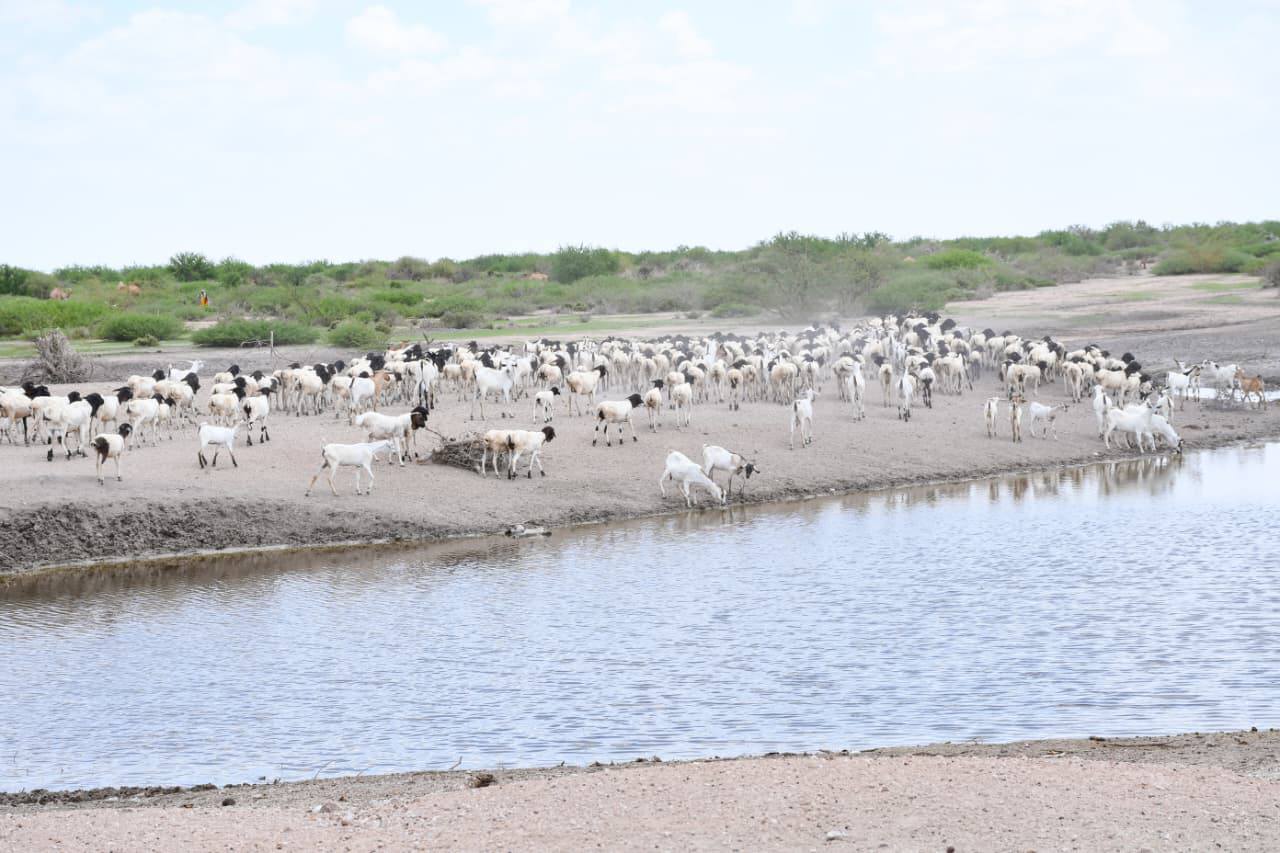
The department’s ambitious livestock restocking programme
targeting pastoral communities in 16 arid and semi-arid counties also came
under scrutiny.
The programme, which had been allocated Sh1 billion, aimed
to procure and distribute Galla goats to vulnerable households in counties
including Turkana, Wajir, Marsabit, Garissa, Samburu, Mandera, Kitui and West
Pokot.
However, according to the report, procurement for the goats
was initiated before beneficiaries were identified.
Gathungu said this made it unclear how the department
arrived at the number of goats required or the areas targeted for distribution.
The department had planned to procure 57,600 goats worth
Sh864 million but eventually purchased only 53,000 goats valued at Sh795
million.
Auditors noted that no explanation was provided for the
shortfall despite the full budget allocation.
Further, no detailed beneficiary register containing names,
identification numbers, phone contacts and locations was provided for
verification.
“It was not clear whether the beneficiaries benefited from
the restocking programme,” Gathungu said.
There was also no documented legislation or approved Cabinet
paper guiding the implementation of the offtake programme.
Several infrastructure projects implemented by the
department across the country were also flagged for poor workmanship, delays
and procurement irregularities.
In Wajir, auditors inspected the Chandarua-Hadado beef
feedlot and borehole project valued at nearly Sh100 million.
The department had already paid Sh32.4 million for the
works, yet physical inspection revealed extensive defects.
Auditors found cracked feed runways, unfinished plaster
works, peeling paint and missing installations, including water trough valves,
weighing platforms and plastic water tanks.
Feed processing equipment valued at Sh3 million remained
unassembled and unused at the site.
Another project flagged was the construction of a livestock
training institute in Baringo county, which consumed Sh49.9 million.
On paper, the project was complete and ready for use.
However, auditors found it to be only 90 per cent complete on the ground.
The contractor had abandoned the site, and critical
facilities, including disability access ramps and teachers’ toilets, had not
been constructed.
Similarly, a Sh19.8 million water pan project in Baringo
North developed visible cracks shortly after completion because of poor
foundation works.
The project is also located in an area prone to banditry and
cattle rustling, making residents reluctant to use it because of insecurity
fears.
“The residents may not benefit from the investment, and
therefore value for money may not be realised,” the report states.
The department’s procurement and distribution of milk
coolers worth Sh1.4 billion also attracted criticism.
The state department procured 230 milk coolers for
distribution to 32 counties across the country.
Bungoma, Nakuru, Kisumu, Meru and Kajiado received
additional coolers despite earlier units remaining non-operational.
In several locations, the coolers could not function because
electricity connections and generators had not been installed.
In Elgeyo Marakwet, auditors found that a milk cooler
purchased and installed by the national government at a cost of Sh8.7 million
had been branded with county government logos, raising concerns over
duplication and ownership confusion.
The department’s assets were also found to be exposed.
Auditors established that 28 motor vehicles valued at Sh53.6
million had been abandoned in various departmental yards for years.
Out of 158 vehicles owned by the department, only 11 were
presented for physical verification during the audit exercise.
In addition, 54 employees were found to have overcommitted
their salaries, earning less than one-third of their basic pay after
deductions.
According to the audit, more than Sh31.2 million in unpaid obligations
had remained outstanding for more than two years.
Gathungu said the situation was exposing taxpayers to
possible lawsuits, penalties and interest charges.
Even donor-funded projects faced implementation challenges,
especially under the Kenya Livestock Commercialisation Project (KELCOP).
Auditors flagged incomplete livestock markets in Kakamega,
Bungoma, Nakuru, Baringo and Siaya despite millions already having been paid to
contractors.
Some projects lacked basic infrastructure such as water systems,
fencing, toilets, poultry cages and weighbridges. Contractors had abandoned the
sites.