President William Ruto is headed for a bruising 2027 political battle as his predecessor, Uhuru Kenyatta,
moves to re-energise the opposition.
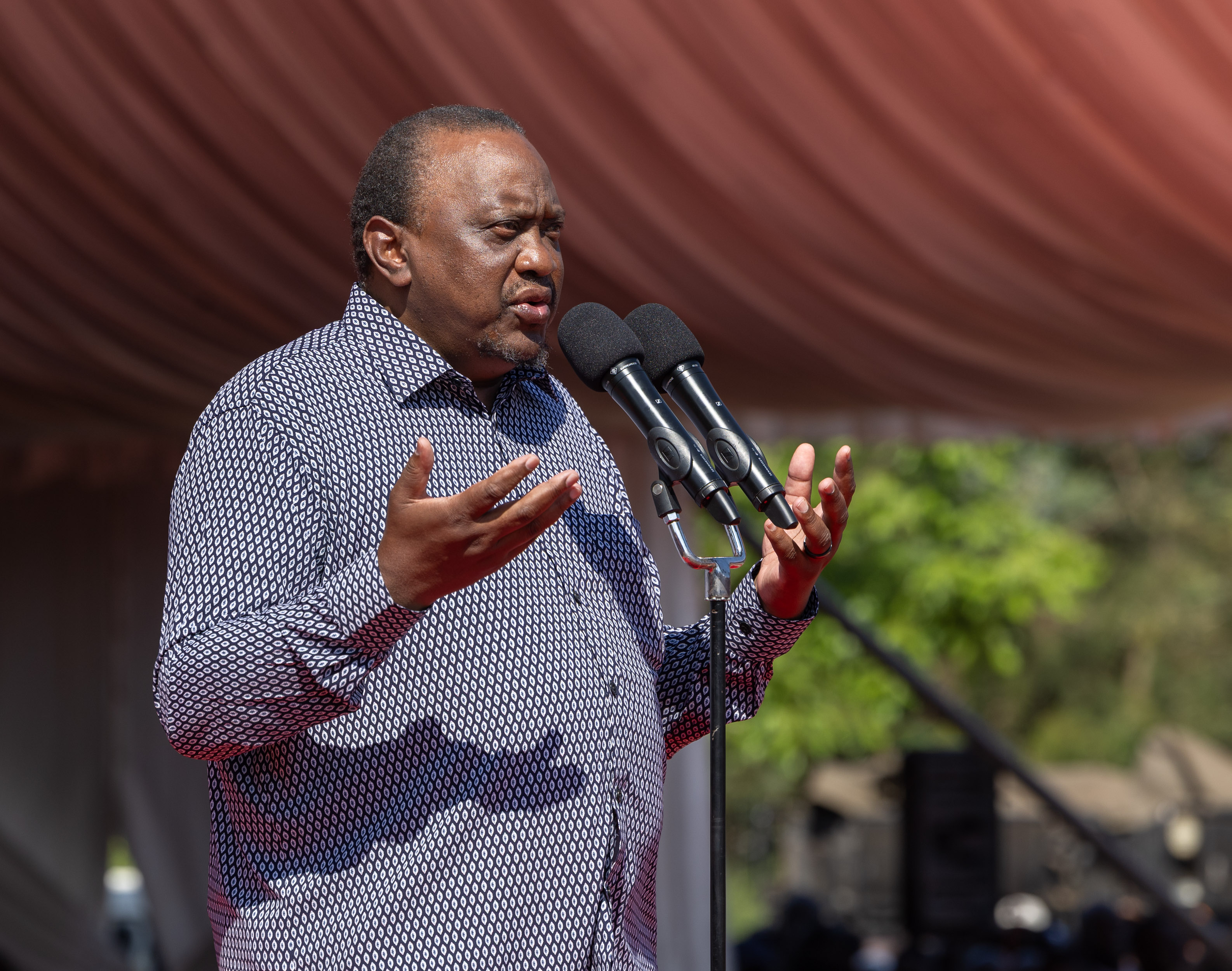
Uhuru’s renewed political activities, including plans to
address several county caucuses, are being viewed as a calculated attempt to
reclaim influence in key voting blocs across the country.
The former president’s strategy is to rally the disparate opposition figures into a formidable anti-Ruto movement.
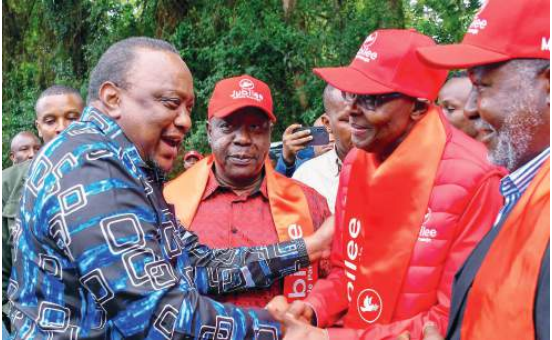
Uhuru's latest interventions, including
his calls for opposition leaders to work together during the burial of former
Kirinyaga Senator John Karaba and recent remarks at a Jubilee Party Kiambu
county caucus meeting, have added momentum to the camp.
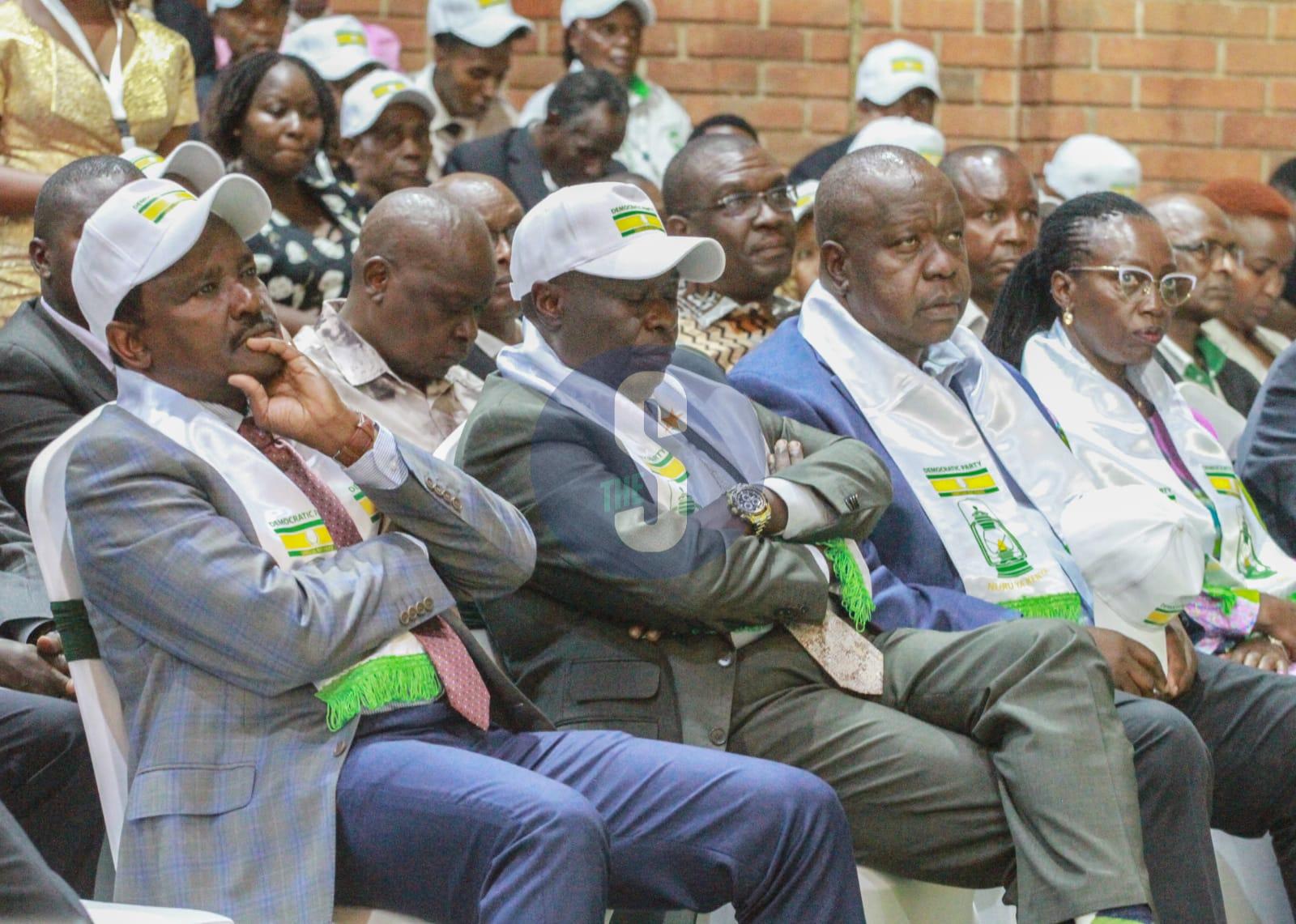
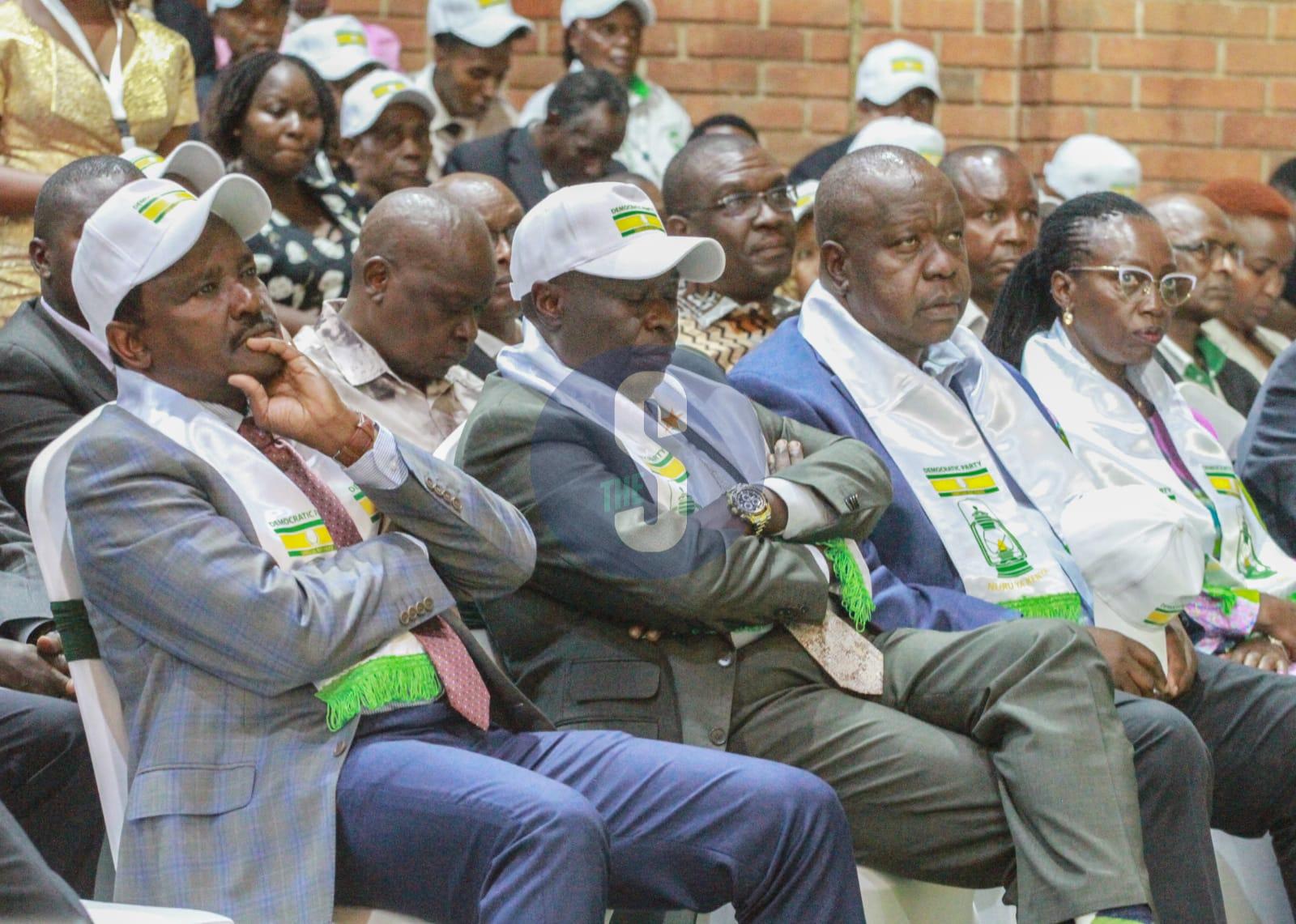
The United Opposition brings together former Deputy
President Rigathi Gachagua, Wiper leader Kalonzo Musyoka, former Interior CS
Fred Matiang’i, DAP-K leader Eugene Wamalwa and Narc Kenya's Martha Karua, among other luminaries.
The Linda Mwananchi team of Edwin Sifuna have signalled a collaboration with the opposition group.
Political observers say Uhuru’s decision to openly align
himself with calls to remove President Ruto from power in 2027 has injected
credibility into the opposition movement.
His re-entry into active politics also comes at a time the Kenya
Kwanza administration is grappling with growing public anger over the high cost
of living, heavy taxation and persistent economic hardship.
A recent poll by Tifa Research showed that a united
opposition remains President Ruto’s biggest threat heading into the 2027
election, especially if key regional kingpins rally behind a single candidate.
Analysts argue that Uhuru’s involvement fundamentally
changes the political arithmetic, particularly in Mt Kenya, where President Ruto
built his 2022 victory after successfully dismantling Uhuru’s grip on the
region.
Now, however, the former president appears keen on
reasserting himself politically while signalling support for a coalition aimed
at denying Ruto a second term.
Unlike in previous elections, where Uhuru and opposition
chief Raila Odinga competed against each other, the current dynamics place him
closer to leaders pushing for a united anti-Ruto front.
Political strategists say the prospect of Uhuru working
alongside Gachagua, Kalonzo, Matiang’i, Wamalwa and Sifuna could significantly
complicate Ruto’s re-election path.
This would be especially if the opposition avoids
internal fallout over leadership and presidential ambitions.
Uhuru is also expected to wield influence
in counties such as Kajiado and Narok, where he historically enjoyed
substantial support during his political rivalry with Raila.
In parts of Northeastern Kenya, Uhuru similarly
maintained strong backing, often splitting support with Raila nearly evenly.
The battle for the country’s largest voting blocs is
expected to define the election.
Nairobi currently accounts for about 2.69 million
registered voters, while Western Kenya has approximately 2.44 million voters.
The northern bloc comprising Mandera, Garissa, Wajir,
Marsabit, Isiolo and Turkana counties contributes about 1.28 million voters.
Observers say Uhuru’s ability to influence parts of Mt
Kenya, Nairobi, and sections of Northern Kenya could present one of the
toughest political challenges President Ruto faces ahead of 2027.
Some analysts believe the position eventually assigned
to Sifuna could determine how effectively the opposition penetrates Western
Kenya and urban voting blocs.
While the opposition views Uhuru’s return as a breakthrough, Kenya Kwanza leaders dismiss suggestions that his
involvement poses a danger to President Ruto’s re-election bid.
Pokot South MP David Pkosing downplayed the significance
of Uhuru’s renewed activism, saying Ruto should remain focused on
governance instead of political noise.
“Absolutely no threat. The other guys are looking for
relevance. President Ruto should focus on national issues like fuel prices,
national security and development. He has a high chance of securing his second
term,” Pkosing said.
Homa Bay Town MP Peter Kaluma similarly argued that the
opposition lacked the capacity to organise themselves to challenge President Ruto
effectively, saying the President was “doing everything right before them.”
But opposition figures insist the political tide is shifting in their favour.
Kitutu Chache South MP Antony Kibagendi, an ally of
Jubilee presidential hopeful Fred Matiang’i, said the political pillars that
propelled Ruto to power were steadily collapsing.
“The prospect of President William Ruto serving only one
term continues to become clearer by the day,” Kibagendi said.
“Over time, I have consistently pointed out that the
very pillars that propelled him to power have steadily eroded - the church, key
voting blocs such as Mt Kenya, the hustler movement, the goodwill of the
international community, public sympathy and the working class.”
Kibagendi accused sections of the ruling establishment
of exhibiting signs of political desperation.
“What is even more troubling is the emerging rhetoric
from some leaders allied to the President, including MPs, Senators and
Governors, openly suggesting that elections can be manipulated if victory at
the ballot proves difficult,” he said.
“Statements such as ‘watajaza debe hata isipojaa’ and
claims that ‘no African President serves only one term’ reveal a growing sense
of political desperation within sections of the ruling establishment.”
Democracy for Citizens Party deputy leader Cleophas
Malala said Uhuru’s involvement gives the opposition strategic depth,
financial muscle and national networks that it previously lacked.
“Uhuru comes with the resources, experience, network and
can mobilise resources, hence a critical injection to the united opposition,”
Malala said.
“Initially, Ruto thought he was the only person with
financial muscle to mobilise the country to support a certain political ideology.
He still thinks that money will be the defining factor. He is a little bit
paranoid when he sees Uhuru trying to offer guidance and trying to put the
opposition together.”
Uhuru’s renewed activism has also triggered sharp
reactions from allies of the President.
Embu Governor Cecily Mbarire and East African
Legislative Assembly MP Hassan Omar recently issued an open letter accusing the
former president of attempting to undermine the government instead of allowing
President Ruto to govern.
The leaders urged Uhuru to respect the outcome of the
2022 election and avoid engaging in what they described as behind-the-scenes
political mobilisation against the administration.
Political commentator Tony Karomo believes Uhuru now
represents the biggest political threat facing President Ruto.
“Uhuru Kenyatta is Ruto's biggest nightmare,” Karomo
said, “Uhuru has nothing to lose, Ruto has everything to lose. Ruto can buy
everyone; he even bought Raila Odinga. But he cannot afford Uhuru.”
Yet despite the growing momentum around opposition
unity, doubts remain over whether the anti-Ruto camp can truly hold together
long enough to mount a formidable challenge.
Some observers argue that the opposition has so far
failed to demonstrate tactical sharpness or electoral effectiveness despite
Uhuru’s perceived influence and political resources.
“They lost all by-elections in Mt Kenya and outside Mt
Kenya. Where is Uhuru Kenyatta's money and connections? There is no energy and
might in their operations,” Mathira MP Eric Wamumbi said.
Others note that Uhuru was unable to stop Ruto’s rise
even while serving as President and controlling the instruments of state power.
“Uhuru has been in opposition since 2018, and he failed
to make the Azimio coalition win in 2022 when he had state machinery. William
Ruto dislodged Uhuru Kenyatta as Mt Kenya kingpin when he was the President,” a
political observer argued.
There are also growing concerns that Rigathi Gachagua’s
political ambitions could complicate efforts to forge a united opposition
front.
Veteran journalist David Makali questioned whether
Gachagua would ultimately subordinate his own presidential ambitions for the
sake of unity.
“At the rate his appetite for getting back to power is
growing, who will stop Riggy G from contesting for president in 2027 to unseat
his nemesis, Ruto?” Makali posed.
“His stealthy moves will soon render the United
Opposition dream a mirage.”
INSTANT ANALYSIS
For now, however, Uhuru’s return to active political
mobilisation has undeniably altered the country’s political landscape and
intensified the battle for the country’s most critical voting blocs. Whether
the opposition can transform that momentum into a disciplined and united
political machine remains uncertain.