

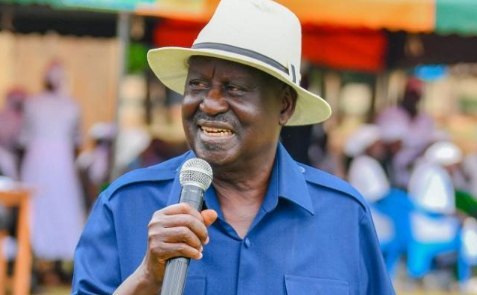
The Kenya National Commission on Human Rights (KNCHR) has supported the government’s proposed reparations framework, with chairperson Claris Ogangah saying its implementation would honour the legacy of former Prime Minister Raila Odinga and strengthen efforts to address historical injustices in the country.
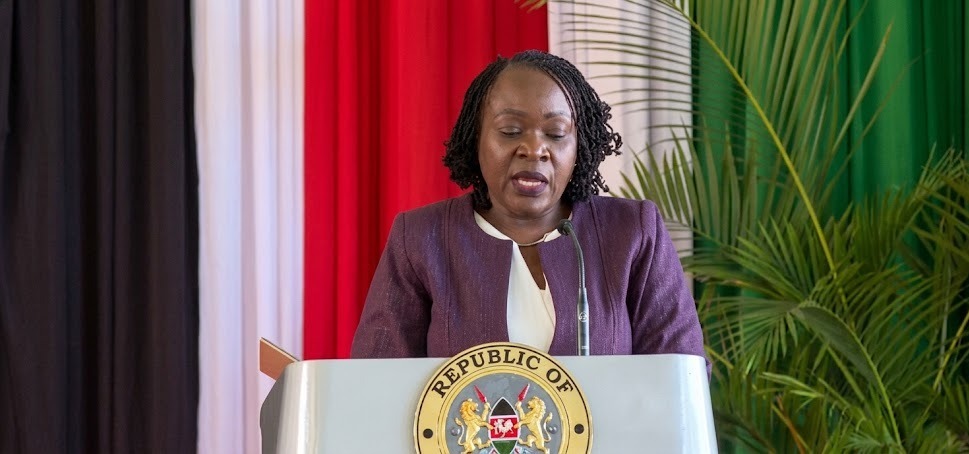
Speaking at State House, Nairobi, during a high-level engagement on justice and accountability, Ogangah said Kenya could not meaningfully discuss human rights and reparations without recognising Raila Odinga’s longstanding advocacy for victims of rights violations.
“His consistent advocacy for the respect of human rights and reparations for victims of violations has significantly contributed to sustaining this important national conversation,” Ogangah said.
Ogangah described the late opposition leader as deeply passionate about confronting Kenya’s past, saying his work focused on both justice and national healing.
“He addressed human rights violations as a critical step in confronting the historical, socio-economic and political challenges that have continued to affect our beloved nation,” she said.
She said the current reparations initiative should be seen as part of honouring him.
“So today’s event, your excellency, is therefore the greatest tribute we can have as a nation to the late Raila Odinga, and implementing the recommendations is an honour to his legacy,” Oganga said.
Turning to the government, Ogangah praised the administration’s push to formalise the framework, saying it reflected a serious commitment to justice and accountability.
“Your Excellency, your bold and deliberate decision to require this reparations framework demonstrates a profound understanding that the state’s obligations to victims must be fulfilled through structured, principled and time-bound action grounded in law, policy and institutional commitment,” she said.
The chair said lasting peace and unity could only be achieved if past injustices are acknowledged and addressed.
“This truly reflects our national moral obligation and profound need for justice, accountability, reconciliation and national healing,” Ogangah said.
“It recognises that sustainable peace cannot be built upon unaddressed grievances and that genuine unity requires acknowledgement of past wrongs, restoration of dignity to victims and a collective commitment to ensuring that such violations never recur.”
Ogangah affirmed the commission’s readiness to support the process, saying it had embraced its responsibility with seriousness and commitment.
“The commission accepted and embraced this responsibility with utmost humility, seriousness, unwavering resolve and above all, a deep sense of national duty and commitment to justice,” she said.