Shock as Sh2.5 billion meant to empower women trapped in unpaid loans, audit reveals
The report cites weak oversight, poor governance and rising financial pressure.
by JULIUS OTIENO
Audio By Vocalize
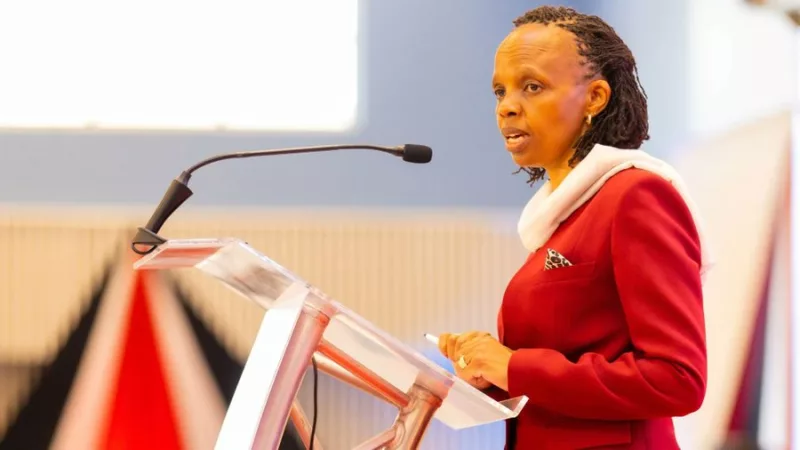
Auditor General Nancy Gathungu /ENOS TECHE
Thousands of women who depend on the Women Enterprise Fund for affordable credit risk missing out on future loans after billions of shillings became tied up in unpaid debts.
A new audit by Auditor General Nancy Gathungu shows the fund is struggling to recover more than Sh2.5 billion in loans.
The audit also cites weak oversight, poor governance and rising financial pressure.
The Women Enterprise Fund was created to help women start and grow businesses. It offers affordable loans to women who may struggle to access bank credit.
However, the audit shows much of the money intended to be distributed to new borrowers remains unpaid.
The report says loans worth Sh1.12 billion issued through Constituency Women Enterprise Schemes have remained unpaid for more than one year, contrary to the fund's lending policy.
Another Sh695.75 million in digital loans issued to 15,234 women groups between July and September 2023 has also remained unpaid for more than two years.
"The management did not explain the measures instituted to recover the loans," the auditor general says.
The report questions the recoverability of the fund's Sh2.54 billion loan book.
Auditors say management failed to show effective measures to recover the outstanding debts.
This means money that should finance new women entrepreneurs remains locked in unpaid loans.
The audit also questioned Sh70.26 million advanced through eight financial intermediary partners.
Although the debts were referred for legal recovery, auditors found no evidence showing whether the cases were progressing or whether any money would be recovered.
"The accuracy and recoverability of the receivables could not be confirmed," the report says.
Auditors also flagged a Sh258.72 million staff car and mortgage loan scheme.
They found no records showing who received the loans, how much was borrowed, repayments made or balances outstanding.
The report also raises concerns about the fund's financial health.
It earned Sh387.24 million during the year and spent Sh631.41 million, leaving it with a deficit of Sh261.7 million.
Although the loss was lower than the previous year's Sh324.72 million, auditors warned that continued deficits could threaten the fund's future.
"The fund therefore continues to operate at a loss, which, if not managed, may affect its future operations and sustainability of services," the report states.
The audit also exposed weaknesses in the digital lending programme.
Auditors found the fund does not own or control the system used to disburse Sh941.9 million in digital loans.
This limits its ability to monitor lending and prevent fraud.
The review found more than 569,000 members were registered in multiple groups.
Another 6,192 groups received Sh307.92 million using duplicate loan identification numbers.
Thousands of groups that did not meet membership requirements also received loans.
Some groups even received amounts below the approved minimum.
Auditors concluded the fund lacks adequate control over its digital lending platform.
The report also highlights governance and staffing problems.
The board held 41 meetings during the financial year, many of which were not properly approved.
The fund also operated with an unbalanced budget, contrary to public finance laws.
Staffing gaps remain a concern.
The agency was understaffed by 176 employees. At the same time, it had 128 more assistant credit officers than approved.
Key departments, including corporate communication and customer service, had no staff.
The auditor general says the weaknesses could undermine service delivery and put public funds at risk unless urgent corrective measures are taken.
INSTANT ANALYSIS
The audit exposes deeper structural problems at the Women Enterprise Fund beyond unpaid loans. Weak loan recovery, poor oversight of digital lending and governance failures have tied up billions of shillings meant to finance new women entrepreneurs. The continued financial deficits raise concerns about the fund's long-term sustainability. Unless management strengthens internal controls, improves accountability and aggressively recovers outstanding loans, the revolving fund could struggle to support women-owned businesses, undermining one of the government's key economic empowerment programmes for women.
This is premium content
Subscribe to Continue Reading
Help us continue bringing you unbiased news, in-depth investigations, and diverse perspectives. Your subscription keeps our mission alive and empowers us to provide high-quality, trustworthy journalism. Join us today to make a difference!

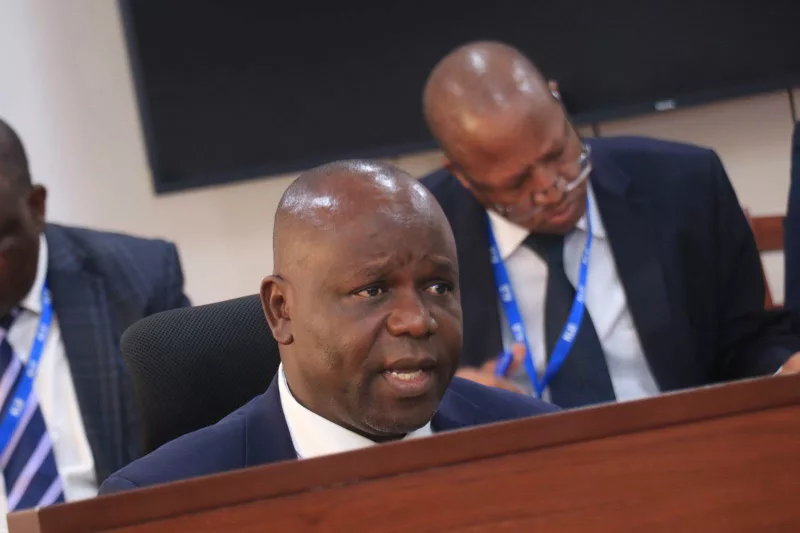
 Auditor General Nancy Gathungu /ENOS TECHE










![[PHOTOS] UHC staff protest contract renewal delays](https://cdn.radioafrica.digital/image/2026/07/24d38f7f-4dbd-42e5-8810-61f3c56490b3.webp)