There
was an interesting story in this newspaper earlier in the week. It alluded to
the former bases of departed ODM leader, Raila Odinga, feeling the pain of
neglect, as the new party “owners” focus more on their Luo Nyanza homeland.
It
has become obvious that no one in the current ODM has the gravitas, the
personality and the capacity to sustain the party’s support beyond its Luo
Nyanza region.
Well,
except the one man they desperately wanted out of the party. After the
departure of Edwin Sifuna as party secretary general, it was only predictable
that ODM would shrink back into a Nyanza political outfit, while its leaders
from other regions keenly check out political events in their neighbourhoods,
before deciding their own next moves.
I am indeed persuaded that the shell that
ODM has become is exactly what President Ruto wanted out of it: a dependent
organisation beholden to him and dancing to his tune.
But
nothing tells the story of regional politics like the by-election in Ol Kalou constituency,
Nyandarua county, which took place last week.
Any neutral person watching the
contest, just as the Fifa World Cup was also drawing to an end, must have
enjoyed the mixture of fine tactics, intrigues, intimidation and bravado
deployed by all sides of the contest, especially the two frontrunners, Ruto’s
UDA and impeached former DP Rigathi Gachagua’s.
The
grandstanding by both sides of the divide ahead of the by-election was a joy to
watch. With each side threatening to “teach the other politics”, the stage had
been set for potent tribal emotions and a competitive environment in which
violence and intimidation often found a stage.
By the time the official
campaign period closed on Monday, July 13, the tension had reached fever pitch.
It was clear it was no longer just a constituency contest, but practically a
national contest between Ruto and Gachagua.
Kenyan
politics can be very strange. The way elected leaders and presidential
surrogates supporting the ruling party candidate in Ol Kalou spoke and acted
ahead of the vote, it seemed like they were either too sure about the impending
result, or knew something the rest of us didn’t.
Nevertheless, the result
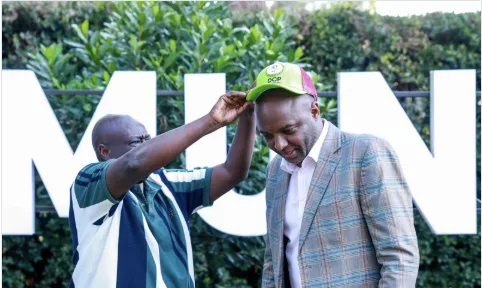
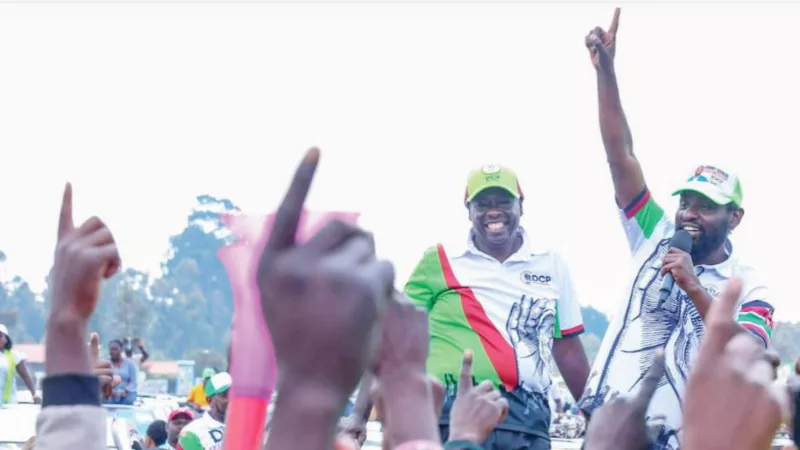
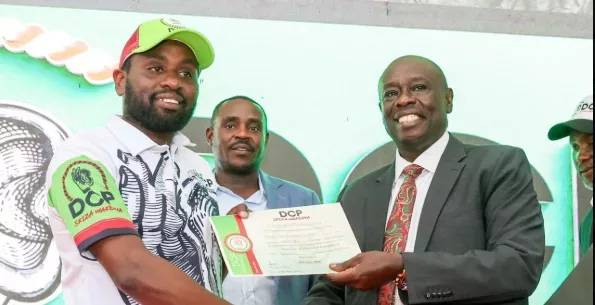
provided a harsh lesson to them, particularly proving that the Democracy for Citizens
Party had done quite well in the previous by-election in Ruto’s backyard in
Emurua Dikirr, Narok county than Ruto and UDA did in Ol Kalou. The result in Ol
Kalou wasn’t close.
More
importantly, the vote-protection exercise was on another level. Any aspirant
looking for take-aways from the by-election had many to pick from.
In an
environment of mistrust, DCP went out of its way to enforce a magnificent
vote-watching scheme, in which vigilance remained on a very high level. If
there were ever any plans to interfere with the voting or tallying process,
that window was firmly shut.
Soon
after the result, and almost predictably, Gachagua read out a list of names,
made up of sitting MPs whom he asked the people to reject in 2027.
The
consensus from Ol Kalou was that elected leaders seeking reelection but
choosing to stick with the President or his UDA party would have an uphill task
in next year’s polls.
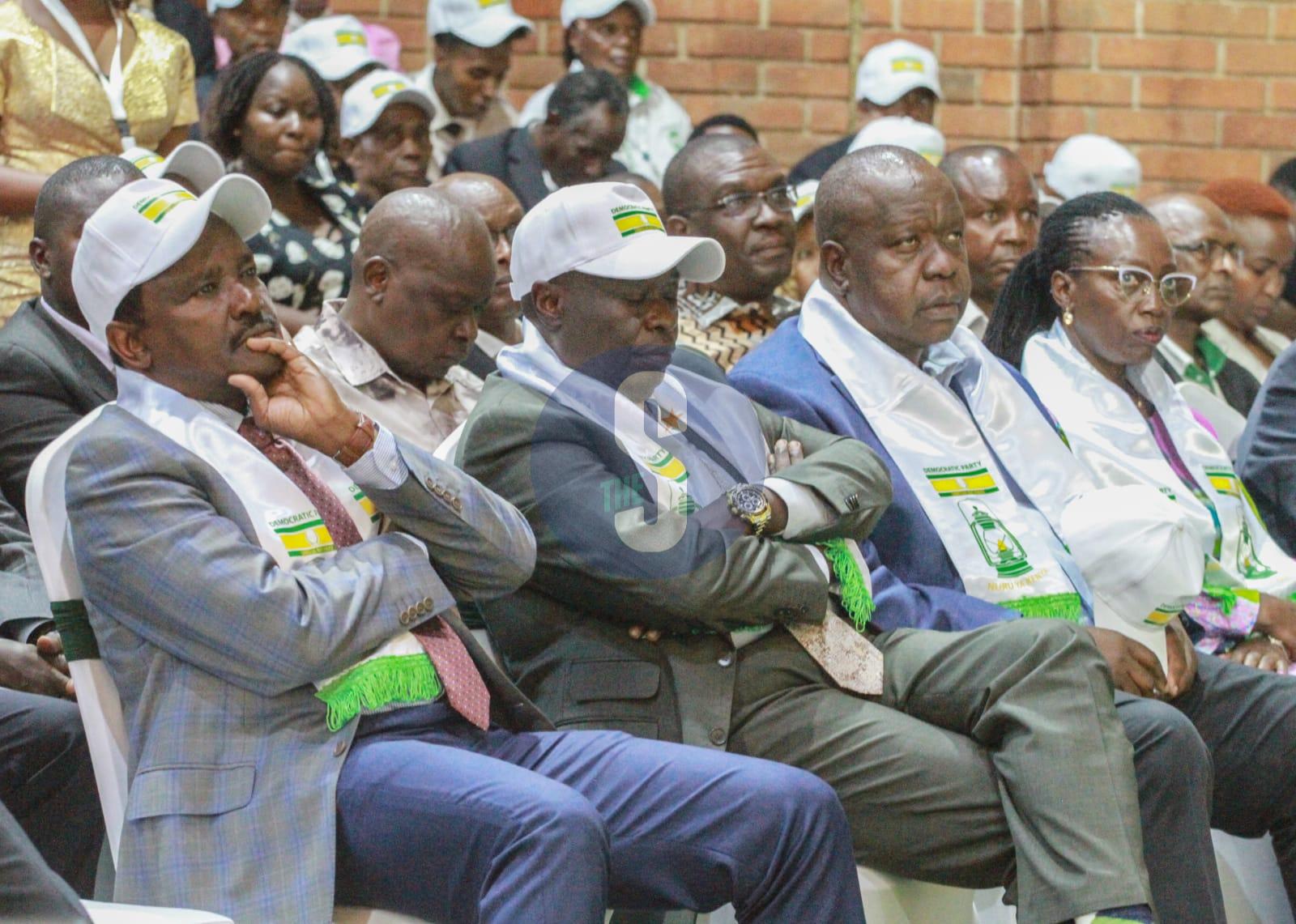
In every sense, the former DP is stamping his authority
and setting the stage to ensure that only politicians allied to him will have
any chance in Central.
While at it, Gachagua doesn’t seem much interested in
what goes on anywhere else in the country, preferring to consolidate his local
support base before moving on to his pet occupation: the removal of Ruto in the
next general election.
Just
days after the UDA whitewash in Ol Kalou, the next instalment of the season of
regional alignments happened when on Wednesday this week, a surprise meeting
happened between former Interior CS Fred Matiang’i and presumed Linda Mwananchi
presidential candidate, Nairobi Senator Edwin Sifuna.
Ahead of the encounter,
the media had been awash with reports of Matiangi’s discomfort over elected
leaders from his Kisii base hobnobbing with Sifuna and helping entrench the
latter’s position as the runaway favourite to be picked as the joint opposition
candidate to face in Ruto in the general election.
Details
of the Matiang’i-Sifuna meeting were not immediately available, but the obvious
inference was that Matiang’i was setting the boundaries and letting the Nairobi
senator know that whereas the public plan was that the opposition would end up
running together, each luminary would zone off their territory and draw a red
line on it.
It isn’t going to be long before murmurs are heard from the
direction of Wiper, in Ukambani, where local supremo, Kalonzo Musyoka, nurses
long-held presidential dreams.
There
is only one problem for regional kingpins in the coming months. Whereas nearly
every presidential hopeful currently has to consolidate their regional base in
order to negotiate positions in an upcoming alliance, the start of Sifuna seems
to rise in a manner where the people who prefer him as their next president do
not necessarily answer to these gate-keeping tribal lords.
In other words, of
all presidential hopefuls, he currently possesses the national support to go
with any alliance, or perhaps even alone, without the encumbrances brought
about by the regional considerations.
Of
all the regions of the country, we can, at this juncture, say that the two that
united to form the UDA government in 2022 have fallen out beyond repair and
will most certainly vote two separate ways.
And whereas Gachagua sits at the
apex of the political pyramid in Central, his impeachment brings to question
whether he is ever going to make it onto the presidential ballot next year.
He
strikes me as one now firmly focused on the quest to have as many MPs elected
on DCP as possible, while also propping up a potentially winning presidential
candidate, from whom he will extract maximum concessions after election.
My
instinct is that most of the opposition luminaries seeking to dethrone Ruto are
aware that their only credible chance is in fielding a joint candidate. There
seems to be near-consensus that the flagbearer is now a contest between Sifuna
and Kalonzo, with the other set to be slotted in neatly as the running mate.
The question is on whether Kalonzo, if he isn’t the top of the ticket, would
agree to deputise the much younger Sifuna. The reverse doesn’t seem to worry
their strategists much.
But
to retain relevance, and extract maximum benefits from any joint electoral
successes, regional kingpins will enter the bargaining mode from now, while
gate-keeping their zones in order to also ensure their parties control a huge
stake in these regions.
This model disappoints me a lot. Having been a voter
and alive to watch the exciting Narc-Rainbow revolution in 2002, I’ve always
hoped that the opposition would end up coalescing into a powerful coalition
akin to Narc, where even party nominations were a joint affair.
The net effect,
at least temporarily, was that Narc made regional political parties irrelevant
and created a national movement which, save for the greed and foolishness of
its leaders, would have delivered the famed second liberation effortlessly.
But
it’s been a lifetime since Narc, and a lot has changed. The political mistrust,
caused in no small part by the betrayal in Narc itself, fraudulent elections
and a decline in democratic values, have caused the rise of small regional
parties, many targeting merely to win the support of tribes.
After Ol Kalou,
the political destiny of every region is now becoming clearer, portending
exciting times ahead.
In a country where tribal alignments supersede all, we
can now start seeing how each region will vote, if all factors remain largely
constant.




![[PHOTOS] Linda Mwananchi takes Trans Nzoia by storm](https://cdn.radioafrica.digital/image/2026/07/0d132395-ad4b-4671-867e-880c9f8144f5.webp)