The general listened, said little, and then
gave the order that shocked Russia. Abandon Moscow. He reasoned that Napoleon’s
army was too powerful to be stopped.
Napoleon
entered Moscow without a fight, only to find it deserted and burning. He waited
five weeks for Russia to surrender, but no surrender came.
Eventually he began
the long journey home through the brutal Russian winter. Of the 600,000
soldiers who entered Russia, fewer than one in six returned.
Napoleon captured
Moscow, but lost the campaign. Kutuzov gave up the city but prevented Russia
from losing the whole war.
On Thursday,
July 16, Ol Kalou voted.
The
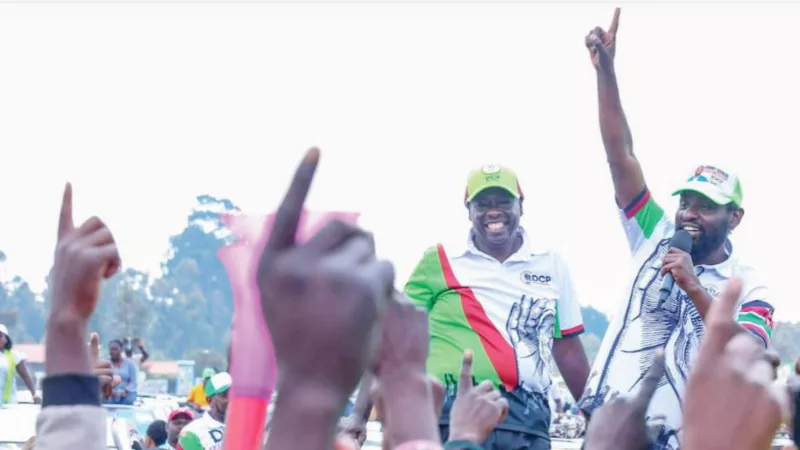
arithmetic is not in dispute. Rigathi Gachagua’s DCP won the seat by a
landslide, while UDA finished a distant second in a field of nine candidates,
through a voter turnout that stood at 57 per cent, which is remarkably high for
a by-election.
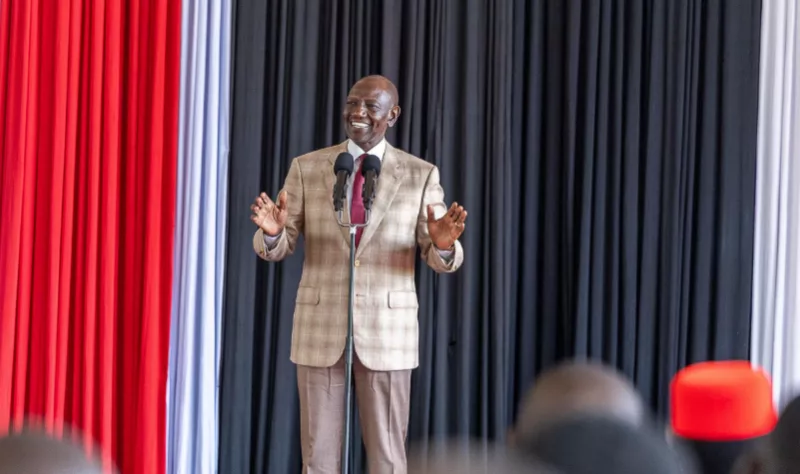
This has been seen as a humiliation for President William Ruto,
coronation for the former deputy president, and proof that Mt Kenya has
divorced the administration it helped elect.
DCP won its first seat in the National Assembly.
What
sharpens this victory is not its numbers, but its history. This was not
opposition territory captured, but government home ground lost. In 2022, this
same constituency gave President Ruto one of its richest harvests on the
mountain.
UDA and its
supporters have correctly pointed out that Ol Kalou was only one out of 10 by-elections and that they won the other eight.
Their critics have
responded, equally correctly, that although the seat was previously held by
Jubilee, the context took place on the larger political ground of Mt Kenya
region that voted overwhelmingly for UDA in 2022. Ol Kalou was therefore not technically a UDA seat lost, but it
was politically home ground lost. Both claims are true, but neither captures
the deeper story.
Begs the
question. Who exactly lost Ol Kalou, and who has just been handed Moscow?
Let’s put
aside what the result means for the winner and consider what it offers the
loser. Any politician seeking reelection should read a byelection not simply as
a verdict but as reconnaissance, a real-world survey conducted at the ballot
box, with no hypothetical voters and no manufactured responses.
By that
measure, Thursday’s defeat yielded intelligence that no nine
comfortable victories never could. UDA should therefore study Ol Kalou defeat without becoming imprisoned by it.
The first Ol
Kalou lesson is a clarified map and spot price. The most
expensive mistake UDA can make is to spend the next 13 months courting a vote
that seemingly cannot be bought at any price.
Ol Kalou has now certified, with notarised finality, that the mountain is no
longer a persuadable market. That certificate is painful, but it is also
liberating.
Every shilling and every day that would have been sunk into the
mountain for campaigns can now be redirected to the margins where elections are
actually decided. These are the regions and sub-regions that are still
listening, still undecided, still open to a bid.
Economists
distinguish between a spot price and a forward price. The spot price tells you
what an asset is worth today. The forward price reflects expectations about its
future value. Ol Kalou revealed the current political price of UDA in that
region.
It did not automatically settle the price at which the entire country
will trade President Ruto, 13 months later. This does not, however, make Ol
Kalou’s win unimportant.
A collapsing spot price is information. It tells the
owner that the market has found a problem. But a general who learns the enemy’s
true position from a skirmish, has lost the skirmish but won the intelligence.
The second
is unanimity. For the Kikuyu nation, this is the deepest irony of all.
Unanimity feels like power. However, in the marketplace of Kenyan coalition
politics, it is the cheapest commodity on offer, because both sides price it at
zero.
In coalition bargaining, the most valuable vote is never the loyal vote
bloc. It is the vote that can still walk away. The price in every auction is
set by the second bidder, which is the rival offer that forces the first bidder
to dig deeper.
Therefore, a
vote with two plausible buyers commands concessions such as the running mate
slot and the Cabinet positions.
The incumbent will
not bid for what he cannot win, not as punishment but as portfolio management,
and the opposition will not pay for what it already owns. Nobody serenades a
vote that has already sworn itself away. And leverage does not live in the
landslide.
It lives in the margin of doubt, in the small per cent that might
move, the constituency that might listen, the bloc that might, just might, be
persuaded.
Elections are decided in places still capable of surprise, but the
mountain, roaring in one voice, has surrendered the only element surprise
demands, doubt. It has traded its margin of doubt for the pleasure of a single,
thunderous afternoon.
And this is
what Ol Kalou did on Thursday. It showed that former DP Gachagua can deliver a large share of the mountain’s
vote. And this makes him an important coalition partner, but it also weakens
his bargaining position.
This is because, if the mountain is firmly committed
to him, and strongly opposed tRuto, other opposition leaders now know that the
mountain votes have nowhere else to go. They therefore have little incentive to
offer Gachagua generous terms in exchange for votes they expect will already
support whichever coalition opposes Ruto.
Third, is
the crack appearing in the mountain. The clamour to see the mountain as two
mountains, east and west of the massif, is no longer idle talk. To shore up his
numbers, Ruto does not need the full mountain back. He only needs a third of
it, and the third he needs already has a son in the presidency.
Rigathi’s
insults and mockery of Kindiki only widen the crack, because what may entertain
his supporters in the west, sounds like contempt in the east that regards
Kindiki’s elevation as their own political arrival. That is the peculiar
economics of this taunt.
Every joke is heard twice, once as comedy in the west
and once as an invoice in the east. So in essence, each time Gachagua campaigns
in the mountain, he is campaigning twice, for himself in the west, and for Ruto
in the east. UDA does not need to widen this crack. It only needs to keep the
microphone on.
Fourth is
the umpire. For weeks before the poll, DCP raised the alarm on voter bribery
and alleged a rigging scheme that included pre-marked ballots, against an
electoral commission the opposition has long painted as the administration's
instrument.
Then the votes were counted, the commission declared a landslide
against the ruling party within hours, and the winners accepted the declaration
with celebrations that ran through the night, and the following days.
Consider
what has just happened and what makes it potent. Ol Kalao will now be cited
whenever the opposition questions the commission’s neutrality. Without
intending to do so, DCP has strengthened the referee’s defence.
Whether UDA
suffered a genuine humiliation or a strategic loss, the effect is the same. The
umpire enters the general election carrying a testimonial written in the
opposition's own hand. Kutuzov did not burn Moscow for Napoleon’s benefit. The
city burned all the same.
Fifth is
transferability. For DCP, the seat and the momentum are real, but the party
will not walk to 2027 alone. It operates within the United Alternative, a
crowded coalition of leaders with competing ambitions.
Ol Kalou has therefore strengthened Gachagua’s party west of the
mountain; however, the by-election cannot answer the more difficult question of
transferability. A by-election measures loyalty to a grievance. A presidential
election measures loyalty to a compromise.
These are different instruments, and
so far, only one of them has been read. You see, Ol Kalou
voted overwhelmingly for a son of the soil, on home ground, in a contest framed
as the mountain’s referendum to its perceived betrayal.
A general
election will ask something categorically different. Whether that same fervour
will transfer, undiluted to a coalition candidate from outside the region,
selected through negotiations they have no control, has not been tested.
The moral
force of Ol Kalou was that their vote could not be bought. The voters took the
goodies, said thank you, then voted for its choice. So Gachagua’s quote for three
million per vote, converts this back into merchandise, and quietly declares the
inventory his.
You cannot market the same vote as a conscience on Monday and a
commodity by Friday. Otherwise, the proposed change is not from coercion to
choice, but from one compulsory loyalty to another.
Finally, my
unsolicited advice is to DCP. Kutuzov understood that losing one city did not
necessarily mean losing the war. Napoleon failed to understand that occupying
one city did not mean he had won the war.
Audit your victory. When an adversary
with the machinery of the state at his disposal loses a city this gracefully,
the correct response is not endless celebration and chest thumping. It is
inventory.
Ask what he kept, and what you are now holding, with winter coming.
Napoleon also entered his burnt Moscow prize to the sound of his own men
cheering.
Wise
generals do not engage the enemy in battle until they know they have won the
war - Sun Tzu









![[PHOTOS] Linda Mwananchi takes Trans Nzoia by storm](https://cdn.radioafrica.digital/image/2026/07/0d132395-ad4b-4671-867e-880c9f8144f5.webp)