

For Peninah Munyoki, the uncontrolled sand harvesting along the seasonal Enziu river in Kitui county is nothing short of a curse.
The harvesting happens round-the-clock in Nguni ward, Mwingi Central subcounty.
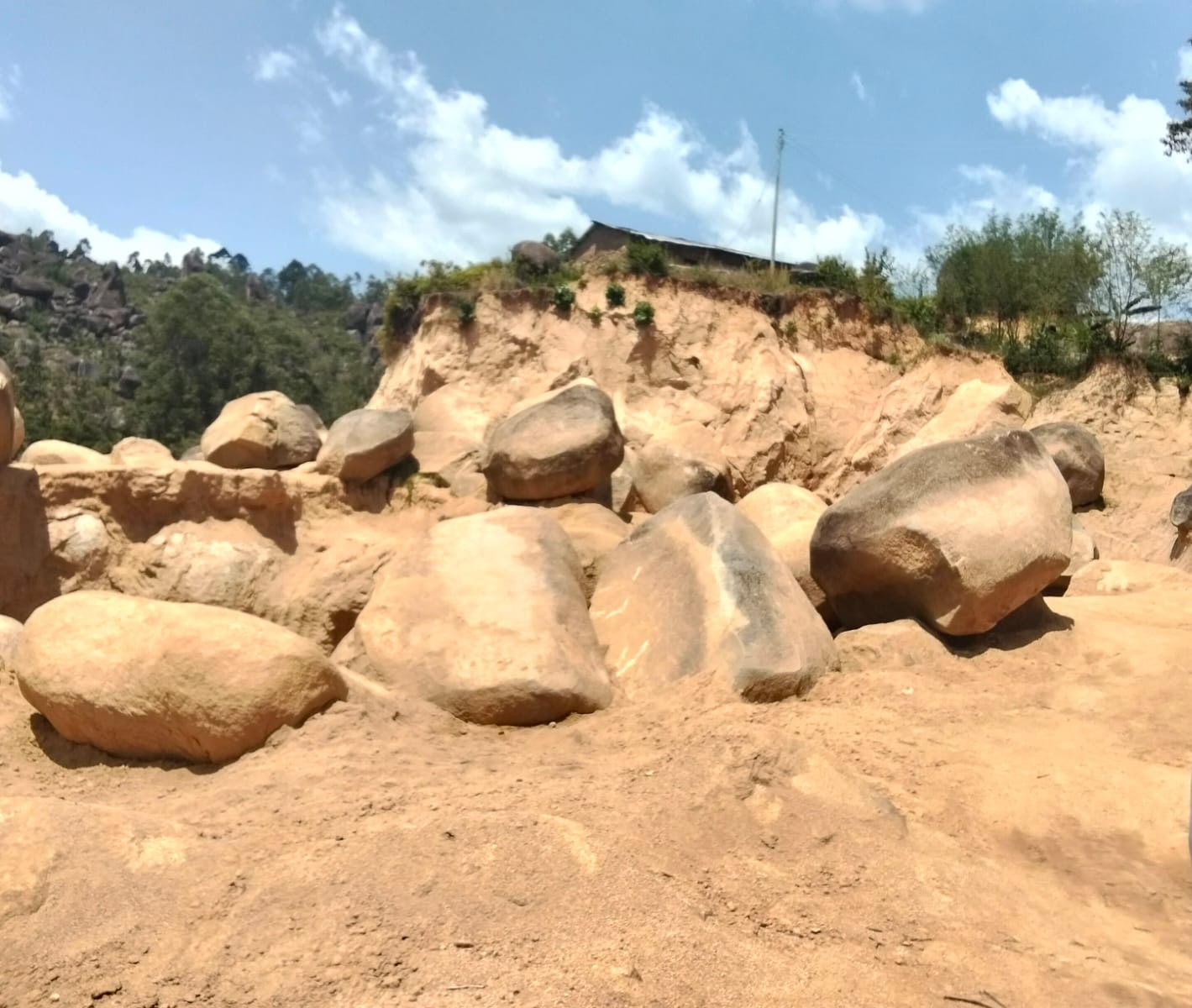
Taking us on a walk along the once-thriving river, Munyoki reflects on what she describes as years of environmental destruction, dwindling water resources and growing social problems brought about by unchecked sand mining.
“Whichever way it is viewed, the sand harvesting business is a disaster,” she explains during our visit on May 21.
“Look at the massive environmental degradation it has caused, the drying up of water sources and the decline in agricultural production.”
Her own Mwania village community lives adjacent to Enziu river. Access to water has become increasingly difficult, particularly during the dry season.
“Sand mining has lowered the water table. Getting
water during the dry season is now a nightmare,” she says.
“The trucks entering the river bed contaminate water sources through oil leaks and exhaust fumes.”
The few remaining water sources are often rendered unsuitable for human consumption as contamination and increased salinity affect water quality.
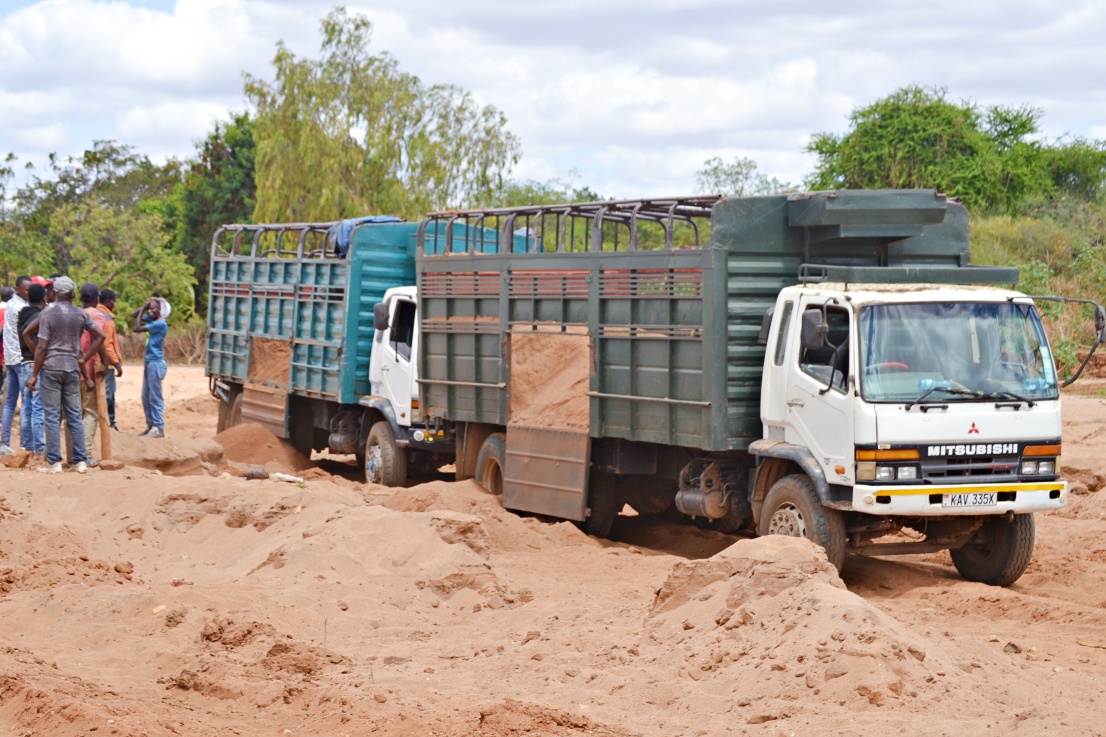
Munyoki took the Star to a sand harvesting site near Mwania market centre, where a sand lorry was buried in the sand by floods after breaking down, to prove how the river water was getting contaminated.
“Since time immemorial, Enziu river never used to dry up. There were springs everywhere. Today, that is no longer the case,” she says.
“The water points have largely dried up and whatever
little water is available is often salty.”
The consequences, she says, are borne disproportionately by women.
As water sources disappear, women and girls are forced to travel longer distances in search of water, exposing them to physical exhaustion, insecurity and domestic tensions.
“Many women complain of being reprimanded or even subjected to violence by their husbands when they spend long hours fetching water in far-off water holes during the dry season,” she says.
Food production has also suffered immensely. Extensive excavation along river banks has accelerated soil erosion, reduced soil fertility and generally undermined farming activities.
“The burden falls heavily on mothers. They have to work much harder to ensure there is food on the family table,” she says.
VIOLENT PROTESTS
She added that repeated appeals to leaders for intervention for regulated sand mining have largely gone unheeded by elected leaders.
The lucrative sand business has also fractured community relations, she further offered.
Munyoki recalls a violent confrontation on February 10 between residents of Kaunguni village and Mwania villages that left one person dead and several others injured. The two villages are found on the banks of Enziu river.
“A number of women were injured and sexually assaulted during the confrontation, which also left one man dead after he was slashed with a panga,” she says.
She said the conflict pitted environmental conservation advocates against those benefiting from the sand trade.
“It was a battle between those who wanted to protect the environment and those who were only interested in benefiting from the sand without regard for its negative impact on the community,” she says.
Beyond environmental degradation, the villager elder said the sand business was robbing children of their future.
She said an increasing number of schoolgoing children are abandoning their education to participate in sand loading and other related activities.
“We are facing a very sad situation. People involved in the sand business lure young girls into relationships with small amounts of money. Some become pregnant and drop out of school, while others end up in child marriages,” she says.
She adds that boys are equally affected.
“A higher number of schoolboys are among the worst
hit. They are hired for meagre wages to load sand onto trucks,” she says.
“Many cannot resist the temptation of quick money and end up skipping school to work at harvesting sites.”
Even more alarming, she says, is the growing exposure of children to drugs and illicit alcohol.
“Schoolboys and girls are being introduced to drugs, such as bhang and illicit brews,” she says.
“The influence of outsiders, especially sand transporters, is corrupting the morals of our children. Our future is being destroyed as we watch helplessly.”
Munyoki warns that children frequenting sand harvesting sites are exposed to sexual exploitation, sexually transmitted infections and insecurity.
“Their safety is not guaranteed when they sneak into sand harvesting sites at night. They are at times defiled, raped or coerced into dangerous activities,” she says.
SECURITY, EDUCATION HIT
Fellow resident Kasyoka Musila says uncontrolled sand harvesting has become a major security issue in the area.
“Serious bad blood has developed between those
perceived to oppose the activity and those believed to support it,” she says.
“Open threats to lives have been exchanged and who knows, another person may be killed, as happened last February.”
Because most sand harvesting activities occur at night, Musila says girls who venture to the sites often become victims of sexual violence, early pregnancies and ultimately child marriages.
“Ultimately, the lives of these girls are ruined. Many are left with children to raise alone while their education comes to an abrupt end alongside the dreams of a better future,” she says.
The burden of caring for teenage mothers and their children often falls on already struggling families, particularly mothers.
“It becomes a very stressful situation. Mothers are blamed for neglecting their daughters even when the problem is much bigger than the family itself,” she says.
Musila believes all stakeholders must come together to establish a sustainable framework for sand harvesting that balances economic benefits with environmental protection and social hygiene.
The impact on education is evident at Mwania Comprehensive School.
The school's Parents and Teachers Association chairperson, Mwanziu Muthuvi, says enrolment has been steadily declining due to the attraction of the sand business to learners.
“School children are recruited into sand harvesting and related activities regardless of their age,” she says.
“Some girls leave school after becoming pregnant, while others are drawn into child marriages and drug abuse.”
She says the school's population has dropped dramatically, from about 500 learners to about 300, in a relatively short period.
“The dropout rate has become alarming. The sand business is directly affecting education in this area,” she says.
Nguni Assistant county commissioner James Munene confirms the worrying trend.
“I have a list of 24 children from 13 families who have dropped out of Mwania Comprehensive School since the beginning of the year,” he says.
“Some are believed to have joined sand harvesting activities.”
Munene says government authorities are planning interventions aimed at returning children to school.
“We will ensure all school-going children return to school. A major crackdown will be carried out soon,” he says.
CALLS FOR REGULATION
David Masauru, a resident of the neighbouring Katiliku village, watches the unfolding situation with concern. He is also an official of the Water Resources Users Association responsible for the Upper Enziu river basin.
“I have been trained on environmental conservation,” he says.
“To sustain life, we must conserve water. To conserve water, we must conserve sand and protect the environment.”
Masauru says sand serves as a natural reservoir that stores water beneath riverbeds. Excessive extraction disrupts the natural system.
“Sand harvesting has caused water to disappear. Communities along the Enziu river basin, from Mwania to Mutwangombe, are experiencing severe water shortages because the water table has dropped significantly,” he says.
The consequences extend to agriculture, he says.
“Micro-irrigation farming along the river has declined significantly and in some places stopped altogether,” he says.
“People are facing food insecurity and malnutrition because vegetable and horticultural production has dwindled.”
Masauru says fruit trees, such as mangoes, are also drying up due to declining groundwater levels.
He adds that residents who previously operated tree
nurseries have seen their projects collapse because seedlings cannot survive
without reliable watering.
“If this situation continues, all green vegetation will potentially disappear,” he warns.
“Riparian areas will turn into wastelands and eventually desert-like landscapes. People may even be forced to migrate when the area becomes uninhabitable.”
Beekeeping, once a thriving economic activity in the region, is also under threat, he says.
“Bees thrive where there is water and vegetation. As water sources disappear, the bees migrate elsewhere,” he says.
“Honey production is declining and people are losing a dependable source of income.”
Kitui Environment executive Richard Mwendandu acknowledges the damage caused by uncontrolled sand harvesting.
“Whenever a natural resource is overexploited, degradation follows,” he said.
Mwendandu says uncontrolled sand mining has contributed to land degradation, poor agricultural productivity, loss of livelihoods, biodiversity decline and severe soil erosion across parts of Kitui.
He says the county government enacted the Kitui County River Basins Sand Utilisation and Conservation Act to address these challenges.
However, the implementation of the law was not an open-and-close scenario.
“We must implement the law systematically rather than through brute force,” he says.
“We are building the necessary structures required under the law, including sand cooperatives, site management groups, designated sand yards and enforcement mechanisms.”
Nema county director Catherine Adunga said commercial sand mining cannot legally take place without an Environmental Impact Assessment and a valid licence.
She said despite widespread commercial sand mining activities across the Mwingi region, only six sites have approved EIA reports and valid licences.
“Some parts of Kitui have experienced excessive sand harvesting, leading to environmental degradation and riverbank erosion,” Adunga said.
The gap between laws and reality points to the scale of illegal operations taking place in the area.
Nevertheless, she insists enforcement action remains an option.
“Nema has the legal authority to arrest and prosecute individuals who violate environmental laws. Enforcement, however, happens as a last resort,” she says.
For residents of Mwania and neighbouring areas, action cannot come fast enough. With the water sources shrinking, farms become less productive and children abandon classrooms for sand pits.
Many a resident fears that unless meaningful intervention is taken, the once life-giving Enziu river may become a symbol of how unregulated natural resource exploitation could devastate an entire community.









![[PHOTOS] Calm prevails in Kisumu, Homa Bay](https://cdn.radioafrica.digital/image/2026/06/dff8923b-c99a-4f40-a4be-cc996653e4e0.jpg)