Two years after the June 25, 2024, protests, the pain
remains raw for families who buried their children and have spent every day
since learning how to live with the loss.
This week, the government activated a Sh2 billion
reparations programme for more than 1,000 victims and families affected by the
anti-Finance Bill demonstrations.
The move follows a directive by President William Ruto
in March for the Kenya National Commission on Human Rights to develop a
compensation framework.
For many of the bereaved, however, the announcement has
reopened old wounds rather than healed them.
No amount of money, they say, can replace a son, a
brother, a friend or a future that was cut short.
For Chrispin Odawa, the memories remain vivid.
His son, Rex Masai, became the first casualty of the
June 2024 protests after he was shot in the leg and bled to death.
Two years later, Odawa says he has tried to stay strong.
His wife has struggled more.
“As a man, you keep a brave face. But his mother
developed high blood pressure,” he said.
The illness has strained the family's finances, adding
another burden to a grief they continue to carry largely on their own.
Odawa says what families need most is counselling,
psychosocial support and a community of people who understand their pain.
On compensation, he remains unconvinced.
“I think they're doing it out of pressure… and for
political mileage. No amount of money can bring back their lives.”
He points to victims who survived with amputated limbs
and permanent injuries, saying many families have been torn apart by the
aftermath of the protests.
As the country marks the anniversary, Odawa insists the
day's events should not be viewed as a protest but as a memorial prayer march
to honour those who never came home.
“My son was shot in the leg and he never survived,” he
said, referring to recent remarks about shooting protesters in the legs.
“When
the President went to the press, I felt like he mocked me.”
His message remains simple: citizens seeking a better
Kenya should not be met with violence.
Kelvin Simba carries a similar burden. His brother,
Brian Kasaine, was killed during the demonstrations.
The loss changed him forever.
“It really shows that the state has agreed it killed its
citizens,” he said of the compensation programme.
“However, no amount of money
can replace a loved one or erase the pain carried by families.”
For Simba, reparations without accountability are
incomplete.
“Compensation should go hand in hand with the truth,
accountability and justice. Families deserve to know that what happened will
never happen again.”
As the anniversary arrives, he hopes those who died did
not do so in vain.
“I hope the memory of Kasaine and all those that lost
their lives inspires us to build a more democratic, peaceful and accountable
Kenya.”
Like many affected families, Simba says there has been
little structured support to help them process their grief and rebuild their
lives.
Magdalene Muthoka knows that loneliness all too well.
Her son, Elijah, died during the first anniversary
commemorations a year later.
She says the compensation may provide some practical
support, especially for Elijah’s sister who is in university, but it cannot
fill the void left behind.
“No amount of money can adequately pay for the life of
someone's child,” she said.
“A life cannot be paid for in cash.”
The tragedy shattered more than her family.
Muthoka says she lost her business as customers drifted
away and some members of the community blamed her for allowing her son to
attend the protests.
The experience left deep psychological and emotional
scars.
“No one came to talk to us, to ask how we are doing, how
life is treating us. There is total rejection,” she said.
Yet amid the grief, she has found moments of comfort in
church.
“At least there, they talk about the Bible. When I go
there, I hear prayers, and we ask God to forgive us. I feel healed.”
Her plea is for peace.
“Life is so precious. Once it is destroyed, it has no
repair.”
Elijah’s sister, Claire Ngina, still struggles to accept
her brother’s death.
She remembers hoping he would survive despite the doctors'
warning that his recovery would be difficult.
“We were ready to accept him and hoped even with
hospital visits, with time, he would get better,” she said.
“But when he died,
it hit us hard. We couldn't move on.”
Ngina says the family was promised counselling support
that never came.
“We were told that counsellors would come and talk to
us. To date, we haven't seen anyone.”
Although the family completed compensation claim forms,
she says justice remains their priority.
“We want justice first, because no amount is equivalent
to Elijah's life. I want my brother and mum's son back.”
Among those living with disabilities is Sheila Awa, who developed sight challenges after coming into contact with tear gas. As a result, she can no longer fend for herself and her children.
"It is okay to compensate victims," she said of the reparation programme, "but I would want treatment to enable me to resume my previous life where I could work and provide for my children. I would appreciate any help, including from well-wishers, to enable me to regain my sight."
She said her whole life was changed and she is confined to her house all day.
To observe the day, Awa called for peace and love among Kenyans.
Across the testimonies, a common thread runs through
every conversation.
While compensation may offer financial relief, it cannot
quiet the grief, answer unanswered questions or deliver accountability.
For these families, justice is not measured in
shillings.
It is measured in truth, responsibility and the hope that no other parent
will have to bury a child under similar circumstances.




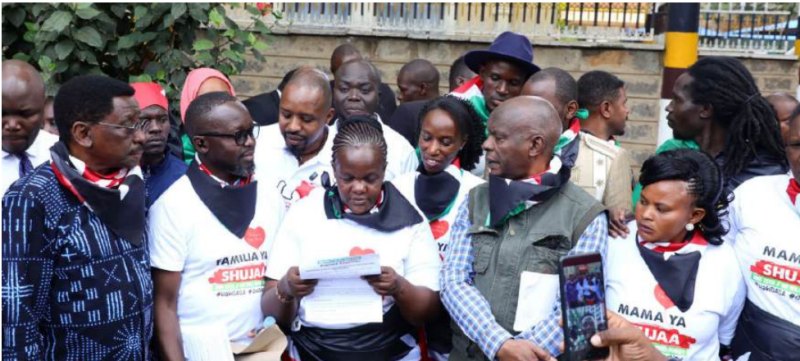
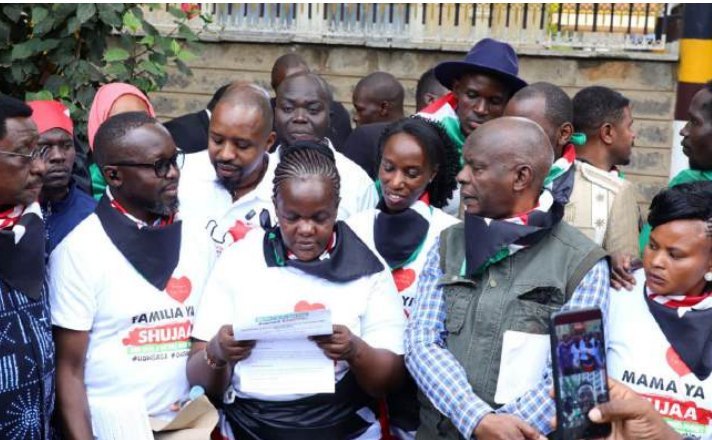 Siaya Governor James Orengo, Rex Masai’s father Chrispin Odawa, mother Gillian Odawa, former Makueni Governor Kivutha Kibwana with other families whose relatives died during Gen Z protests and civil society members outside Jogoo House after delivering a notice of planned demonstrations on Thursday last week /EZEKIEL AMING’A
![[PHOTOS] Raila Odinga Stadium construction enters home stretch](https://cdn.radioafrica.digital/image/2026/06/45f6990c-4882-4cd2-b83c-8fc730dcdce5.jpg)