It’s now official that the 2027 general election will be held on
August 10, the electoral agency has announced, as it unveiled an ambitious poll
roadmap.
The new timelines now set the stage for a bruising campaign,
especially for the presidential contest, where several opposition bigwigs have
lined up to unseat President William Ruto.
According to the Independent Electoral and Boundaries Commission
Operations Plan unveiled on Wednesday, IEBC plans to conduct another mass voter
registration drive in early 2027.
The exercise, which would be a do-or-die for the political
elite, will start on January 11 and will end by February 9.
The commission targets 6.3 million new voters before the
election through Continuous Voter Registration and Enhanced Continuous Voter
Registration campaigns.
A similar exercise conducted between March and April this
year yielded 2,612,725 new voters.
In 2022, there were 22,102,532 registered voters.
According to the plan, presidential candidates will be
cleared between May 29 and June 11, 2027.
This means the opposition team, including Kalonzo Musyoka,
Rigathi Gachagua and Fred Matiangi still have many months to decide on the
lineup.
However, public officers seeking elective positions shall
have to resign on or before February 9 next year.
This means civil servants only have about eight months left
in office.
Another key timeline is that political party nominations
will be conducted by May 9, 2027.
“Parties intending to present a candidate in the General
Election shall conduct its primaries and resolve intra party disputes on or
before Sunday, May 9, 2027,” part of the plan reads.
Nominations are usually a real test for candidates coming
from the backyards of well established political parties.
Many of those who succeed at that stage are as good as
elected.
IEBC says candidates intending to participate in the
election as independent candidates shall resign from any registered political
party at least three months before the General Election.
This will be by
Sunday, May 9, 2027.
This will however allow those seeking to party hope some
window to contest as independent candidates.
“Candidates intending to participate as independent
candidates shall submit their names and symbols that they intend to use to the
commission on or before Sunday May 9, 2027,” IEBC said.
Disputes arising from nominations shall be determined within
10 days of the lodging of the dispute with the IEBC.
The lodging of the dispute shall not be later than Saturday,
June 12, 2027.
Candidates will be cleared by IEBC between May 29, 2027 and
Friday, June 11, 2027.
The official campaign period shall commence on Saturday, May
29, 2027 and cease on Saturday, August 7, 2027 — 48 hours before the General
Election Day.
Identification and gazettement of tallying centres will take
place in June, while polling stations will be confirmed and gazetted between
July 4 and July 8, 2027.
The voter register will be displayed at polling stations
between August 1 and August 3 before Kenyans head to the ballot on August 10.
In a move aimed at increasing transparency, the commission
said it will also publish details of polling stations lacking network coverage
and provide information on communication arrangements ahead of the election.
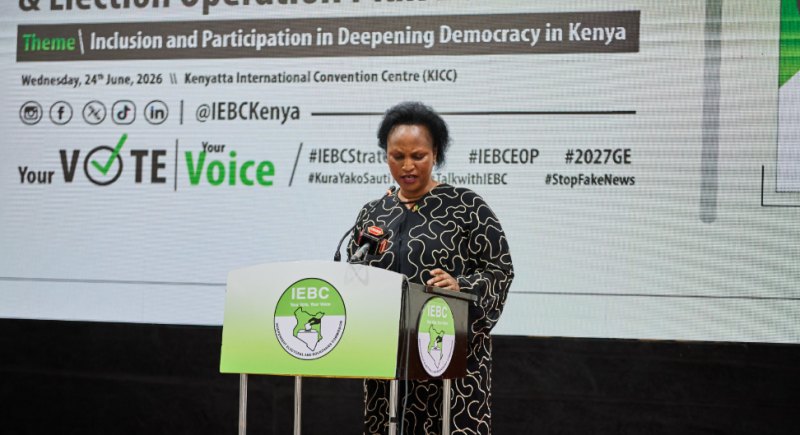
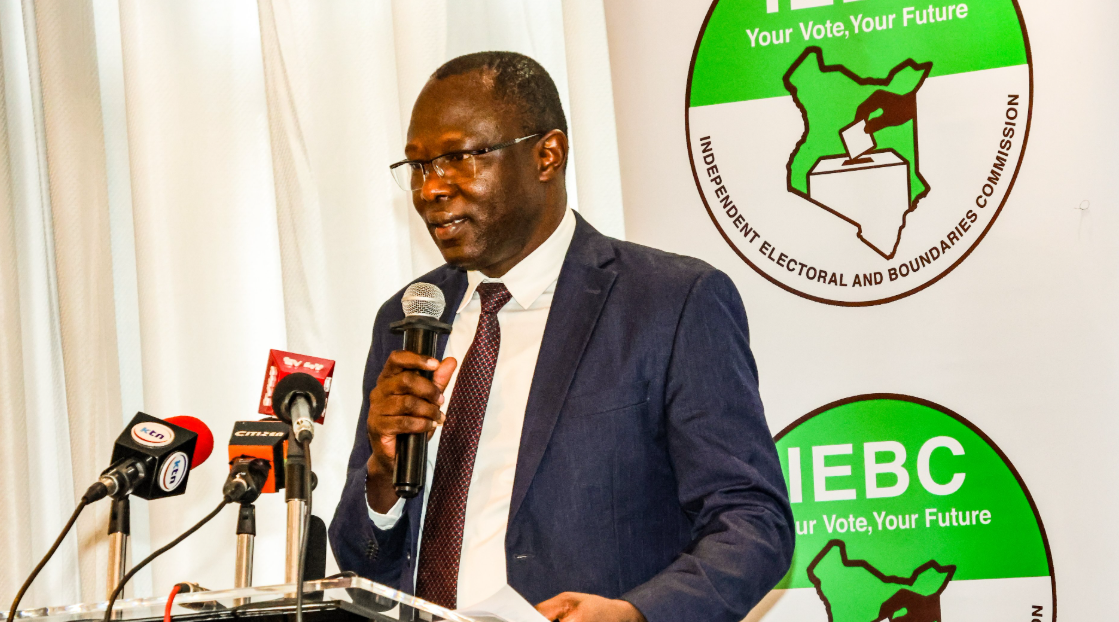
Speaking at the launch, chairman Erastus Ethekon and
commissioners committed to safeguard the commission's independence,
strengthening confidence in election technology and ensuring every vote cast is
accurately reflected in the final results.
“I wish to assure all Kenyans that the commission has
listened to your expectations. We have reflected on lessons from previous
electoral cycles and carefully considered recommendations from election
observation missions, court decisions, post-election evaluations and
stakeholder engagements.
“These lessons have informed the reforms, priorities and
operational improvements contained in the documents we launch today,” Ethekon
said.
One of the most significant proposals is an overhaul of
election technology systems and results management mechanisms, issues that have
featured prominently in electoral disputes since 2013.
The IEBC says it will enhance the Kenya Integrated Election
Management System (Kiems), strengthen voter identification and verification
systems, improve results transmission and conduct comprehensive testing of
election technology before polling day.
The commission also plans to review the Election Results
Management Framework and align electoral laws with recommendations arising from
the Supreme Court's 2022 presidential election petition judgment.
Testing and verification of election technology for the
General Election will take place between June 5 and June 9, 2027, two months
before polling day.
The poll agency will also publish details of network service
providers supporting election operations and identify polling stations without
network coverage to avoid transmission challenges that have previously
triggered disputes.
Youth, marginalised communities and Kenyans living abroad
have been identified as priority groups for new voter registration.
The commission says it will work with the National
Registration Bureau, Immigration Department, Civil Registration Services and
the Ministry of Foreign and Diaspora Affairs to clean up voter records and
expand access to registration services.
Chief Justice Martha Koome, who was the chief guest,
welcomed the registration drive, saying it would be critical in ensuring
inclusivity.
“The plans commitment to inclusion and equal political
participation is commendable. The strength of any democracy is measured not
only by the conduct of elections but also by the extent to which all citizens
participate meaningfully in the electoral process,” Koome said.
She said women, youth, persons with disabilities, minority
communities and other marginalised groups must be active participants in the
process and beneficiaries of it.
The IEBC identifies election-related violence, political
polarisation, criminal gangs and attacks on election officials among the major
risks that could undermine the credibility of the poll.
The commission plans to operationalise constituency-level
peace committees and strengthen cooperation with security agencies through the
Election Security Arrangement Programme.
Despite the ambitious agenda, the commission acknowledges
that financing remains one of the biggest risks to successful implementation.
The IEBC warns that delayed or inadequate funding could
affect procurement, voter registration, technology deployment and other
critical preparations.
To mitigate the risk, the commission intends to engage
Parliament, the National Treasury and development partners to secure adequate
resources for the election. It is also pushing for the operationalisation of the
IEBC Fund to provide a more sustainable financing framework for electoral
activities.
For the first time, the commission has formally identified
artificial intelligence-driven misinformation, deepfakes and online propaganda
as major threats to electoral integrity.
The IEBC warns of a "proliferation of misinformation,
disinformation, hate speech, fake news, deepfakes and propaganda" in the
run-up to the election.
Kenya's highly active social media landscape and the rise of
youth-driven online political mobilisation have heightened concerns that false
information could shape public perceptions during the campaign period.
To counter the threat, the commission plans to strengthen
strategic communications, expand collaboration with media organisations and
increase public awareness efforts.
The roadmap assigns the media a central role in educating
voters, reporting accurately on electoral processes and amplifying verified
election information.
“To the media, we urge that you report factually. We know we
are yet to see the crazy headlines but let those headlines be factual. Help us
to win the trust of Kenyans,” Ethekon said.
INSTANT ANALYSIS
The IEBC’s release of the 2027 election roadmap formally starts
Kenya’s next political cycle and provides certainty for parties, candidates and
voters. The timeline puts pressure on opposition leaders to settle on a
presidential lineup while giving the commission time to implement electoral
reforms and register 6.3 million new voters. However, concerns over funding,
election technology, misinformation and political tensions suggest that the
credibility of the 2027 polls will depend as much on effective preparation as
on the voting process itself.

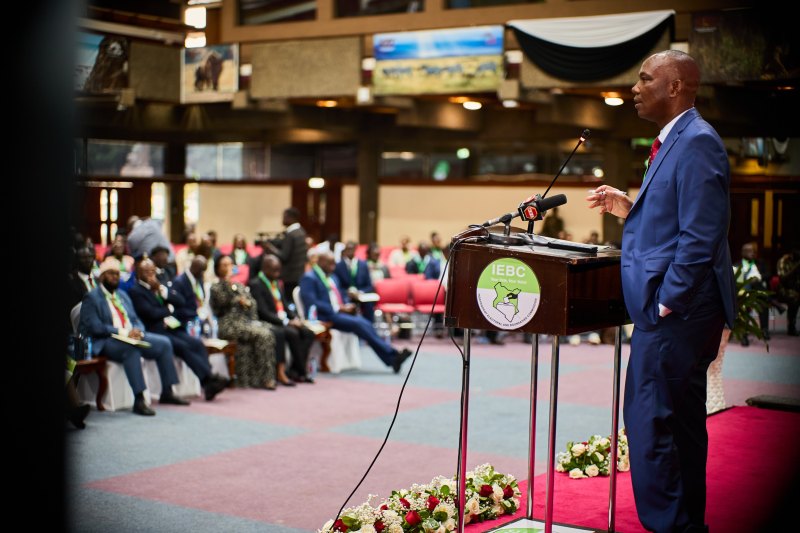
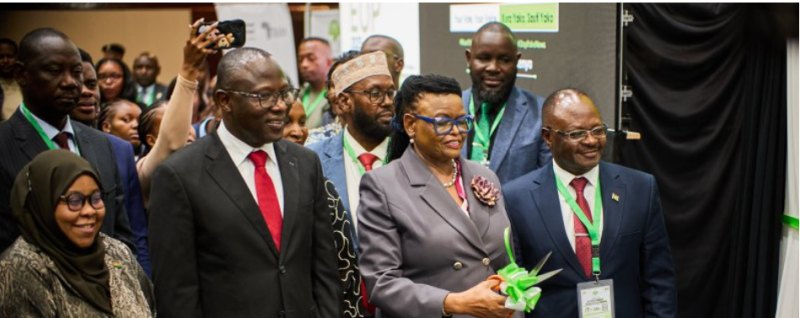
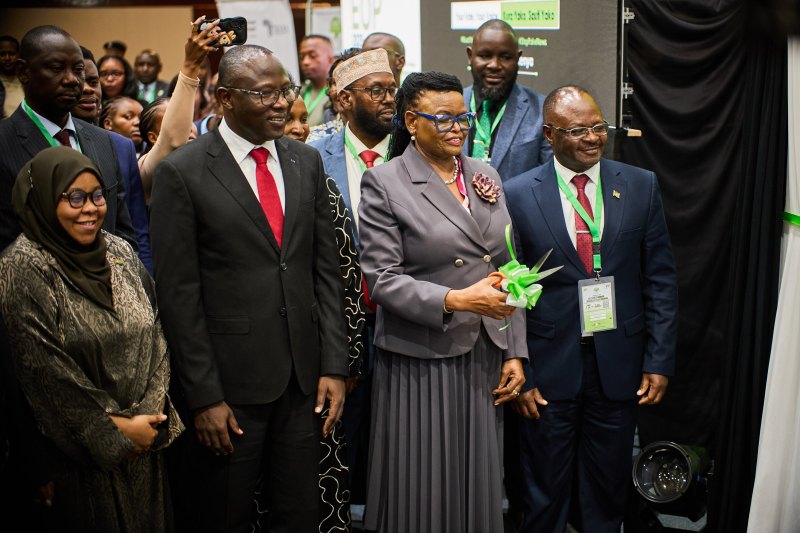 Chief Justice Martha Koome, flanked by IEBC chair Erastus Ethekon and commissioners launch the agency's strategic plan and 2027 election plan at KICC on June 24, 2026/HANDOUT


![[PHOTOS] Raila Odinga Stadium construction enters home stretch](https://cdn.radioafrica.digital/image/2026/06/45f6990c-4882-4cd2-b83c-8fc730dcdce5.jpg)