Strong El Niño conditions are developing, threatening food security, agriculture and livelihoods.
by Hillary Bett
Audio By Vocalize
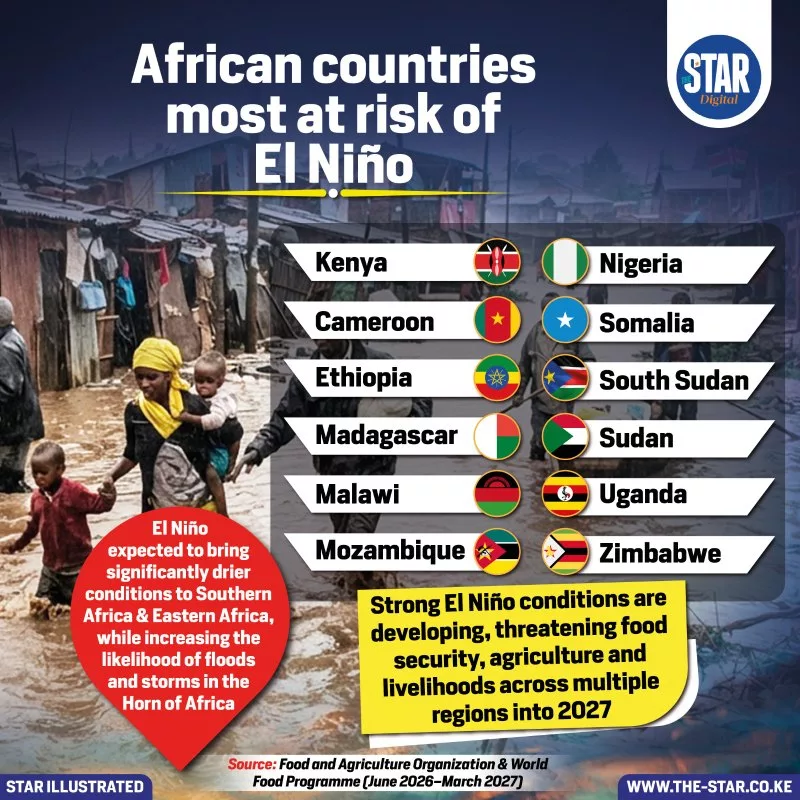
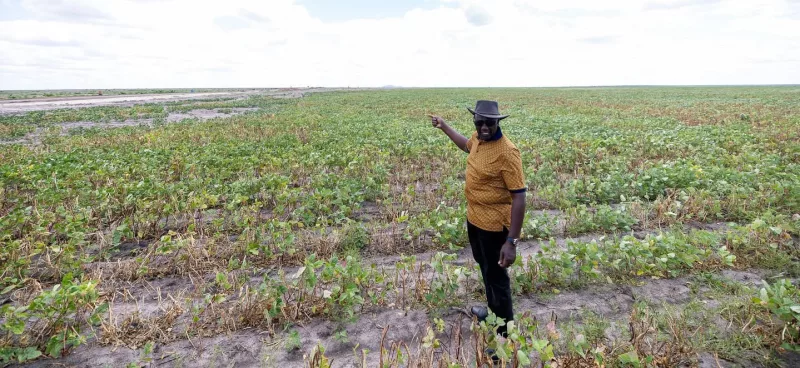
Strong El Niño conditions are developing across Africa, threatening food security, agriculture, and livelihoods across multiple regions into 2027.
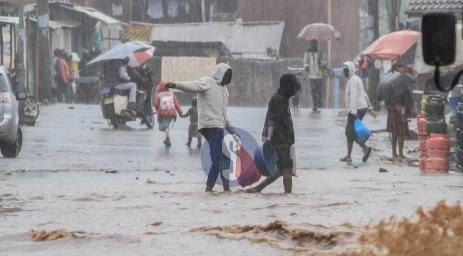
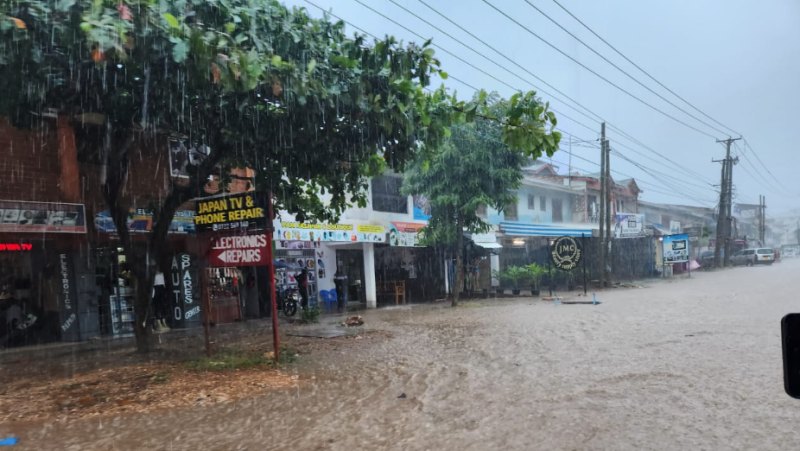
The climate phenomenon is expected to bring significantly drier conditions to Southern Africa and Eastern Africa, while simultaneously increasing the likelihood of floods and storms in the Horn of Africa.
Data from the Food and Agriculture Organisation and the World Food Programme, covering the period from June 2026 to March 2027, identifies twelve African nations most at risk from these developing weather patterns.
In Eastern Africa and the Horn of Africa, countries facing these severe threats include Kenya, Somalia, Ethiopia, Sudan, South Sudan, and Uganda.
Southern Africa also faces widespread vulnerability, with Madagascar, Malawi, Mozambique, and Zimbabwe listed among the most at-risk nations due to the anticipated dry spell.
West and Central Africa are not spared either, as Nigeria and Cameroon are also highly susceptible to the impending climate disruptions.
As these strong El Niño conditions intensify, the dual threats of extreme drought in some regions and severe flooding in others pose an immediate challenge to agricultural production and community stability across the continent.
With the impact projected to extend well into 2027, these twelve nations stand on the frontline of a developing regional climate crisis.