SATHYA: Kenya’s coffee growth must be built on quality, consistency and market relevance (Siasa)
The path forward requires acknowledging that good prices are fundamental to farm sustainability. Excellence demands investment in people.
by JOHN SATHYA
Audio By Vocalize
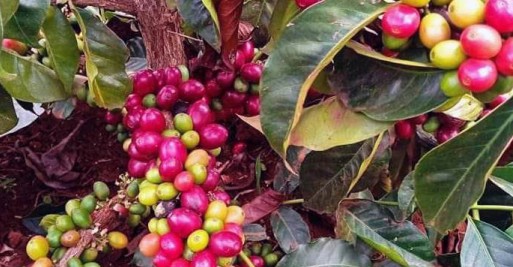
Coffee bush /FILE
Kenya’s
coffee industry is at a decisive inflection point. Domestic consumption is rapidly
increasing, with the Agriculture and Food Authority indicating that coffee
houses have risen from just 14 in 2022 to more than 800 in 2026.
The government and other industry players are also targeting the growing
global market by aiming to increase production to a projected 150,000 tonnes
annually over the next few years.
This effort comes at a time
when Kenya’s coffee production has been on a declining trend, currently in the
region of 45,000 tonnes per year, which risks reducing the country’s visibility
on the global coffee sourcing radar.
Globally, it is a common agricultural pattern for
production to expand when prices reach record highs, a cycle that often sows
the seeds for the next glut.
The current momentum is supported by recent record
prices and when price cycles turn downward, it remains to be seen whether this
pace of expansion will be sustained.
It
also raises a critical question: how will producers remain competitive now and,
in the future, during times of lower global coffee prices? Sustaining quality
requires long-term investment to manage climate risks such as floods, heat
waves and drought, while also absorbing rising input costs.
Arabica trade prices are based on the New York Coffee
market, a global supply-and-demand-driven pricing that gives little weightage
to conditions in Kenya or the challenges producers face in growing the
country’s renowned coffee. This means there will be periods when prices can be even
lower than the cost of production.
Within the coffee buying space, there are discerning
specialty buyers who seek high-quality coffee that is consistent, reliable and
delivered as contracted to destination warehouses, with sufficient volumes
available, even at full container load scale. This segment typically operates
on a fixed-price model that takes into account the cost of production and
provides a fair margin for producers.
Both
pathways offer market access. One is a faster route
with quicker returns, while the other is a slower, longer and more demanding
path, but ultimately a more rewarding one. The choice between these two routes
rests with each producer.
Scaling this rigour across the country’s coffee
sector, where smallholders account for about 70 per cent of production volume,
represents the central challenge. It is beneficial for producers to know the
quality and strengths of their coffee before offering it to the market for
sale. This helps them arrive at realistic and fair price expectations.
Even
basic pan roasting and normal grinding at home, without expensive lab-grade
equipment, is better than nothing at all. The inability of many
farmers to taste their own coffee has long been a critical bottleneck.
It also requires a willingness to accept lower prices for coffees that
fail to meet established standards, even when financial pressures encourage the
sale of marginal lots.
Producers should not expect every buyer to tell them
what is “great” about their coffee. However, if there are defects, they are
likely to receive prompt feedback.
This is similar to situations where
producers are advised to sell quickly because the market is expected to
decline. Rarely does one hear advice to “hold your coffee, prices are going
up.” Such
realities are typical of agricultural commodity markets.
Producers often have a bias toward their produce, given the
time, effort and investment involved, and it is
therefore seen as the “best quality.” This is where events such as the Kenya
National Taste of Harvest cupping competitions come in to provide validation at
a national level.
These competitions function as industry barometers, signalling
which production methods, processing techniques and quality control measures
deliver outcomes that stand up to rigorous scrutiny. The Washed Arabica
category, widely recognised as Kenya’s most competitive, demands precision.
Notably,
the winning coffees came from regular production rather than experimental lots,
reinforcing the importance of consistency at scale.
The international jury
praised the coffees for their complex notes of orange blossom, red berries,
marmalade and jam with juicy, well-balanced, bright acidity, and sweetness that
increased with extraction time. The multi-layered clarity was a highlight.
Collaboration with larger, established estates also
offers smallholders the opportunity to learn and adopt proven systems. The same
applies in reverse, as estates can also learn from smallholder resilience and
innovation. An industry that has a 360-degree learning culture continues
to grow.
This calls for a unified approach that encourages estates to open
their doors, allowing smallholders to understand the processes that maintain
quality and, where possible, benefit from access to the machinery and infrastructure
held by their larger counterparts.
Positively,
the demand for Kenyan coffee is growing both domestically and internationally, with
quality as the foundation. Producers who commit to verified quality and
reliability will be best positioned to capture value.
Those who treat quality
as a marketing buzzword rather than an operational reality will find themselves
competing at lower tiers of the industry.
Kenya’s
coffee future will depend on maintaining market-visible volumes and how many
producers choose to make quality and reliability their defining characteristics.
In addition, producers and other industry players need to constantly recognise
the contribution of the industry to Kenya’s rural economy.
Coffee estates and
cooperatives provide thousands of permanent and seasonal jobs, generating
significant employment and income in coffee-growing communities. This
investment supports livelihoods, contributing to the resilience of Kenya’s
coffee sector at a time when national coffee production has faced long-term
decline.
There
is also a growing need for operators to adhere to environmental, social and
agricultural standards. Sustainability must be embedded across coffee
production and operations, including water management, reforestation, ecosystem
conservation, and responsible waste handling. The industry must also prioritise
worker welfare through fair wages and safe working conditions.
The
path forward requires acknowledging that good prices are fundamental to farm
sustainability. Excellence demands investment in people, infrastructure,
training, commitment, and rigorous process discipline.
These do not come for free.
Producers are capable of implementing all of this when prices are remunerative.
The transition from a hardworking farmer to a commercially informed producer
begins with a clear understanding of product quality and market positioning.
The writer is the CEO of Tatu Coffee Estates Limited
This is premium content
Subscribe to Continue Reading
Help us continue bringing you unbiased news, in-depth investigations, and diverse perspectives. Your subscription keeps our mission alive and empowers us to provide high-quality, trustworthy journalism. Join us today to make a difference!