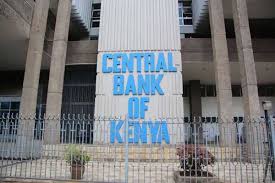
The Central Bank of Kenya (Amendment) Bill, 2026, sponsored by the Finance and National Planning Committee, concentrates parliamentary vetting powers in the National Assembly.
The Bill proposes to amend Section 13B of the CBK Act by replacing the word ‘Parliament’ with ‘the National Assembly’ in the approval process for CBK deputy governors.
The proposed amendment means nominees for the position would only require approval by the National Assembly, effectively excluding the Senate from a process that currently involves Parliament.
Presently, the President nominates the deputy governors (usually two) and sends the names to the Senate and the National Assembly.
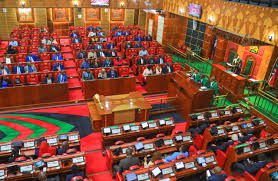
The Houses have been holding joint approval sessions and coming up with a report debated by both Houses.
“The committees, having conducted the approval hearings, would submit a Joint Report to the respective Houses.
“Unless a decision is reached by consensus, any vote taken in the joint sittings of the committees shall be by separate Houses,” the joint sittings rules state.
The process has been deemed challenging, especially where the two Houses have divergent verdicts on the approval process.
According to the Bill’s memorandum of objects and reasons, the change is intended to align the approval process for deputy governors with that of the CBK governor.
The latter’s appointment is already subject to approval by the National Assembly.
The committee, chaired by Molo MP Kuria Kimani, argues that the amendment will enhance transparency, accountability and parliamentary oversight in the appointment of senior officials at the apex bank.
“The amendment seeks to align the approval process for the deputy governor with that of the governor of the Central Bank of Kenya, whose appointment is subject to approval by the National Assembly,” the memorandum states.
If enacted, the proposal is likely to rekindle debate over the respective oversight roles of the two Houses of Parliament, particularly regarding appointments to independent institutions and key state agencies.
The amendment has been packaged as part of reforms aimed at strengthening the Central Bank’s legal framework, particularly its role in monetary policy implementation and financial stability.
The Bill seeks to clarify the CBK’s mandate by requiring the Bank to promote and foster “the liquidity, solvency, proper functioning and integrity of a market-based financial system” as well as the “soundness, safety and effective regulation of the banking system”.
It also introduces a new function empowering the Central Bank to provide capacity building and training to its staff, the public, government institutions and persons from other jurisdictions.
Another significant proposal expands the bank’s powers to deal in gold and precious metals.
Under the Bill, the CBK would be allowed to buy, sell, import, export, transfer, hold and refine gold, silver, platinum and other precious metals under terms and conditions it determines.
The legislation also overhauls provisions governing liquidity support to banks and microfinance institutions.
It repeals and replaces the current section on loans and advances, proposing a distinction between routine monetary policy operations and emergency liquidity assistance during periods of financial distress.
Under the proposed framework, the CBK would be permitted to provide emergency liquidity assistance to banks and microfinance institutions that meet solvency and viability requirements.
This would apply to institutions that are assessed as systemically important or capable of causing instability within the financial system.
The support would be temporary, discretionary and subject to collateral and risk-management requirements determined by the Bank.
The Finance Committee says the reforms are designed to strengthen the statutory framework governing liquidity support by the Central Bank.
They are aimed at establishing legal certainty on the scope of the bank’s intervention powers and introducing safeguards for emergency lending.
The proposals are also intended to reduce moral hazard and improve coordination during periods of financial stress.
In addition, the Bill updates references in the law to reflect institutional changes in the financial sector.
It replaces the now-defunct Deposit Protection Fund Board with the Kenya Deposit Insurance Corporation, which took over its functions following the enactment of the Kenya Deposit Insurance Act.

















![[PHOTOS] Red carpet in Pretoria as Ruto begins South Africa visit](https://cdn.radioafrica.digital/image/2026/06/abe3e750-6e5a-4394-a45c-899768be6240.jpeg)