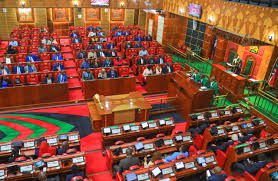
Concerns over alleged tampering with the voter register dominated House proceedings, with lawmakers alleging suspicious voter transfers and irregular registration ahead of the 2027 polls.
The debate was triggered by responses from the Independent Electoral and Boundaries Commission (IEBC) to the House on concerns there had been illegal transfers of voters from their polling stations.
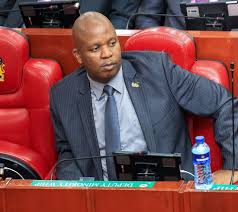
The claims were made by Embakasi West MP Mark Mwenje, who alleged several of his constituents had been transferred to polling stations in Garissa county without their consent.
The IEBC’s responses, relayed to the House by Justice and Legal Affairs Committee member and Tharaka MP George Murugara, however, dismissed the claims.
According to the IEBC, illegal voter transfers are impossible since the process requires the physical presence of the voter and biometric verification.
Mwenje, however, expressed dissatisfaction, going further to name several individuals whom he claimed reside in Embakasi West but had allegedly been transferred to polling stations in Ijara and Balambala constituencies in Garissa county.
The commission maintained any voter transfer must be initiated by the voter in person through biometric verification and formal application.
"The response I got was insulting. It makes it look as though I imagined what I raised," Mwenje told the House.
He, however, argued that a third party could be manipulating unsuspecting voters.
"I am not accusing the commissioners or my returning officer, but someone is meddling. This issue cuts across several constituencies and must be investigated," Mwenje said.
He warned that failure to address the matter could trigger numerous election petitions after the 2027 polls.
Funyula MP Ojiambo Oundo, weighing in on the matter, alleged that non-citizens were being facilitated to acquire identification documents and subsequently registered as voters in border constituencies.
He claimed that groups of people were being transported into parts of Busia county under a rapid mass registration programme and issued with identification documents despite not meeting constitutional requirements for citizenship.
"It might be expedient politically, but the danger we are exposing this country to is going to haunt us for many years," Oundo warned.
He promised to table a substantive question in Parliament on the matter, citing concerns over both electoral integrity and national security.
Tetu MP Geoffrey Wandeto also called for thorough investigations into claims of voter transfers, warning that electoral disputes had previously plunged the country into political turmoil.
"When we hear of voters being transferred against their wishes or finding themselves registered where they did not wish to be, it is an issue that requires a thorough investigation," he said.
Wandeto urged parliamentary committees to summon affected voters and gather evidence rather than dismissing concerns.
But Murugara defended the IEBC's responses, arguing that allegations must be supported by concrete evidence.
"You cannot just make allegations without particulars and expect investigations to proceed," he said.
Murugara urged MPs raising concerns to submit names, identification details and supporting evidence to enable proper investigations by the Justice and Legal Affairs Committee and the IEBC.
The legislator also appealed to Parliament to ensure adequate funding for the electoral commission, saying sufficient resources were critical to guaranteeing a credible electoral process.
The IEBC also addressed concerns raised by North Horr MP Adhe Wario regarding the implementation of the Enhanced Continuous Voter Registration (ECVR) exercise, saying services remained limited in the vast area.
According to the commission, North Horr exceeded its voter registration target by recording 7,988 new registrations against a target of 4,204 voters.
The electoral agency acknowledged logistical challenges affecting voter transfer services in the vast constituency and said it was exploring ways to improve internet connectivity, power supply and outreach services at the ward level.
The commission also dismissed claims by Nakuru Town East MP David Gikaria that holders of the new Maisha cards were being denied voter registration in Nakuru Town East.
"The commission recognises the Maisha Card as an identification document and confirms the voter registration system fully supports it," Murugara clarified, adding that allegations that young Kenyans born from 2004 onwards could not register as voters were false.
The IEBC challenged the Nakuru Town East lawmaker to provide specific cases of Maisha Card holders who had allegedly been turned away from registration centres.











![[PHOTOS] Red carpet in Pretoria as Ruto begins South Africa visit](https://cdn.radioafrica.digital/image/2026/06/abe3e750-6e5a-4394-a45c-899768be6240.jpeg)