The Athenians did not treat parrhesia as an individual virtue. It was a
civic duty. The city’s health depended on citizens who said uncomfortable
things in public, to powerful people, without softening the message for comfort
or convenience.
But parrhesia was never a one-way licence reserved for citizens against
authority. The ruler, too, had the right to step into the square and respond.
Indeed, that was part of the democratic bargain.
The general/ruler was not expected to sit
mutely on the hill while the crowd exercised its courage below. He could defend
his decisions, rebut accusations, challenge bad faith and make his own case
openly.
However, parrhesia carried one absolute condition. It applied to
everyone, in every direction, without exception.
The citizen who invoked
parrhesia to challenge the general/leader/ruler could
not then return home and punish his own household for speaking frankly to him.
The principle was the principle. It did not belong to any faction. It did not
switch off when the speaker became the subject.
Did we recently witness our own rendition of parrhesia?
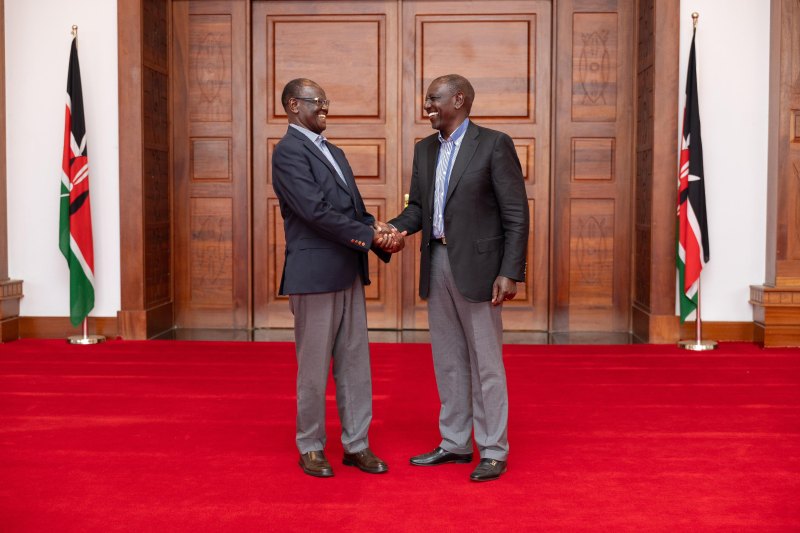
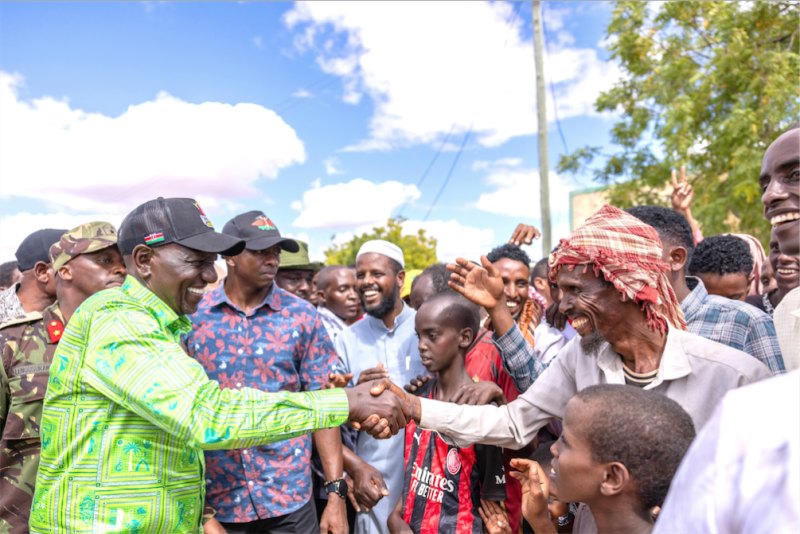
Last week on April 8, an
extraordinary verbal spectacle took place at the funeral service for Ol Kalou
MP David Kiaraho;
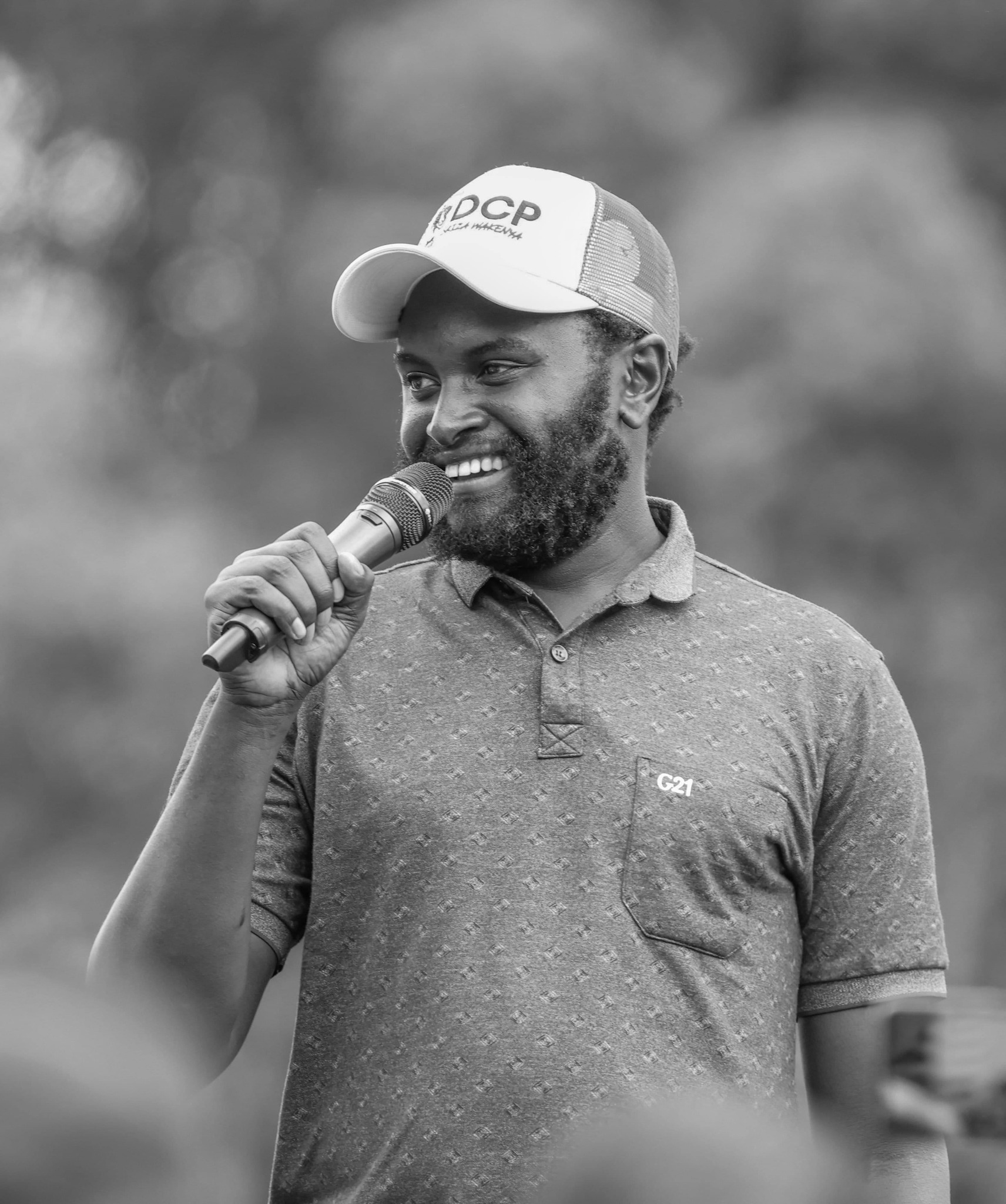
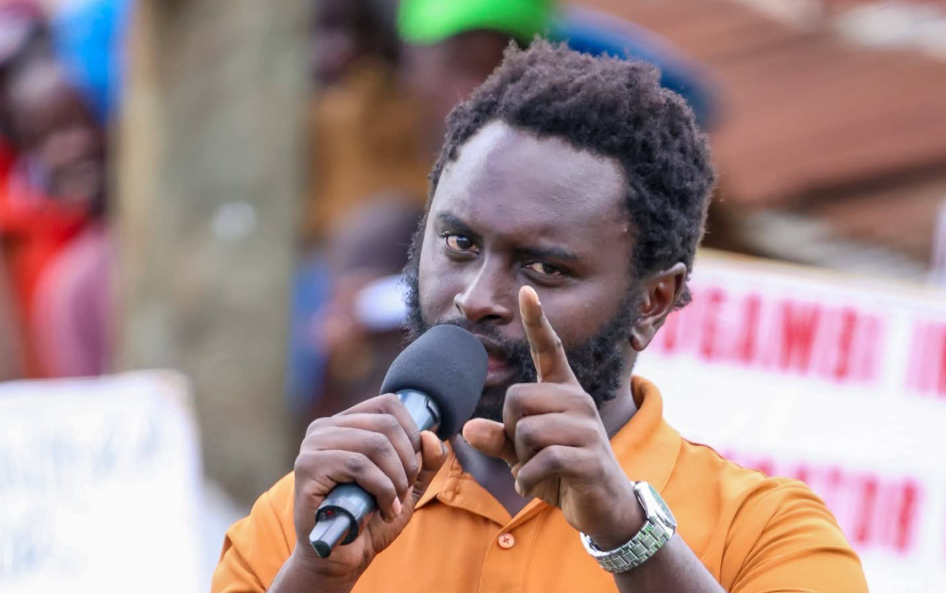
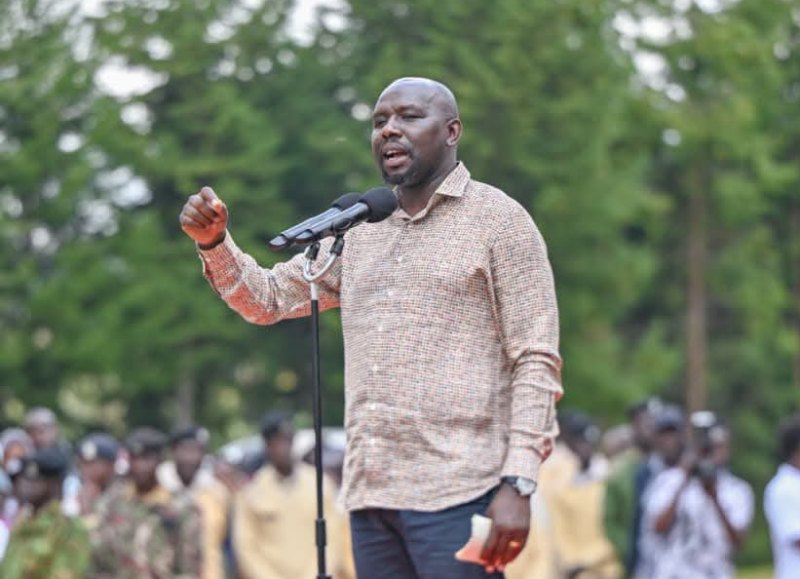
Senator John Methu of Nyandarua told President William Ruto to his face
that he respects him but does not fear him. He pressed the government to
complete stalled projects and declared that leaders have the right and
obligation to speak frankly on behalf of their people.
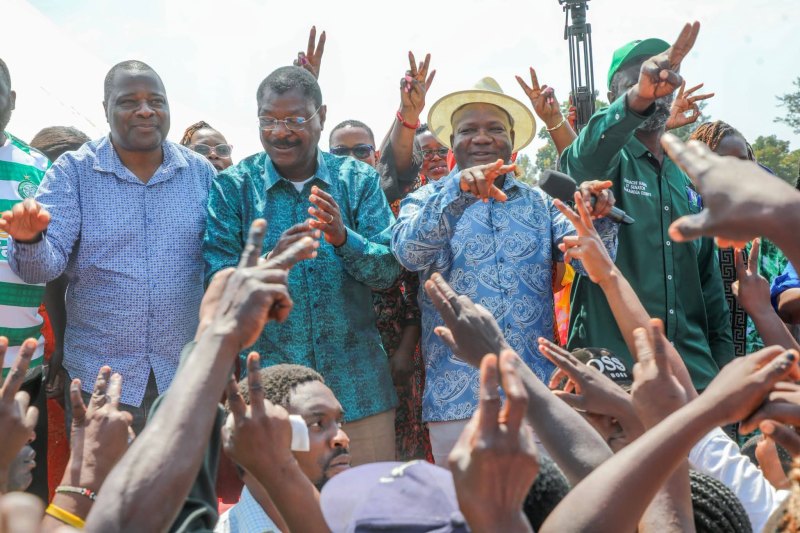
The crowd roared its approval.
The microphone was shut off.
And by morning, T-shirts were printed.
Predictably, debate has raged on whether this was courage or disrespect.
But Kenyan politics has never suffered from a shortage of men performing
bravery for applause. Our problem lies elsewhere.
I submit that the deeper significance of Methu’s statement is not that
it was dramatic, nor even that it was directed at the President. I submit it
sounded like an argument against political fear itself.
Not the fear of one man
but fear as a governing method. Not fear of the President as a person but the
wider habit in our politics whereby public officials speak softly upward, clap
loudly sideways and bark harshly downward (downward?)
Begs the question. Was Methu brazenly insolent or heroically brave?
Also, if tomorrow he directed the same sentiment to his political patron (in this case Rigathi Gachagua), would that still be
applauded as principle, or denounced as betrayal? You be the judge.
I submit that the more useful question is whether Kenya is finally ready
for a politics in which frank speech is not treated as a factional privilege,
but as a democratic norm. Because the real disease in our politics is not
disagreement. It is selective candour.
You see, accountability in Kenyan politics has always had a direction
problem. It flows in one direction and stops the moment it becomes inconvenient
for the person invoking it. On one hand, the opposition demands accountability
from the government while protecting its own from scrutiny. On the other hand,
the government demands loyalty from its subjects and frames criticism as
subversion.
This cycle is as old as the republic, and it is precisely why every
change of political guard produces the same governance outcomes despite the
genuine enthusiasm that surrounds each transition.
The faces in leadership
change. But the architecture of selective accountability remains, where every
camp in Kenya celebrates truth when it wounds the other side. Every camp
discovers the beauty of fearless speech when it embarrasses a rival and
rediscovers the importance of respect the moment the same frankness is directed
inward.
That is not parrhesia. That is convenience dressed as principle. It is
the oldest trick in the Kenyan political playbook of invoking a universal
standard only for as long as it serves a particular purpose, then quietly
retiring it when it becomes inconvenient.
This is why the lasting significance of Methu’s intervention will not be
determined by how loudly the crowd cheered, how quickly the clip spread, or the
number of branded T-shirts that materialised by sunrise. It will be determined
by whether the ethic implicit in his words survives a change of audience.
If “I respect you, but I do not fear you” is to mean anything beyond a
viral moment, then it must remain legitimate when spoken not only to the
president, but to every centre of power, including party leaders, regional
kingpins, elected leaders, bishops and cattle dip elders.
The creed collapses
the moment those who invoke fearless speech for themselves demand silence from
those beneath them, or those in their camp. At that point, what looks like
principle is revealed as mere factional privilege. The principle should not get
to choose its targets.
And that may be the more uncomfortable lesson here. The problem is not
that Kenya lacks brave leaders. It is that our brave leaders are too often
rented out to factional warfare to injure opponents instead of invested in
public principle. Too often we witness the courage of the opposition turn into
cowardice of the incumbency the moment elections are won.
The Athenians understood something we haven’t. Parrhesia was not merely
the right to speak. It was not built on the courage of individual citizens. It
was built into the architecture of the agora whose design made silence more
costly than candour.
It was also the discipline to live under the same standard
one demanded of others. And that is the part we like least, because it is the
part that removes the comfort of tribal certainty. It denies every side the
easy pleasure of thinking that truth belongs naturally to it.
So perhaps the proper response to Methu’s moment is not to ask whether
he was brave or insolent. That is the binary trap into which our politics
forever falls, and from which it rarely learns. The better question is whether
we are finally prepared to defend frank speech as a rule rather than as a
tactic.
If we are, then something important happened in Ol Kalou.
If we are not, then nothing much happened at all. A sentence was spoken.
A crowd roared. A microphone went silent. T-shirts were printed. And the old
Kenyan arrangement continued: courage for the other side, caution for our own,
and principle only until it becomes inconvenient.
Finally, my unsolicited advice is threefold.
First, it is to those who have criticised the President for responding
back. The point of the agora was never to gag power and then romanticise
everyone else as brave. It was to subject power to the same public discipline
of speech. In that sense, the President had every right to step into the
square, answer his critics, challenge their claims and persuade the country of
his own case.
That’s not repression. It’s politics. What would be undemocratic is that
he demands to be beyond question. By the same token, those who speak in the
name of courage cannot suddenly claim victimhood the moment power answers back.
Parrhesia is not a licence to speak without reply. It is an obligation
to enter the public contest of truth and endure its consequences.
Second, it is to President Ruto. Don’t mistake candour for insolence. A
strong presidency does not weaken because it is spoken to frankly. If anything,
presidencies are most endangered when everyone around them sings praises rather
than the uncomfortable truth.
A mature republic should be able to hold two
ideas at once. One is that the presidency is a serious office and should be
treated with respect. Two is that respect is not the same thing as silence. One
reason strong institutions decay is because too many people around them confuse
agreement with stability.
They begin to believe that if no one speaks candidly, then all must be
well. But quiet can be the most dangerous sound in politics. Quiet often means
caution not peace; fear, not consensus.
Third, it is to Senator Methu. Don’t fall into the trap of turning one
sharp sentence into a personality cult or mistake selective boldness for
principle. If candour is your creed, then let it apply upward, downward and
inward.
Kenya doesn’t need politicians who are fearless only toward their
enemies and fragile toward their friends, brave only at a distance and delicate
the moment scrutiny crosses into their own camp.
The day you punish among your allies what you celebrate against your
rivals, you will prove that this was never parrhesia at all. It was only
theatre.
The country needs leaders whose courage survives proximity, whose
candour does not end at the boundary of loyalty, who apply the same standard
regardless of direction, regardless of who it costs and regardless of whose
applause it forfeits.
Parrhesia is what happens when truth stops asking permission from power – Unknown