It is emerging that some quick actions were also taken
once assessments gave indications of potential flare-ups and how the team that
went to pick the body was facilitated.
On learning of the death, the government called Indian
authorities and negotiated a special entry for the entourage that flew to
Mumbai, which was led by Musalia Mudavadi.
There were neither visas nor tickets issued to the team
that flew out of the country, save for passports, which were only for the preparation of the passenger manifest.
This was besides the calls that saw PM Narendra Modi
provide air travel that lifted the body from Devamatha hospital to Mumbai airport
for onward repatriation to Nairobi.
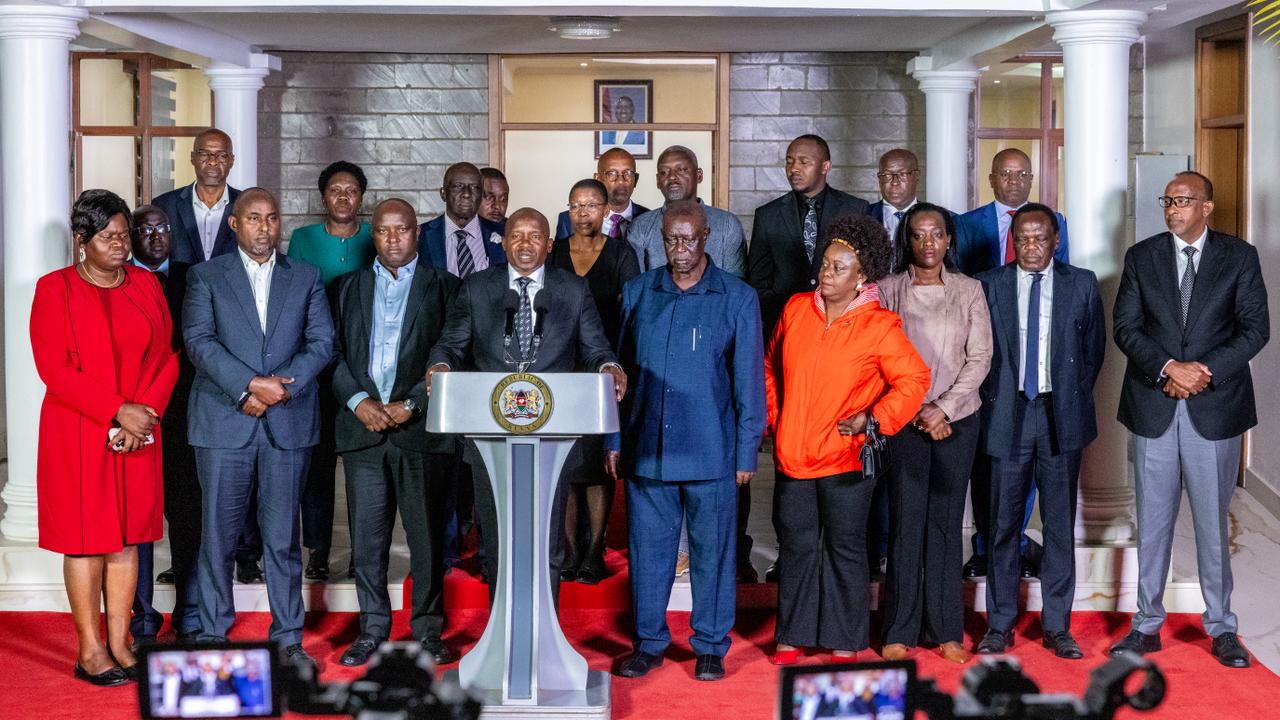
The Deputy President Kithure Kindiki-led committee kept
revising the schedules after monitoring the events as they played out.
After the chaos witnessed at JKIA, where Raila’s supporters
were demanding to view the body as soon as it landed, it became clear that the
body was the centre of focus.
As such, the committee resolved to use every available opportunity
for Kenyans to view the body, a move they believe dealt with disaffection among
supporters.
Initially, the body was to be taken to Lee Funeral Home
for embalmment for two hours, after which it was to be taken to Parliament
Buildings to lie in state, and for public viewing.
But that would change after crowds surged and blocked
the convoy from JKIA. It was decided that Homa Bay county chief Gladys Wanga would talk to the curious supporters.
On realising the impracticality of the timings, Lee
Funeral Home staffers were dispatched to Kasarani Stadium, and they embalmed the
body in a room next to the presidential pavilion.
It was at this time that the coffin was changed, and that
which the body had come with from India was dumped.
The new one was a special lead-lined casket, said to
last decades or centuries, and can keep the body from decomposing for years.
While at Kasarani, a decision was made to shift the
location to a parking lot since the pavilion proved difficult to accommodate
the swelling numbers.
This went on until 8pm, when it was adjudged that the
public had had enough and the body was moved to Lee, where the embalming continued.
On Thursday night, the committee decided to fix an hour
for Raila to lie in state in Parliament, the former PM having been MP.
It is said that the teams argued it would have looked
bad had the ODM leader not been taken to Parliament, yet he represented Lang'ata
for 20 years.
A call was thus made to Speaker Moses Wetang'ula and his
team to make arrangements, hence the reason the funeral service was delayed for an
hour.
At Nyayo Stadium, it was again resolved that the body be left to
stay for public viewing for endless hours, before it was taken to his Karen
home.
To avert crowding in Karen, ODM issued a statement
indicating that the body would not be taken to Kerarapon Drive.
“We feared that the crowds would overwhelm the home and
the neighbourhood. The ODM statement did the trick, and Raila had a peaceful stay
at his home,” an insider told the Star on Wednesday.
Then came the Kisumu and Bondo programmes, which were also
not without intrigues.
The committee had contemplated a funeral service akin to
that which was done at Nyayo Stadium for Kisumu, for Nyanza politicians to give their tributes.
That was also dropped after it emerged that factional
wars could play out, pitting the camps of ex-Kisumu Central MP Fred Ouda, his
counterpart Ken Obura and Senator Tom Ojienda.
There was also pressure from evangelical bishops based
in Kisumu, led by Bishop Winnie Owiti, Bishop Ogonyo Ngede and the Legio Maria.
It was then decided that only Bishop Zacchaeus Okoth (former
Archbishop of Kisumu Catholic Diocese) would give a word of prayer, and then
members of the public would be allowed to view the body.
Then came the quagmire of moving the body to Bondo.
Initially, the plan was to go by road, but that was also revised.
Intelligence reports showed there were crowds waiting
at the various town centres along the route, also to do their bidding for public viewing.
Groups had been gathering at the market centres with
candles lit along the road, and it was feared the entourage would drag on for
hours.
It was decided that the body be airlifted to
Bondo, and that is how residents got a chance for the public viewing at Raila’s
Opoda Farm.
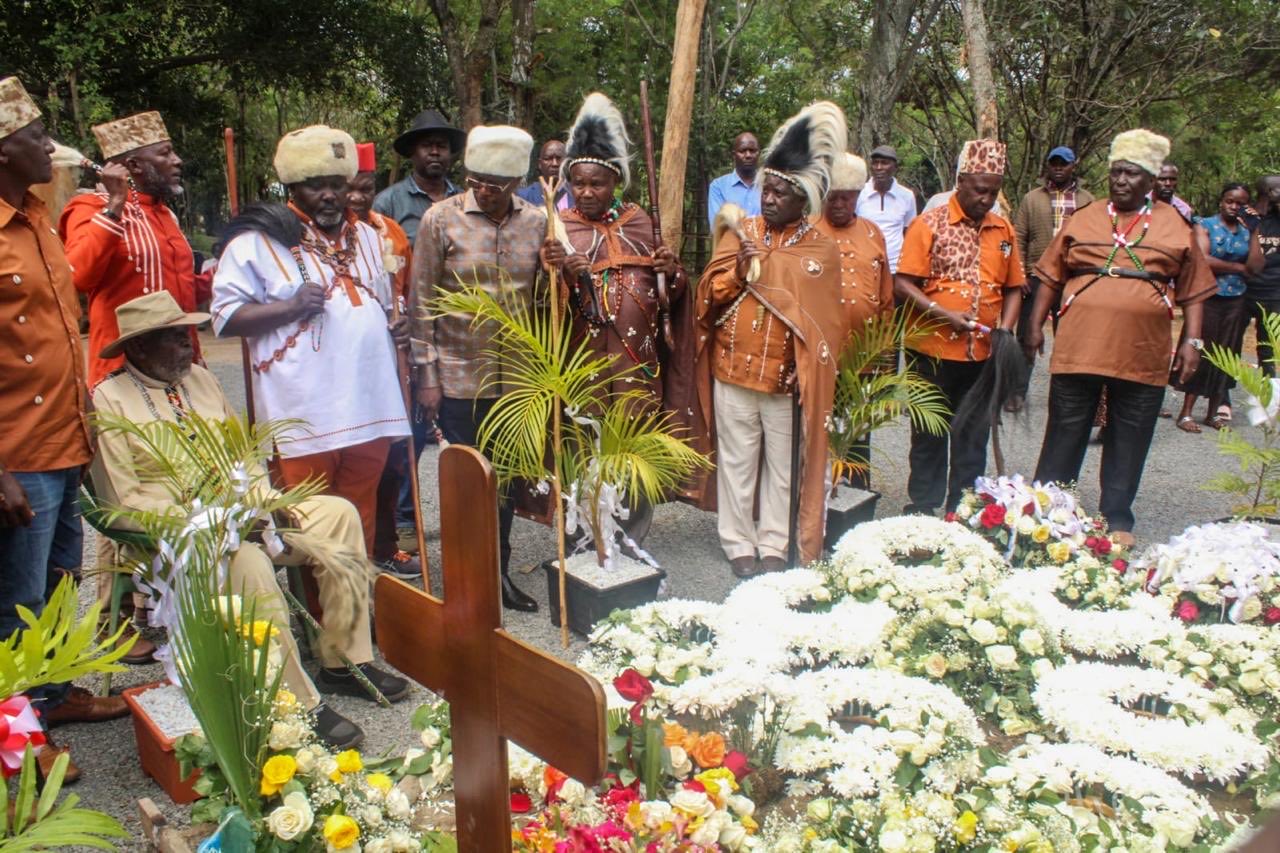
The body stayed overnight, to the full of every curious
mourner, before it was again flown to Jaramogi Oginga Odinga University for the funeral
service, where no further viewing was allowed.
“That is why the service at Bondo and Kisumu had no
instances of chaos. People had enough time, to an extent, some viewed the body
several times,” the source said.
At the service, there was also a tough balancing act on
how to deal with the long list of speakers who had requested the committee for
a chance to pay their tributes.
Here, the committee co-chaired by Oburu Oginga resolved
that only family members, key ODM officials, House leaders, and former President
Uhuru Kenyatta and his Nigerian counterpart Olusegun Obasanjo would speak.
They would still get pressed for time, and indeed, at
some point, the Deputy President had to stand at the podium to manage the time
speakers took.
“Had we allowed all the dignitaries and political
figures who sought to speak, Raila would have been buried past 8pm.”
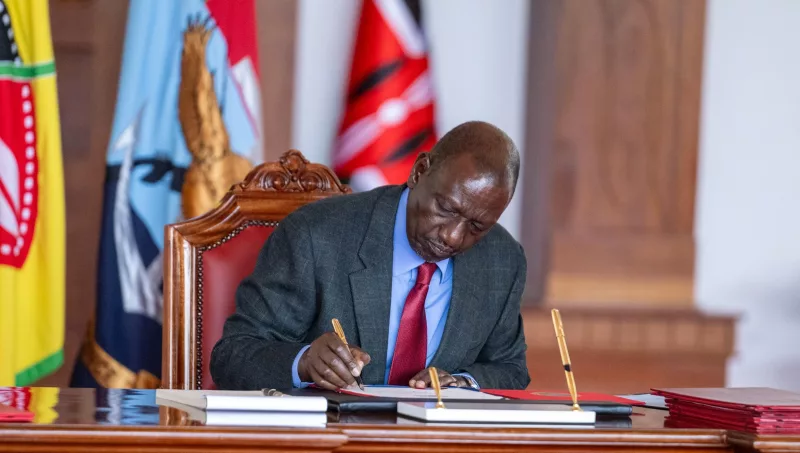
It is emerging that President William Ruto was apprised
of every move, right from the journey to India all the way to the burial, and provided a great deal of advice, including directives restraining police from using force on mourners.
Because of time constraints amid Raila’s 72-hour notice
in the will, it was resolved that more activities be planned for after the
burial.
Among them was the move to award the departed former Prime
Minister the title of Chief of Golden Heart—the country’s highest honour,
posthumously.
There is a planned Raila Legacy commemoration festival
to “honour his life, vision, and enduring legacy”.
A poster on the event seen by the Star shows it’ll be
held at Uhuru Park, Nairobi, on October 31 from 10am to dawn.
The festival will bring together leaders, artists and
citizens from all walks of life to celebrate the values he stood for–unity,
peace, democracy and freedom.
INSTANT ANALYSIS
The committee's primary success was proactively managing crowds by allowing extensive public viewing, thereby diffusing tension. Every detail, from the airlift to Bondo to the strictly curated speaker list, was a calculated move to honour a towering figure while preserving public order, all under the watchful guidance of the highest government levels.