When more than 1.1 million learners
reported to school on Monday for the inaugural Grade 10 intake under the
Competency-Based Education system, the expectation was that Kenya’s
long-troubled education reform would finally enter a stable phase.
Instead, the transition has laid
bare deep structural weaknesses, raising questions about preparedness, equity
and whether the pace of reform has outstripped the system’s capacity to absorb
it.
Under the senior school rollout,
learners are streamed into three pathways—STEM, Social Sciences and Arts and
Sports—an approach designed to align education with skills, careers and talent
development.
But even as learning began in
earnest in some schools, parents across the country described a rollout marked
by confusion, financial strain and poor coordination.
Central to the discontent is the
online placement system.
Parents in some counties
protested placements that sent learners to schools far from home, including day
schools located hundreds of kilometres away—an outcome many say ignored basic
welfare considerations.
In Kajiado, parent Christopher
Murungaru questioned how young learners could reasonably manage such
placements.
“How do you expect a day scholar, barely 13 years old, to live alone in a rural
town far from home?” he asked.
Similar concerns were echoed by
James Mburu, who said some learners had been posted to schools in regions such
as West Pokot or Kisii, making attendance practically impossible without
additional costs for housing and upkeep.
The Kenya National Union of Teachers
(Knut) has warned that these challenges could undermine the government’s push
for 100 per cent transition.
Knut first national vice chairperson
Malel Lang’at said many learners had yet to report due to logistical and
financial barriers.
He urged the Ministry of Education
to allow schools with larger capacities to admit more learners to absorb those
stranded by the placement system.
Citing Tenwek High School in Bomet,
Lang’at said despite having adequate facilities, the school had been
allocated limited slots.
Beyond logistics, rights groups say
the failures have opened the door to corruption.
The Kenya Human Rights Commission
(KHRC) warned that some parents were being asked to pay money to influence
placements, a development it says reflects systemic breakdowns.
“Parents are being exposed to
corruption and learners risk losing their slots due to failures in the
placement system,” KHRC deputy executive director Cornelius Oduor said.
KHRC also documented cases of
schools demanding unauthorised levies, including remedial fees, “teacher
motivation” charges and replacement costs for textbooks—expenses not provided
for under the Free Day Secondary Education policy.
In some instances, junior school transcripts were allegedly withheld over unpaid fees, raising concerns
about violations of the right to education.
Parents have further raised alarm
over the rising cost of uniform, laboratory equipment and pathway-specific
materials.
Some reported being asked to
buy full uniforms costing more than Sh20,000, a burden many families say
is unsustainable amid a difficult economy.
Staffing shortages compound the
pressure.
The Teachers Service Commission
estimates the country requires an additional 35,000 STEM teachers, 14,600
in Social Sciences and 8,778 in Arts and Sports to adequately support senior
school learning nationwide.
While the government has released
Sh5.64 billion for textbooks, distribution remains incomplete.
Publishers say only about half of
the approved books will be delivered by mid-January, with full supply expected
by the end of the month.
Yet the picture is not uniformly
bleak. Several national schools reported smooth admissions and strong turnout.
At Moi Girls High School, Eldoret, principal Juliana Kirui said more than half
of the expected Grade 10 cohort had reported by the first day.
Similar reports came from Kapsabet
Boys and Chebisas Boys High schools, where administrators cited ministry
support and expanded facilities.
Teachers’ union officials in these regions
said staff were ready to begin instruction without disruption.
Still, analysts note these
successes are largely concentrated in well-resourced institutions, masking
deeper inequalities elsewhere.
As the CBE system enters its most
complex phase, the Grade 10 transition has become an early stress
test—revealing that while policy ambition is high, implementation gaps risk
widening disparities unless urgently addressed.


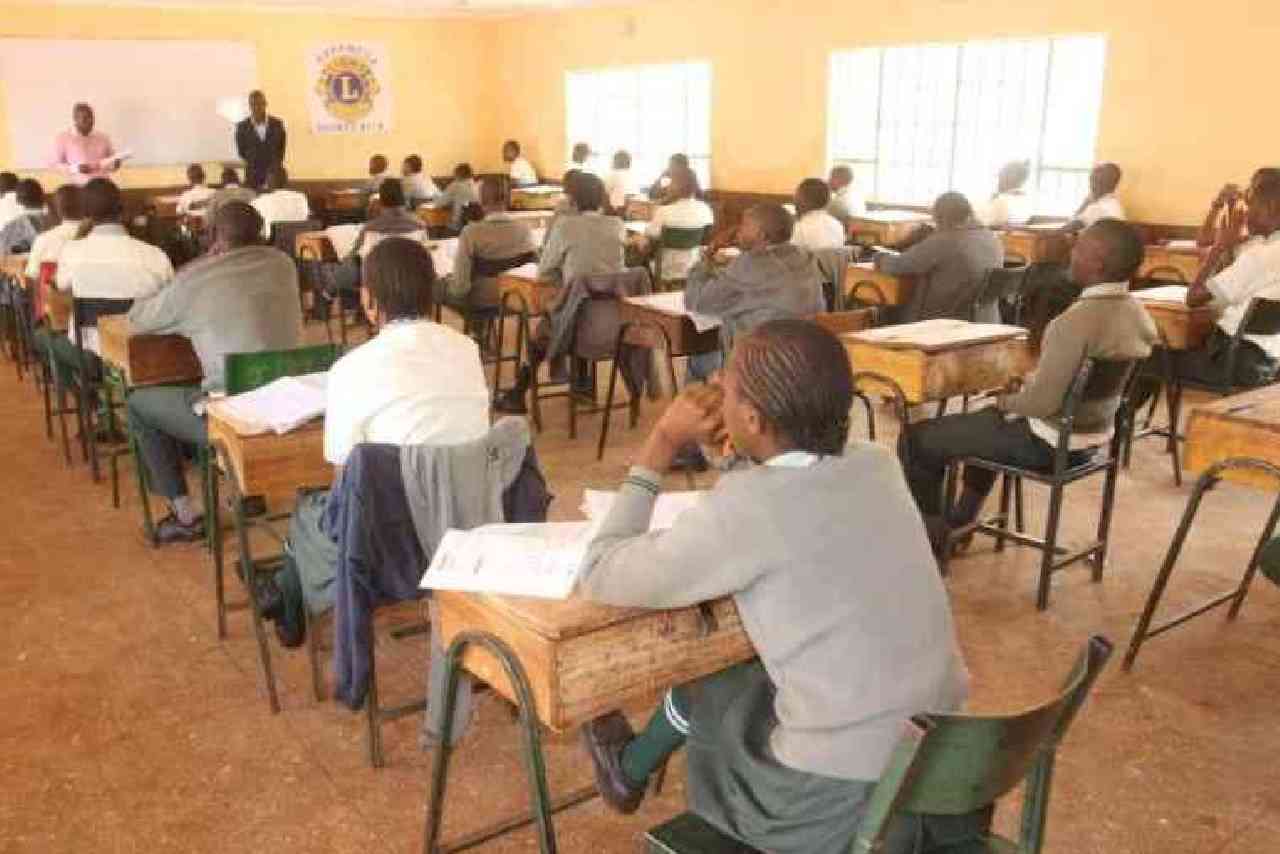 Learners/COURTESY