At exactly 2.25 pm, the convoy snaked through Parliament's
main gate, bringing with it the man carrying the country's fiscal hopes,
political expectations and economic anxieties.
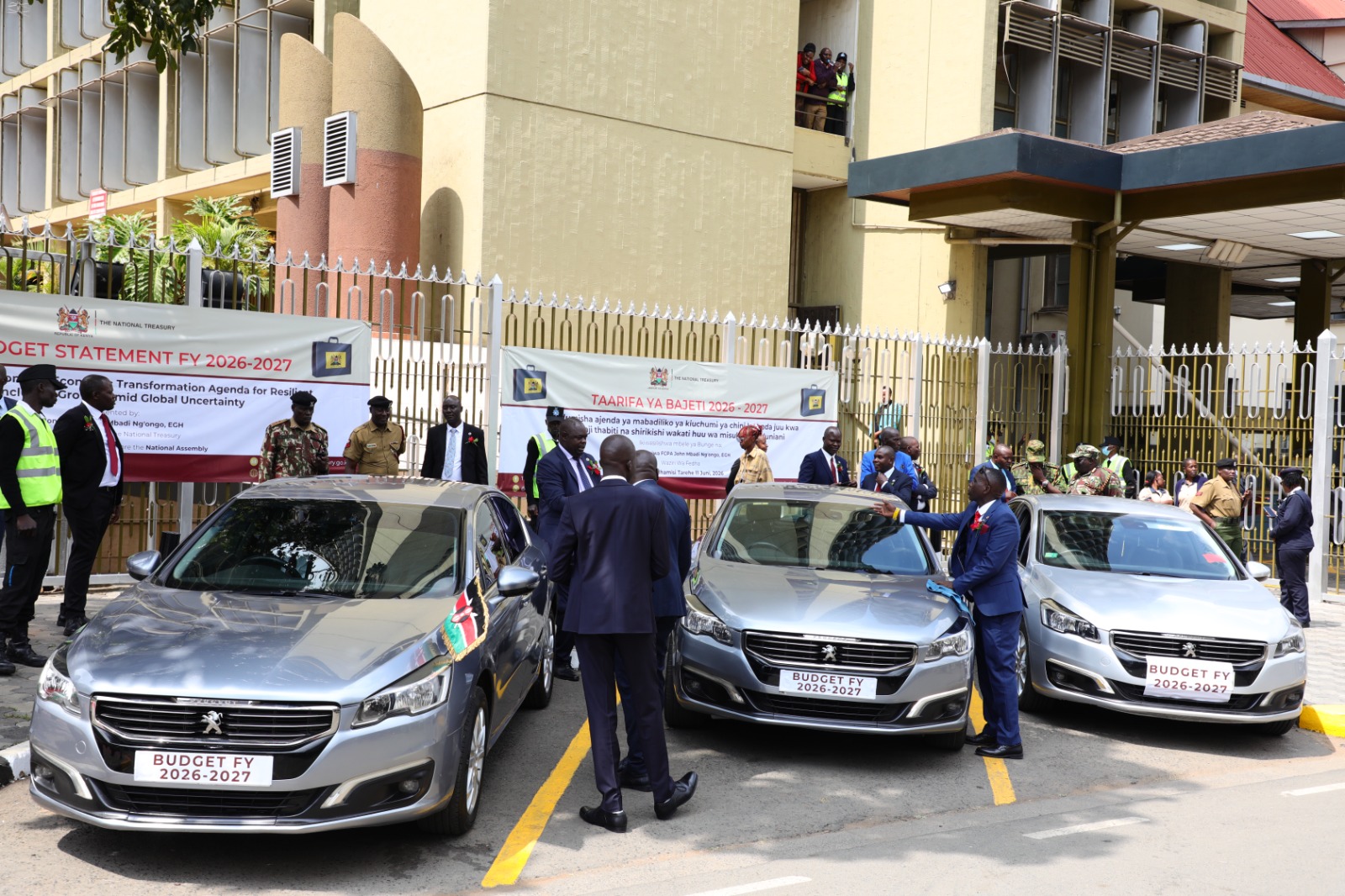
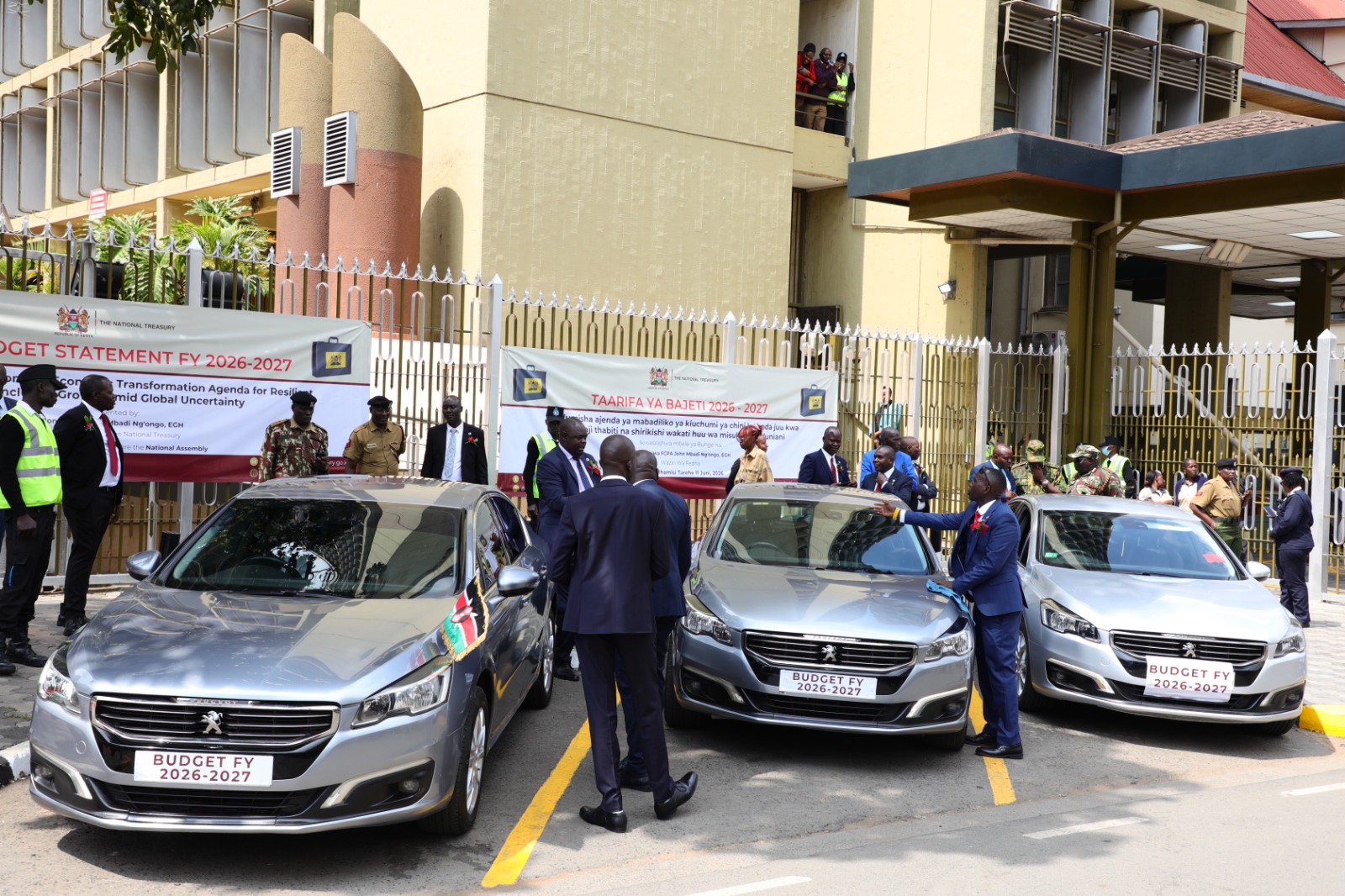
The grey Peugeot rolled slowly into the precincts of
Parliament, its customised number plate boldly declaring budget for the 2026/27 financial year.
The national flag was mounted on the vehicle, signalling
the significance of the afternoon's assignment.
Inside sat National Treasury Cabinet Secretary John Mbadi,
the man of the moment.
Waiting to receive him was an unusual gathering of political
heavyweights drawn from both sides of the House.
Deputy Speaker Gladys Shollei, Majority Leader Kimani
Ichung'wah, Minority Leader Junet Mohamed, Budget Committee chairman Samuel
Atandi, Finance Committee chairman Kuria Kimani and National Assembly Clerk Samuel Njoroge stood
ready at the entrance.
As Mbadi stepped out, dressed in a crisp blue suit with a
bright red flower pinned neatly on his lapel, cameras clicked furiously.
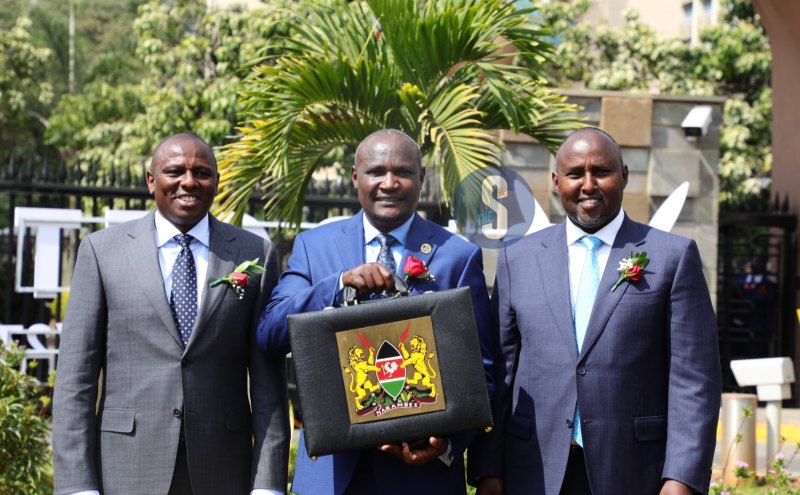
He moved from one leader to another, exchanging handshakes
and brief pleasantries before pausing for a group photograph.
Behind him stood three principal secretaries, also dressed
in matching blue suits, adding to the ceremonial feel of a day steeped in
tradition and symbolism.
Hours earlier, the Treasury headquarters along Harambee
Avenue had been transformed into a stage of anticipation.
Shortly after 1.30pm, Mbadi emerged carrying the iconic
black budget briefcase embossed with the Kenyan coat of arms and the word
"Harambee".
Members of the public lined sections of Harambee Avenue,
hoping to catch a glimpse of the man entrusted with unveiling the country's
spending plan for the next financial year.
Police officers maintained a tight security cordon as the
motorcade slowly made its way toward Parliament.
The briefcase, though lighter in the digital era, still
carried immense symbolism.
For decades, it has represented the government's economic
priorities and the hopes of millions of Kenyans waiting to hear how taxes will
be spent and whether life might become a little easier.
Inside Parliament, the atmosphere was equally charged.
Members hurried through routine business on the Order Paper,
keen to clear the way for the budget presentation.
The Speaker's Gallery steadily filled up with senior
government officials, and invited guests eager to witness one of the most
important events in the country's legislative calendar.
As MPs settled into their seats, Minority Leader Junet
Mohamed briefly transformed the chamber into a comedy stage.
"The person coming to read the budget is a former
chairman of ODM. Can you repeat after me?" he quipped, triggering laughter
across the House.
His attempt at starting an impromptu choir was swiftly shut
down by Speaker Moses Wetang'ula, who ruled him out of order.
But Junet was not done.
Taking a swipe at former Speaker Justin Muturi over comments
suggesting it was unusual for a budget to be read while the President was
outside the country.
Junet reminded the House that the responsibility belonged to
the Treasury Cabinet Secretary.
"There is a minister in charge of the Treasury who is
supposed to read the budget," he said.
Wetang'ula concurred, emphasising that the budget
process is an exclusive mandate of Parliament and proceeds regardless of the
President's whereabouts.
At exactly 3pm, the doors opened and Mbadi entered the chamber.
MPs craned their necks while guests in the galleries leaned
forward to catch a better view. The House momentarily fell silent as the
Treasury boss made his way to the front.
Wetang'ula formally welcomed him and his delegation before delivering a line that instantly relaxed the chamber.
"Honourable Mbadi, you may now proceed with your
afternoon job."
The House erupted in laughter.
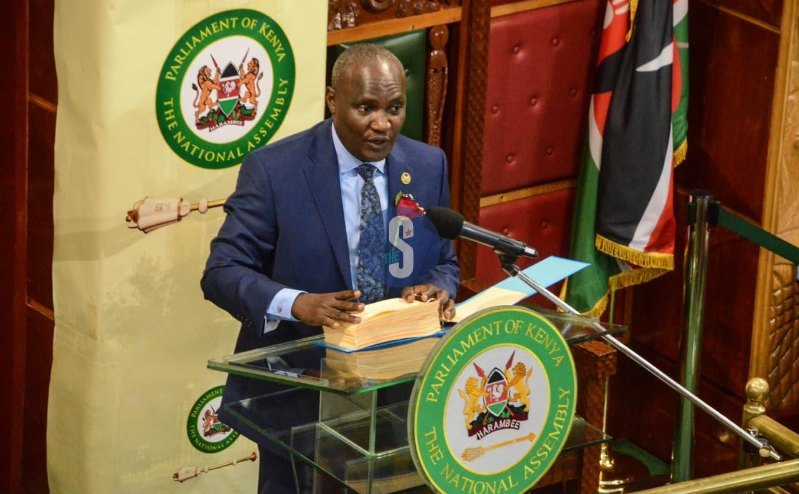
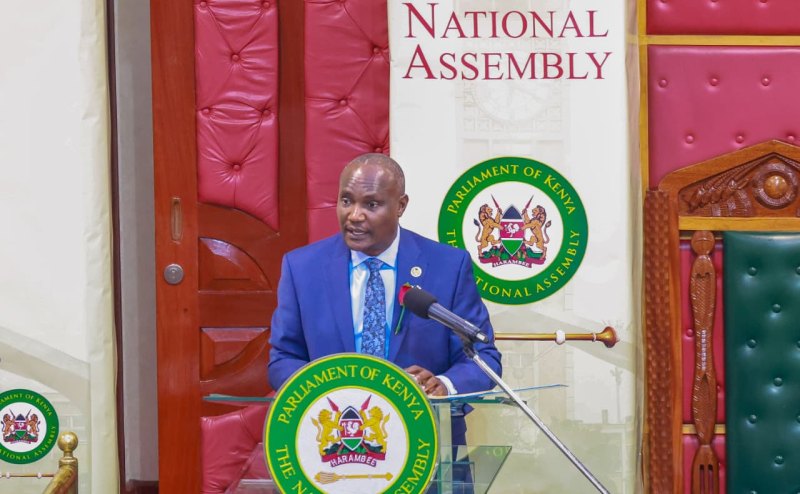
Seven minutes later, at precisely 3.07pm, Mbadi rose to
deliver the Budget Statement for the 2026-27 financial year.
But before unveiling the record Sh4.84 trillion spending
plan, he paused for a solemn moment.
"This is the first budget since the passing on of the
Rt Hon Raila Odinga," he said.
He then requested members to observe a minute of silence in
honour of the former Prime Minister.
The chamber stood still.
When the silence ended, emotion quickly gave way to
politics.
Chants of "Jowi! Jowi! Jowi!" echoed across the
House as MPs remembered Raila.
Mbadi smiled briefly before turning to the task at hand.
For the next several minutes, he outlined a spending plan
aimed at stimulating economic growth, creating jobs and funding critical
sectors amid persistent concerns over the high cost of living.
As he spoke, MPs repeatedly thumped their desks and stamped
their feet in approval. Between pages of his speech, Mbadi occasionally paused
to sip water, while lawmakers listened intently.
Outside Parliament, Nairobi continued with its usual bustle.
Inside, however, all attention remained fixed on one man,
one briefcase and one speech that would help shape Kenya's economic direction
for the year ahead.