


The dusty roads leading through China’s revolutionary heartland tell a story that cannot be fully appreciated from history books.
For the past several days, I travelled across China, retracing the route of the Red Army—the soldiers whose determination, sacrifice and resilience changed the course of Chinese history.
Along the way, I walked through villages where ordinary peasants once sheltered exhausted revolutionaries, visited museums preserving memories of one of the greatest military retreats in history, and eventually found myself standing in the middle of what was once an unforgiving desert.
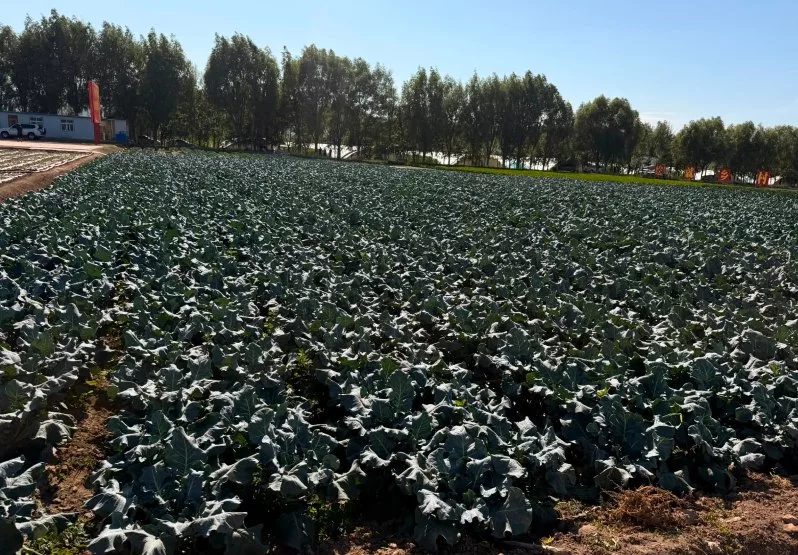
Today, that desert feeds people.
Green fields stretch to the horizon. Modern irrigation channels carry life-giving water across land that decades ago could barely sustain human life. Huge potato farms, vineyards and vegetable fields have replaced blowing sand.
Farmers who once lived in extreme poverty now produce food that ends up on dining tables across China and in some of the world’s biggest restaurant chains.
It is impossible to witness such transformation without asking one question:
What happened here that has not happened in Kenya?
A revolution born from hardship
China’s revolutionary journey began in 1927 when the Communist Party of China (CPC) launched an armed struggle following the collapse of its alliance with the ruling Kuomintang government.
The years that followed were brutal.
The defining chapter came between 1934 and 1935 during the Long March, when the Red Army trekked approximately 9,000 kilometres across mountains, grasslands, rivers and snow-covered terrain while escaping encirclement by government forces.
Tens of thousands perished along the way, but the march ensured the survival of the Communist movement and cemented Mao Zedong’s leadership.
The armed struggle would continue for another 14 years.
On October 1, 1949, Mao stood atop Tiananmen Gate in Beijing and proclaimed the founding of the People’s Republic of China.
Military victory, however, was only the beginning.
After 1949, the Communist Party gradually shifted its attention from revolution to nation-building. Later, following the launch of reform and opening up in 1978, economic development became the country’s overriding national priority.
Every major national policy—from infrastructure and manufacturing to education, agriculture and technology—would increasingly be measured against one objective: improving the lives of ordinary Chinese citizens.
That focus continues today.
The Communist Party now speaks of embarking on a "new Long March" towards achieving socialist modernisation by 2035.
Kenya’s own liberation story
As I reflected on China’s revolutionary history, my thoughts drifted home.
Kenya also has its own Long March.
The Mau Mau uprising remains one of Africa’s most courageous anti-colonial struggles. Thousands of freedom fighters gave their lives in the forests of Mount Kenya and the Aberdares so future generations could inherit a free country.
Like China’s revolutionaries, they fought for dignity, land and self-determination.
But while both countries emerged from bitter struggles, their development journeys have taken markedly different paths.
China treated political liberation as the starting point for economic transformation.
Kenya gained independence in 1963 with immense promise. Yet, more than 60 years later, many of the structural challenges that have held back development remain stubbornly intact.
Grand development plans are frequently announced but inconsistently implemented. Corruption continues to consume resources meant for public investment. Politics often overshadows long-term national planning.
Our liberation succeeded politically.
Our economic liberation remains unfinished.
Turning deserts into breadbaskets
Nothing illustrates China’s development story better than Ningxia Hui Autonomous Region.
Not long ago, parts of this region were among China’s poorest.
Harsh climatic conditions, desertification, poor soils and chronic water shortages condemned many communities to generations of poverty.
One such place was Yaomo Village.
Today, visitors encounter something entirely different.
Rows of healthy crops flourish under carefully managed irrigation systems. Farmers cultivate potatoes, grapes for Ningxia’s award-winning wine industry, vegetables, maize and forage crops. Roads connect villages to markets, while agricultural extension officers work closely with farmers to improve productivity.
The transformation did not happen overnight.
It was the product of decades of deliberate planning.
In 1996, China launched the Fujian-Ningxia East-West poverty alleviation programme, pairing the prosperous coastal province of Fujian with impoverished Ningxia.
At the time, Xi Jinping was serving as a senior leader in Fujian and became closely associated with the partnership, encouraging investment, technical cooperation and industrial development aimed at lifting poor communities out of poverty.
Rather than relying on short-term relief, authorities invested in irrigation infrastructure, skills training, agricultural modernisation, enterprise development and market access.
Nearly three decades later, the results are visible everywhere.
The World Bank estimates that China has lifted around 800 million people out of extreme poverty since the beginning of economic reforms in 1978—the largest poverty reduction achievement in human history.
For visitors, these numbers become meaningful when seen through the lives of ordinary farmers whose children now attend university instead of worrying about the next meal.
From the farm to the world’s dinner tables
One of the highlights of my visit was Moon Valley, one of Ningxia’s leading potato processing companies.
The visit demonstrated how modern agriculture extends far beyond planting crops.
The company works closely with thousands of farmers, providing improved seed varieties, technical support and guaranteed markets for their harvests. Such arrangements reduce uncertainty for farmers while ensuring consistent supplies for processors.
Inside the sprawling factory, potatoes move through a highly automated production line.
They are washed, sorted, peeled, sliced, cooked, seasoned, packaged and prepared for shipment under rigorous food safety standards.
The finished products supply domestic consumers as well as international restaurant chains, including KFC and McDonald's, among other global food companies.
Every stage of the process adds value.
Every stage creates jobs.
Every stage keeps more income within the local economy.
It is an ecosystem built around the farmer.
Could northern Kenya become the next Ningxia?
As our delegation drove through irrigated fields carved out of what was once desert, I kept thinking about Turkana.
Then Garissa.
Then Mandera.
Northern Kenya possesses vast tracts of land blessed with abundant sunshine.
Instead of seeing those regions primarily through the lens of drought and humanitarian emergencies, perhaps it is time to see them through the lens of opportunity.
Solar-powered irrigation could unlock thousands of hectares currently lying idle.
Modern water-harvesting technologies could capture seasonal rains.
Drought-resistant crops could improve food security while creating commercial agriculture.
Tree planting could gradually restore degraded ecosystems.
The technologies already exist.
What is often lacking is sustained implementation.
If county and national leaders embraced long-term planning, tackled corruption decisively and focused public investment on productive infrastructure, recurring drought crises in northern Kenya could become far less frequent.
Development is ultimately about choices.
China chose to invest patiently over decades.
Kenya must decide whether it is willing to do the same.
China’s rise is not simply a story of roads, railways and skyscrapers.
It is increasingly a story of technology serving development.
Across the country, drones monitor crops and spray fertilisers with remarkable precision. Artificial intelligence helps farmers predict diseases and improve yields. Digital platforms connect producers directly to consumers. Smart factories use robotics and automation to manufacture goods at enormous scale.
Equally striking are the massive data centres powering China’s digital economy.
Technology here is not viewed merely as an industry.
It is treated as an enabler across agriculture, healthcare, manufacturing, logistics, education and public administration.
Kenya has already shown what is possible.
M-Pesa transformed financial inclusion and became a global innovation success story.
The same spirit can now be applied to precision agriculture, climate monitoring, manufacturing, healthcare and education.
Technology should not simply make life more convenient.
It should make economies more productive.
The lesson from China’s Long March
Walking the route once travelled by weary Red Army soldiers, I realised that China’s greatest achievement may not have been winning a revolution.
It has been sustaining one.
Not a military revolution.
A development revolution.
One generation fought for political liberation.
The next fought poverty.
Today’s generation is pursuing technological leadership and modernisation.
Every generation has inherited a national mission larger than itself.
Kenya’s Mau Mau heroes secured our political independence.
Our generation carries a different responsibility.
To build an economy that frees future generations from poverty, unemployment and underdevelopment.
History remembers those who fought for freedom.
Posterity remembers those who transformed that freedom into prosperity.
Perhaps that is the enduring lesson from China’s Long March.
The march never really ended.
It simply changed direction.
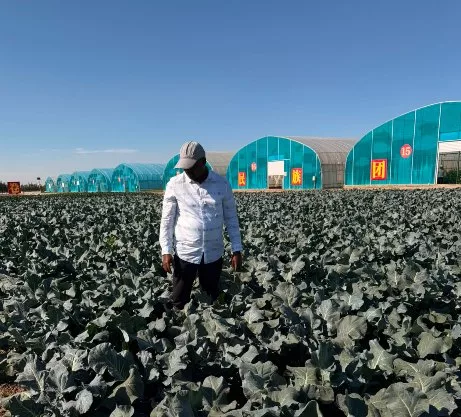
Radio Africa Group Editorial Director Paul Ilado

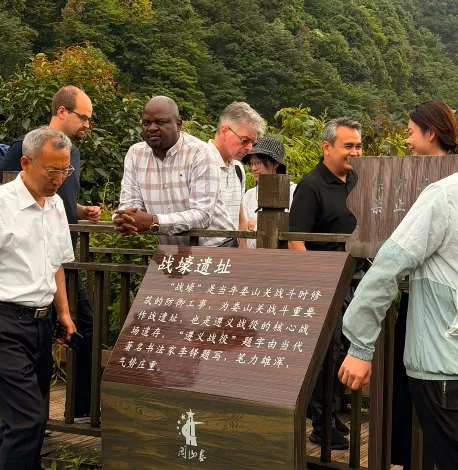
Radio Africa Group Editorial Director Paul Ilado
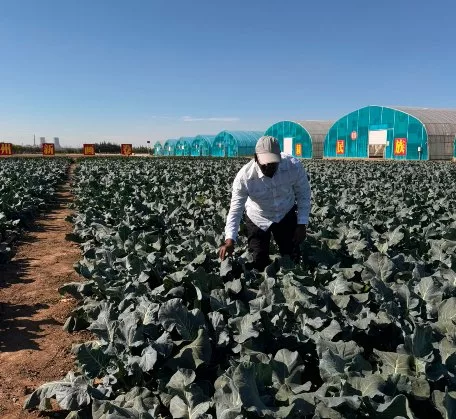
Radio Africa Group Editorial Director Paul Ilado