
HIV burden in Kenya, 2025
On mortality, the country recorded a total of 19,393 AIDS-related deaths.
6d agoHillary BettInfographics
About 38% of new HIV infections among children were due to mothers dropping off antiretroviral therapy during breastfeeding


Audio By Vocalize
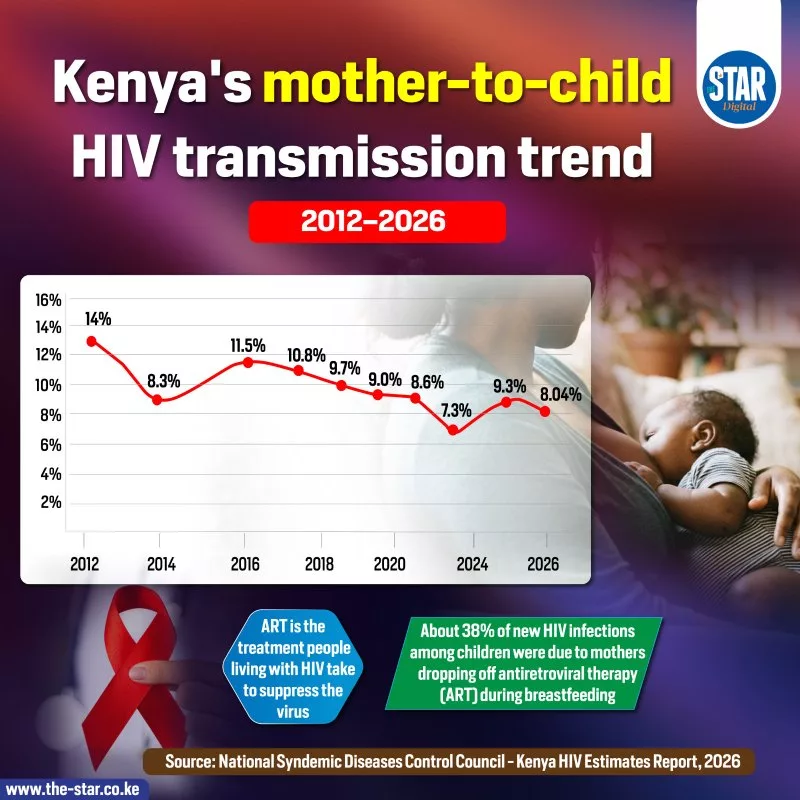
Kenya has made noticeable progress in reducing mother-to-child HIV transmission over the last 14 years, according to data from the National Syndemic Diseases Control Council’s Kenya HIV Estimates Report 2026.
In 2012, the mother-to-child transmission rate stood at 14%. The country achieved a sharp decline by 2014, dropping the rate to 8.3%.
However, this progress faced a setback in 2016 when the transmission rate climbed back up to 11.5%.
Following that peak, Kenya recorded a steady, multi-year decline: the rate fell to 10.8% in 2018, 9.7% in 2019, 9.0% in 2020, and 8.6% in 2022, eventually hitting a record low of 7.3% in 2024.
The most recent data shows a slight rebound, with the transmission rate rising to 9.3% in 2025 before settling at 8.04% in 2026.
Antiretroviral therapy (ART) remains the primary medical intervention, serving as the treatment people living with HIV take to suppress the virus.
Despite its availability, treatment adherence challenges directly impact these figures.
Healthcare data reveals that about 38% of new HIV infections among children occurred because mothers dropped off antiretroviral therapy during breastfeeding.
While the overall downward trend from 14% to 8.04% highlights a long-term improvement in preventing vertical transmission, the recent fluctuations underscore the critical role of consistent treatment adherence to protect infants during the breastfeeding period.
On mortality, the country recorded a total of 19,393 AIDS-related deaths.