

A new survey by TIFA has revealed a significant crisis of confidence in Kenya’s major public institutions, with negative trust ratings exceeding positive sentiment across all institutions assessed.
The findings show that Parliament is the least trusted institution among those surveyed. Only 27 per cent of respondents reported having “a lot” or “some” trust in Parliament, while 72 per cent said they had little or no trust, resulting in a net trust score of negative 45 per cent.
The police ranked second lowest, with a net trust score of negative 40 per cent. While 29 per cent of respondents expressed positive trust in the institution, 69 per cent reported little or no trust.
The survey also found widespread scepticism toward political leadership. The President and political parties each registered net trust scores of negative 39 per cent, with positive trust ratings of 29 per cent and negative ratings of 68 percent.
County government leadership and the Independent Electoral and Boundaries Commission (IEBC) also recorded substantial trust deficits, each posting a net trust score of negative 36 per cent, reflecting continued public concerns over governance and electoral management.
Among the institutions surveyed, the judiciary received the most favourable ratings, although public confidence remained below a majority level. Thirty-six per cent of respondents expressed positive trust in the judiciary, while 60 per cent reported little or no trust, resulting in a net trust score of negative 24 per cent.
TIFA noted that the findings point to a persistent trust gap between citizens and institutions responsible for governance, security, representation, and justice. The data suggest that many Kenyans remain dissatisfied with institutional performance and leadership accountability.
Fieldwork for the survey was conducted between 2nd and 11th May 2026, covering a nationally representative sample across nine zones: Central Rift, Coast, Lower Eastern, Mt Kenya, Nairobi, Northern, Nyanza, South Rift, and Western.
Data was collected through face-to-face, household-based interviews conducted mainly in Swahili and English.
The study achieved a sample size of 2,013 respondents, with a margin of error of +/- 2.18%, noting that larger error margins apply to sub-samples.
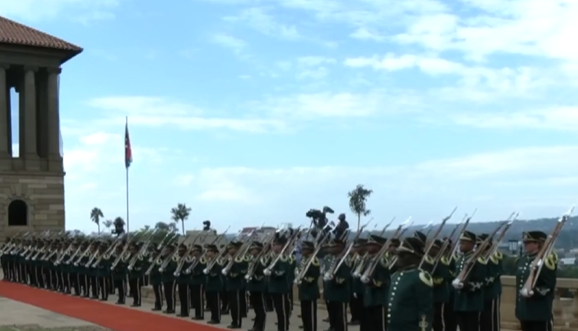







![[PHOTOS] Red carpet in Pretoria as Ruto begins South Africa visit](https://cdn.radioafrica.digital/image/2026/06/abe3e750-6e5a-4394-a45c-899768be6240.jpeg)